Lionfish in Thailand: Where to See Them and Staying Safe
Lionfish are native to Thai waters. Learn where divers and snorkelers spot them, how to identify them, and how to avoid venomous stings.
On this page
Last updated November 2026: if you search lionfish thailand, most results describe an invasion in the Atlantic and Caribbean. In Thai waters these fish are native, and divers can meet them on reefs, wrecks and artificial structures. Look, don't touch, because the dorsal spines are venomous.
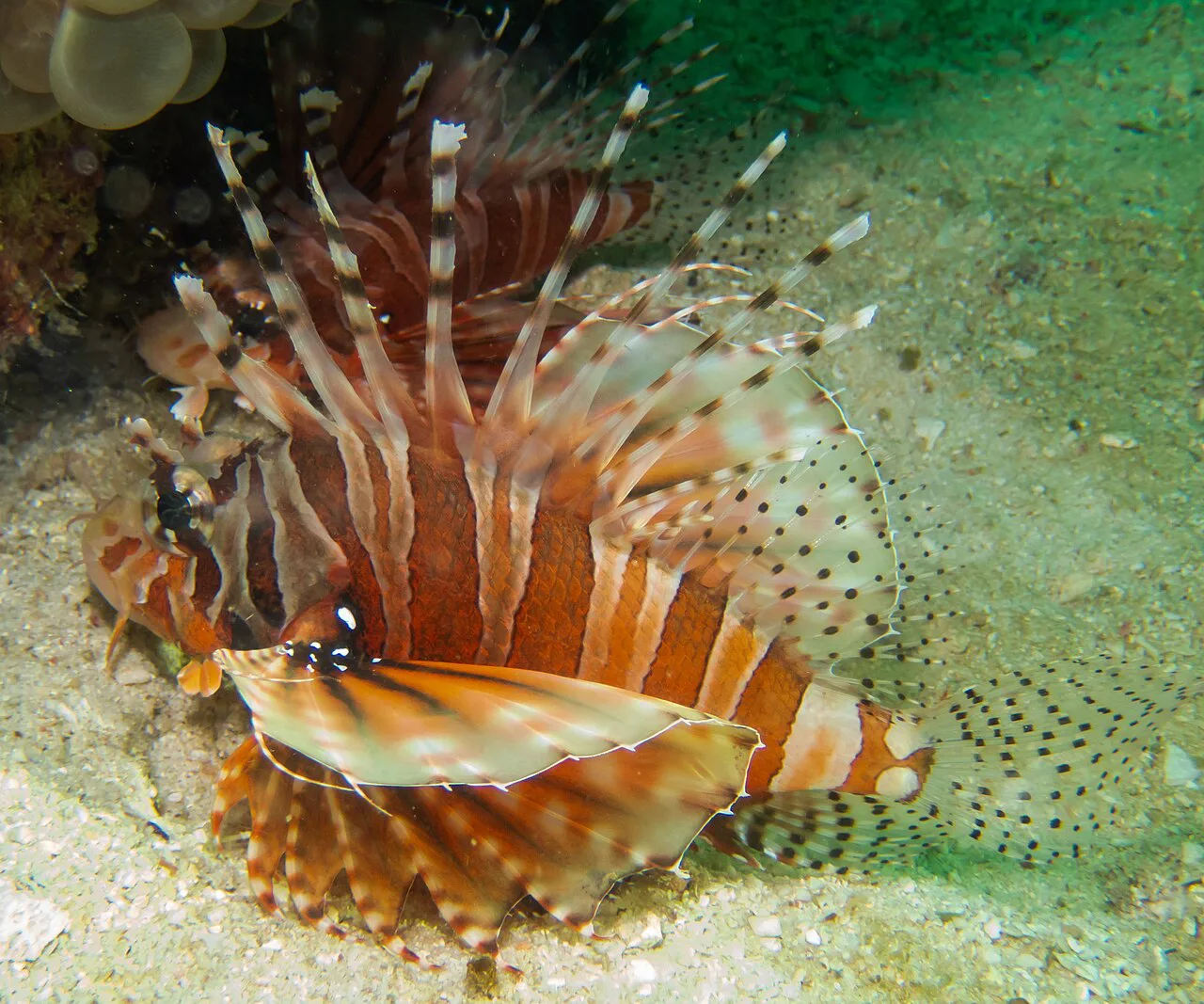
Featured image: portioid, CC BY-SA 4.0, via Wikimedia Commons.
Are There Lionfish in Thailand? Native, Not Invasive
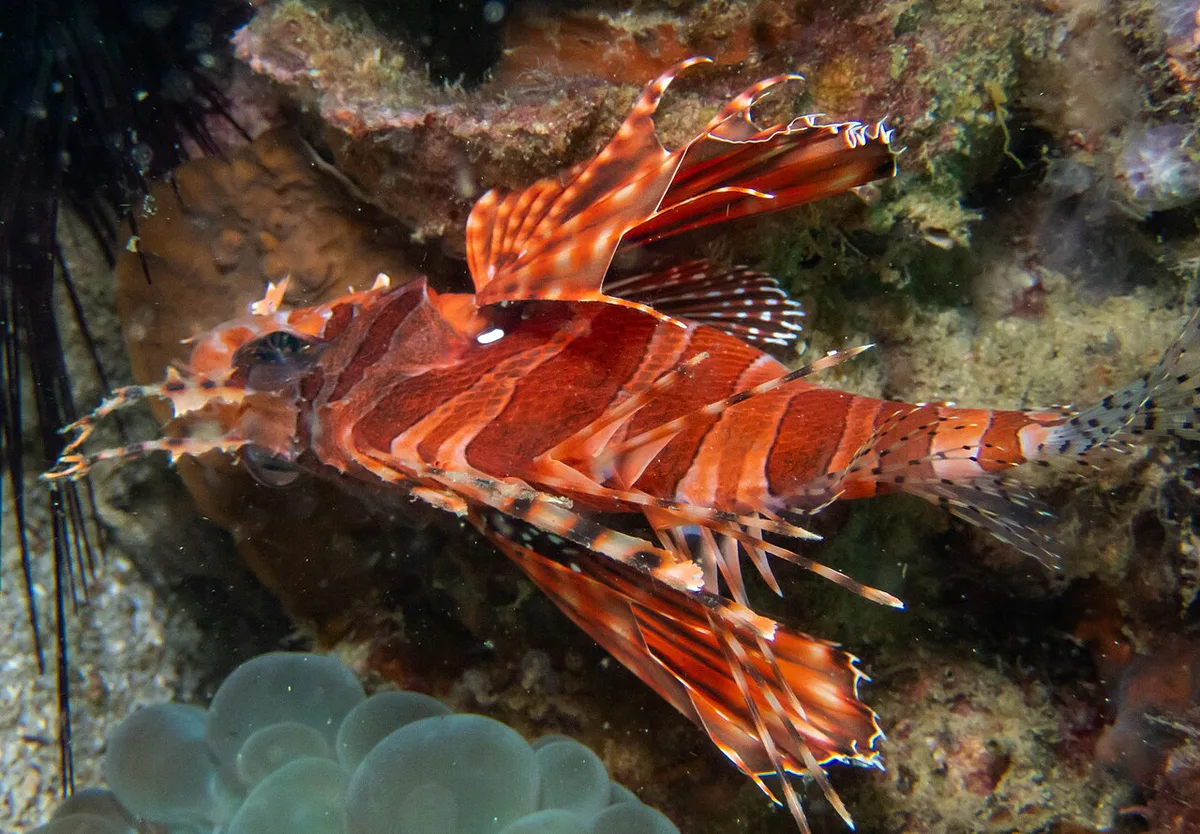
Yes. Lionfish belong to the Indo-Pacific, and Thailand sits inside that natural range. They are one of many reef residents covered in our Thailand marine life guide. Pterois volitans, the red lionfish, is the species most people picture. Most pages you find online discuss invasive lionfish in the Atlantic, Gulf of Mexico and Caribbean. That framing does not apply here. Thai reefs have evolved alongside lionfish, so you will not find removal derbies, bounties or culling dives in Thailand's tourism scene. Treat a sighting as a bonus, not a promise. Lionfish rest under ledges, inside wrecks and among coral heads, and many dives pass without one.
Where to See Lionfish in Thailand: Gulf vs Andaman
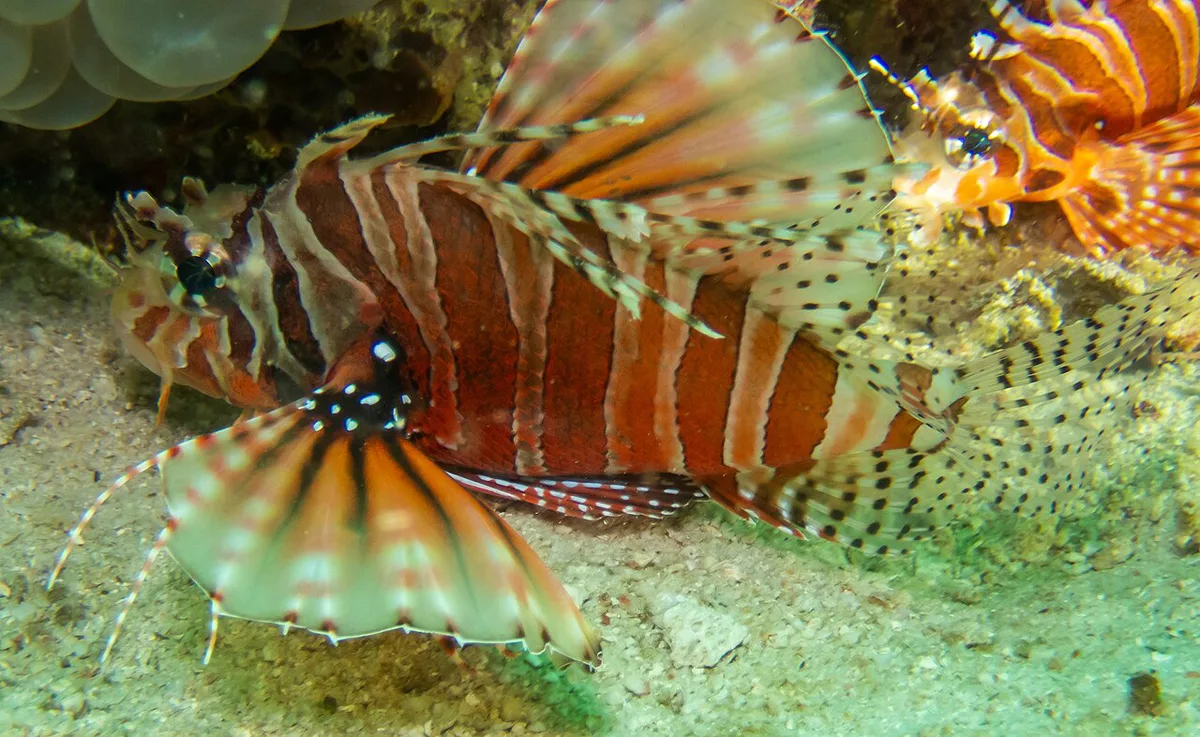
Lionfish favour structure. Wrecks, artificial reefs, pinnacles and rocky reefs give them shelter and hunting perches. Divers report them around the HTMS Sattakut wreck off Koh Tao in the Gulf of Thailand. On the Andaman side, the King Cruiser wreck off Phuket is another structure where sightings are reported. Ask your dive center which sites currently hold lionfish, because individual fish move on.
| Factor | Gulf of Thailand | Andaman Sea |
|---|---|---|
| Example structure | HTMS Sattakut wreck, Koh Tao | King Cruiser wreck, Phuket |
| Typical habitat | Wrecks, artificial reefs, rocky reefs | Wrecks, pinnacles, rocky reefs |
| Access | Day boats from dive centers on Koh Tao | Day boats and liveaboards from Phuket |
| Trade-off | Wreck dives need training and a guide | Wreck dives need training and a guide |
Best Time and Conditions for Spotting Lionfish
Lionfish are ambush hunters that tend to be most active around dusk and at night. A twilight or night dive often shows them hunting in the open, while daytime dives usually find them resting in shade. Visibility matters more than season for spotting a motionless fish tucked against a wall. Seasons differ between the Gulf and the Andaman coasts, so ask local operators about current conditions before choosing a coast. Wrecks and pinnacles reward slow, close inspection of every overhang and cavity.
Snorkeling vs Diving: What You Can Realistically See
Most lionfish sightings happen on scuba dives, because the fish favour deeper structures and shaded gaps. Snorkelers can still get lucky around rocky shorelines and shallow reefs, but sightings are less likely. Either way, keep your distance from the spines.
| Option | Depth and access | Certification | Lionfish chances | Cost level |
|---|---|---|---|---|
| Shore or boat snorkel | Surface, shallow reefs and rocks | None | Lower, luck-dependent | Lowest |
| Guided daytime dive | Reefs, pinnacles, wrecks | Open Water or equivalent | Moderate near structures | Mid |
| Night dive | Same sites after dark | Often an extra qualification | Higher, fish hunt in the open | Mid to higher |
| Liveaboard | Multiple sites over several days | Open Water or equivalent | More sites, more chances | Highest |
How to Identify Lionfish (and Not Confuse Them with Stonefish)
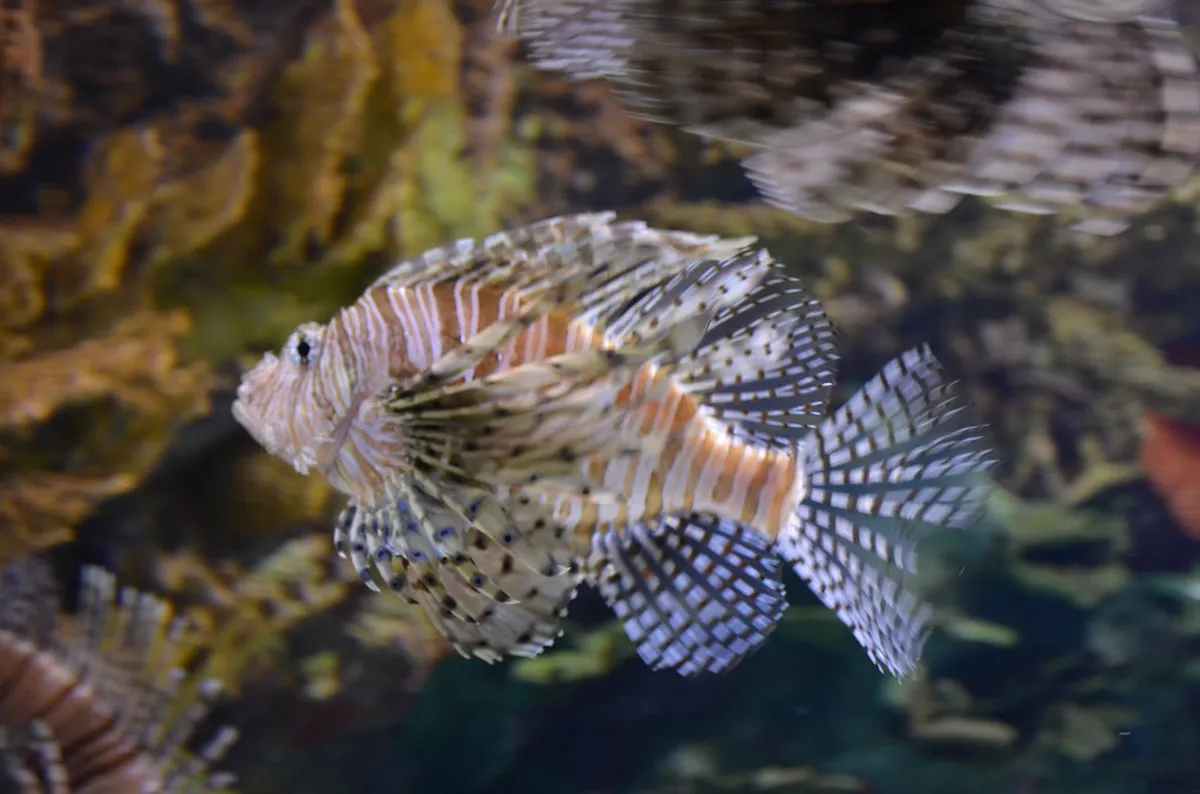
Lionfish carry bold stripes in red, brown and white. Long, feathery pectoral fins fan out like a mane, and the dorsal spines stand upright. They hover or drift slowly, often head-down near a ledge. Stonefish look nothing like that. They sit motionless on the bottom, covered in lumps that mimic rock. Our stonefish guide explains why a stonefish is far harder to spot, and why you should never rest a hand on the seabed. Other scorpionfish relatives also blend into reef, so treat any odd-shaped lump as a hazard.
Are Lionfish Dangerous? Stings and First Aid
Lionfish are venomous, but they are not aggressive toward divers. Stings usually follow accidental contact, such as a hand pressed on a ledge or a fish cornered against a wall. NOAA notes the venomous spines as the species' best-known feature. A sting can bring intense local pain and swelling. Allergic reactions are possible. If you are stung, move away from the fish and stay calm. Tell your guide and get off the water. Seek medical care promptly rather than waiting to see how it develops. Divers Alert Network is the place to read current first-aid guidance and to check your dive insurance. Ask your dive center where the nearest clinic or hospital is before you leave the dock. Lionfish are one hazard among several. Our guides to box jellyfish and sea urchins cover other stings and punctures. You can also read about stingrays and sea snakes in the same section of this series.
Dive Etiquette and Photography Tips
Good buoyancy keeps you safe. Hover a body length away and never use a hand to steady yourself near rock. Lionfish let photographers approach, which tempts people to creep closer. Resist that, and use a longer lens or a zoom instead. Never feed, chase or corner a lionfish. Do not use a torch or a pointer stick to herd one into the open. Small reef life makes good company for a lionfish shoot, including nudibranchs, seahorses and clownfish. At night, you might also see an octopus hunting nearby. Other predators, such as moray eels, share the same ledges, so check before you reach into a crevice. Some countries encourage eating lionfish to control invasions. That is not a Thai conservation practice, and wild native fish here should be left alone.
- Do not touch, corner or chase lionfish.
- Do not assume a sighting is guaranteed.
- Do not mistake a lionfish for a stonefish, or vice versa.
- Do not grab rock or coral without checking for hidden fish.
Planning Notes: Operators, Access and Budget Level
Pricing, boat schedules and site access change by season and operator. Check current rates and conditions with Thailand's Department of National Parks and your chosen dive center.
Notes for your next dive trip
Optional updates to our Thai diving guides.
You might also like

Continue reading
More guides you'll find useful