Box Jellyfish in Thailand: Where Stings Happen and First Aid
Box jellyfish stings are reported in Thailand. Learn where, how to prevent them, and the first-aid steps to take on the beach.
On this page
Last updated November 2026. Box jellyfish thailand searches usually come down to one question: do stings really happen here? Yes. Patong Municipality lifeguards on Phuket reported a significant rise in stings in October 2025, and the first move is to leave the water and pour on vinegar. This guide covers where stings are reported, how to lower your risk, and what to do on the sand.
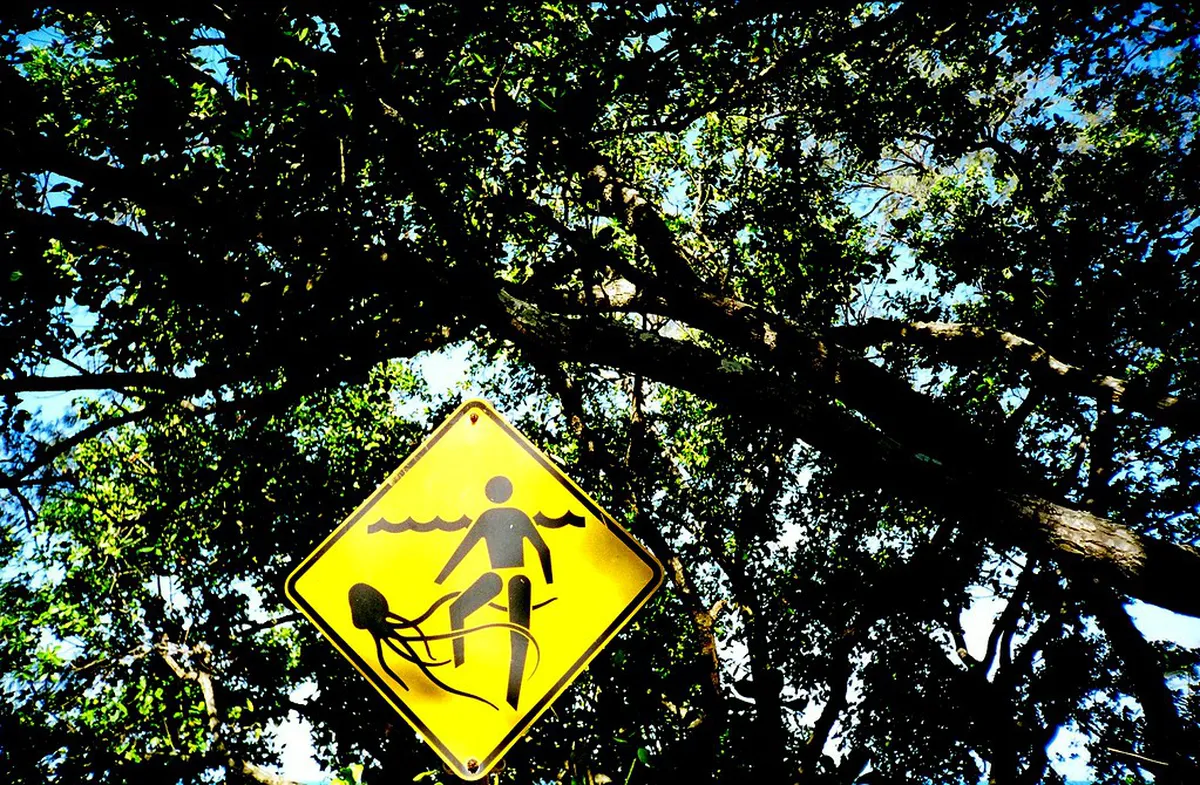
Featured image: rezendi, CC BY 2.0, via Flickr.
Are there box jellyfish in Thailand?
Stings attributed to box jellyfish are reported in Thai waters. A Bangkok Post report dated 16 October 2025 quotes Patong Municipality lifeguards on Phuket's Andaman coast. They described many swimmers leaving the water with red rashes, burning pain and allergic reactions, and several severe cases went on to hospital. Species identification is a separate matter. The most dangerous box jellyfish, the sea wasp (Chironex fleckeri), is documented by Divers Alert Network in Australia and Southeast Asia. Expert sources are needed to say which species sting people at a given Thai beach, including around Koh Samui and Koh Phangan in the Gulf of Thailand. This page does not guess. For the wider picture of Thai sea life, start at our Thailand marine life guide.
Where and when box jellyfish stings are reported
The best-documented recent cluster is Patong Beach on Phuket, from the October 2025 lifeguard report. Swimmers there may never see the animal. Detached tentacles drift in the water and still carry stinging cells. For the Gulf side, including Koh Samui and Koh Phangan, no official sting record or species list is cited here. Ask the local lifeguards or your accommodation what has been seen recently. Season is the same story. No reliable Thai calendar of box jellyfish activity is available, and the October 2025 reports show stings can occur in that month. In northern Queensland, Australia, protective net enclosures run from November to May, but Thailand has no equivalent published schedule. Treat every warm-water swim as a possible sting day and rely on current beach conditions.
How dangerous are they?
Most jellyfish stings in Thailand cause pain, a rash and swelling that fade. Our guide to common jellyfish in Thai waters covers those milder cases. True box jellyfish are different. DAN describes the sea wasp as having a bell about 8 inches (20 cm) across and tentacles up to 10 feet (3 m). It reports that death can come in as little as 3 minutes in the worst Australian cases. Those figures describe Australian fatalities, not Thai statistics. Another risk is Irukandji-type syndrome, caused by tiny box jellyfish found near Australia. Symptoms can start mild and turn severe later, which is why the Bangkok Post advises watching every patient for at least one hour. Severe back pain, vomiting, chest symptoms or a sense of impending doom mean emergency care.
Even with Australia's worst case of 3 minutes in mind, pick a beach where lifeguards are on duty, since Patong lifeguards gave first aid.
How to avoid stings
Prevention costs less than treatment. Swim where lifeguards are on duty, such as Patong Beach, and read the flags before you wade in. Ask what has been seen that week. A stinger suit or full-length lycra covers the skin that tentacles reach, and DAN notes that even nylon pantyhose can block stings. Divers and snorkelers should wear full exposure suits, hoods, boots and gloves. DAN also advises carrying household vinegar to every dive site.
Keep vinegar on the sand as well as the boat, since first aid means pouring it on for 30 seconds.
- Ask tour crews whether vinegar is on the boat before you leave the pier.
- Keep children close to shore, in rash vests, and out of the water if stings were reported that day.
- Skip swimming at dusk or in cloudy surf where you cannot see the water column.
- Leave the water if another swimmer shouts about stings, even if you feel nothing.
Swim, think twice or stay out
Use this table as a quick decision aid on the day. It is editorial guidance, not an official rating.
| Situation | Call | Why |
|---|---|---|
| Lifeguards on duty, no sting reports, you wear a stinger suit | Swim | Fast help and vinegar are on hand. |
| Unguarded beach, no local information | Think twice | Nobody can treat a severe sting quickly. |
| Lifeguards report recent stings or hospital cases | Stay out | This matches the Patong situation in October 2025. |
| Young children, no protective swimwear | Think twice | Small bodies take a larger dose per sting. |
| Pool or resort lap pool day | Swim | No tentacles, no first-aid emergency. |
First aid for a jellyfish sting, step by step
Act in this order. Health authorities and DAN agree on the vinegar-first approach. Medical disclaimer: this is general information, not a substitute for professional care. Heat and ice advice differs between sources, so follow the emergency responder if one is present.

- Get out of the water at once. Continuing to swim can lead to drowning in a severe reaction.
- Call local emergency services. Start CPR immediately if the person is unconscious or not breathing.
- Pour vinegar generously over the area for at least 30 seconds.
- Lift off remaining tentacles with tweezers. Never use bare hands.
- Rinse with seawater if vinegar is not available. Do not use fresh water.
- If medical advice allows it, immerse the area in hot water no hotter than 113°F (45°C) for 30 to 90 minutes. Test the water on yourself first.
- Use a cold pack in a dry plastic bag if hot water is not available.
- Watch the patient for at least one hour, even if symptoms look mild.
What not to do after a sting
Vinegar neutralizes stinging cells that have not yet fired. DAN says it does not ease pain or remove venom already injected. That is why the mistakes below matter so much.
- Do not rub the skin. Rubbing rolls tentacles across more skin and spreads the sting.
- Do not rinse with fresh water. It can trigger unfired cells.
- Do not use urine or oils. Thai authorities named in the Bangkok Post report advise against both.
- Do not pick tentacles off with bare fingers.
- Do not skip hospital because the pain eases. Delayed symptoms can follow.
When to go to hospital and what to arrange
Go to a hospital for any sting that brings breathing trouble, chest pain, vomiting, spreading rash or faintness. Several severe Patong cases were transferred to nearby hospitals after lifeguard first aid. Confirm the current Thai emergency number from an official source before you travel and save it in your phone. Check that your travel insurance covers medical evacuation and water activities. DAN sells travel protection, and other insurers offer similar plans. Beyond jellyfish, other hazards deserve a look. Read about stonefish on Thai reefs next. Learn how to avoid sea urchin spines too. Prices and hours checked November 2026; no hospital fee is quoted here.
Frequently Asked Questions
How deadly is box jellyfish venom?
DAN describes the sea wasp as capable of killing an adult in as little as 3 minutes. That is the worst case for one species documented in Australia and Southeast Asia. Most jellyfish stings in Thailand cause pain and a rash rather than death.
Has anyone survived the box jellyfish sting?
Yes. Survivors of Irukandji-type stings describe a sense of impending doom, yet DAN notes a single sting should not be fatal. Fast vinegar treatment and emergency evaluation give the best chance.
Notes for your next dive trip
Optional updates to our Thai diving guides.
You might also like

Continue reading
More guides you'll find useful