Bull Sharks in Thailand: Where They Occur and How Safe It Is
Are there bull sharks in Thailand? See where they are mentioned, how likely a sighting is, and what to do at the beach or on a dive.
On this page
Last updated November 2026. Bull shark Thailand searches usually come down to one question: do they live here, and should you worry? Yes, bull sharks occur in Thai waters, but diver sightings are described as rare, so they make a poor reason to book a trip. For the full species list, start with our guide to sharks in Thailand.
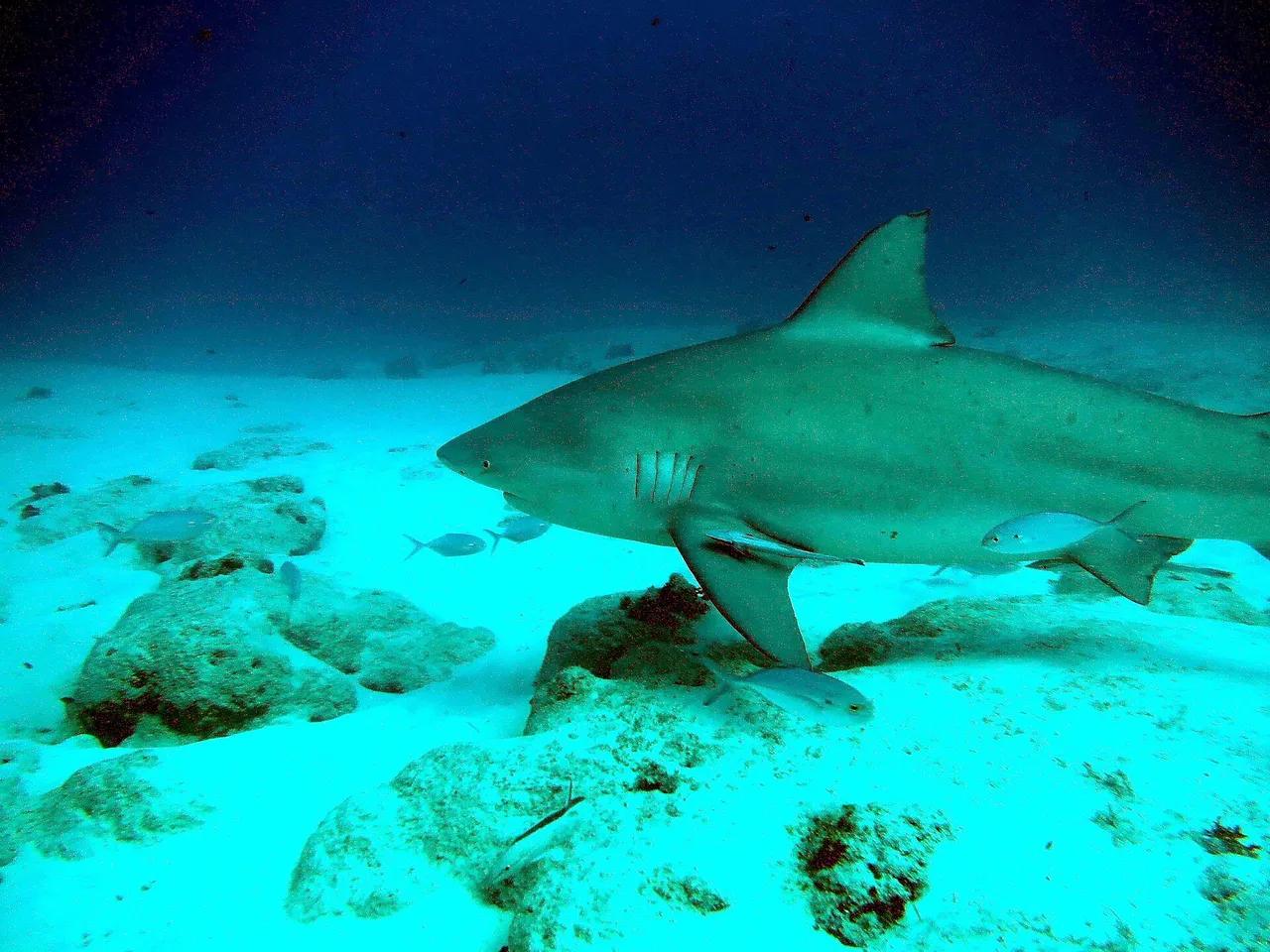
Featured image (a bull shark outside Thailand, shown for illustration): Jerome Paillet (IFREMER, Laboratoire d'Océanographie Physique et Spatiale, Centr, CC BY 4.0, via Wikimedia Commons.
Are there bull sharks in Thailand? The short answer
Yes. Bull sharks (Carcharhinus leucas) occur in Andaman Sea coastal and estuarine waters, and some dive operators also place them in the Gulf of Thailand. Diver sightings are described as very rare. No operator can promise one. Treat a bull shark as a lucky bonus on a dive, not a target. Readers who want a reliable shark should jump to the final section.
Bull shark ID and behavior in brief
Bull sharks have a stocky build, a broad head and a short, blunt snout. The back is gray to light brown, and the underside is white. Females reach about 13 ft (4 m), while males top out near 12 ft (3.6 m), according to IFAW. Other sources quote smaller maximums, so "roughly 3 to 4 m" is a safe range. Their best-known trait is tolerance of fresh water. They enter estuaries and swim far up rivers. The IUCN Red List has classed the species as Vulnerable since 2020, with a decreasing population.
- Build: heavy, muscular, blunt snout
- Habitat: shallow coastal water, bays, estuaries, river mouths
- Size: roughly 3 to 4 m (10 to 13 ft)
- Status: Vulnerable on the IUCN Red List since 2020
Where bull sharks are mentioned in Thailand
Sources disagree on locations, and no single site is a confirmed hotspot. Dive guides name several places. Treat each row as a lead to put to a local operator, not a promise. Gulf-side talk centers on Koh Tao Sharks: Where, When and How to See Them. Andaman-side leads sit near Koh Lanta dive sites.
| Area | Mentioned by | Evidence strength | Notes |
|---|---|---|---|
| Koh Haa / Koh Lanta area | A Lanta-based dive shop page title | Weak, no text to confirm | Ask Lanta operators about recent sightings |
| Hin Daeng and Hin Muang | A Phuket dive center | Weak, described as very rare | Deep, current-swept sites |
| Chumphon Pinnacle (Koh Tao) | A Thailand tour company | Weak, single source | Deep pinnacle on the Gulf side |
| Khao Lak wrecks | A Thailand tour company | Weak, single source | Submerged wrecks |
| Gulf of Thailand | A Phuket dive center | Weak, general claim | No named site |
Can you realistically see one? Season, depth and odds
Odds are low. Sightings come at deep pinnacles and current-swept sites, where visibility and luck both matter. No season is confirmed for bull sharks. The October to May diving season often quoted for the Similan Islands applies to whale sharks and general diving, not to bull sharks. Ask the dive shop direct questions before paying.
- When was the last bull shark sighting at this site?
- How deep is the site, and what certification does it need?
- How strong is the current on this route?
- How large are the groups?
- What do you do if no sharks appear?
Shark attacks in Thailand: how dangerous are bull sharks?
Incidents are uncommon relative to beach visitor numbers. Published lists of bites from 2000 onward include a handful at Phuket and Phang Nga beaches, among them Karon, Kamala, Sai Noi and Nang Thong. Most involve foot, ankle or leg injuries in shallow water. Sources often say the species was "possibly" a bull shark, so attribution is unclear. Records are inconsistent across websites. Check the Florida Museum's International Shark Attack File for dated records. Bull sharks are the species most often suspected in shallow-water bites worldwide, because they favor warm, murky, coastal water. For beach context, see our Phuket shark safety page.
Bite lists from 2000 onward mostly involve shallow beach water, which is far from the deep pinnacles where divers see sharks.
- Avoid river mouths and murky water.
- Skip swimming at dawn and dusk.
- Stay away from baitfish activity and fishing boats.
- Obey local flags and lifeguard advice.
Dive vs. snorkel vs. beach: who should do what
Divers and beachgoers face different risks. Diver encounters happen in open water at deep sites, where sharks are watched from a distance. Beach and estuary risk lies in shallow, turbid water near river mouths. Match your plan to your traveler type.
| Traveler | Best plan | Bull shark expectation |
|---|---|---|
| Certified diver | Dive Koh Haa, Hin Daeng or Chumphon Pinnacle for the wider marine life | Rare bonus |
| Snorkeler | Clear reef sites with a guide | Very unlikely |
| Beach-only family | Swim in patrolled, clear water away from river mouths | Very unlikely |
| Wildlife photographer | Target leopard or reef sharks instead | Do not plan around it |
- Never bait or feed sharks.
- Never chase or corner a shark for a photo.
- Never swim at night or in murky water.
Cost, access and logistics trade-offs
Day trips from Lanta or Phuket keep boat time shorter and let you return to shore each night. Liveaboards and multi-day trips reach farther sites, with more diving but longer time at sea. Deeper pinnacles often need an advanced certification. Weather can close routes, and no operator can guarantee a bull shark. Compare current operator quotes rather than relying on any price you see in a blog.
Conservation and responsible behavior
Bull sharks face fishing pressure, habitat loss and climate change. Thailand protects reefs in marine parks such as Similan and Surin National Parks, and rules are published by the Department of National Parks. Thailand has also been described as banning shark finning, so read the official text. Responsible divers keep their distance and never touch or feed sharks.
Other sharks you are more likely to see
For a dependable encounter, look elsewhere. Our leopard shark guide covers resting sharks on sand. Blacktip and whitetip sharks are covered in the reef sharks page. For a bucket-list animal, read about whale shark season. Snorkelers can start with Phi Phi shark spots. For the whole picture, return to the Thailand shark hub.
Frequently Asked Questions
What is the biggest shark in Thailand?
The whale shark is the largest, at over 12 m (about 40 ft). It filters plankton and poses no danger to divers or snorkelers.
Are sharks a problem in Thailand?
Incidents are uncommon, and most sharks seen by divers are harmless reef species. Shallow, murky water near river mouths is where caution matters most.
Notes for your next dive trip
Optional updates to our Thai diving guides.
You might also like

Continue reading
More guides you'll find useful