Leopard Sharks in Thailand: Where to See Them and When
Where to see leopard (zebra) sharks in Thailand, the dive sites to choose, season, etiquette and the rewilding project bringing them back.
On this page
Last updated November 2026: a leopard shark Thailand encounter is possible on the Andaman coast, mostly on scuba dives at Hin Bida, Hin Klai and Shark Point. Sightings are never guaranteed, and snorkelers rarely get them. Use this guide to pick a site, time your trip and behave well around an Endangered species. For the wider picture, see our overview of Thailand's shark species.
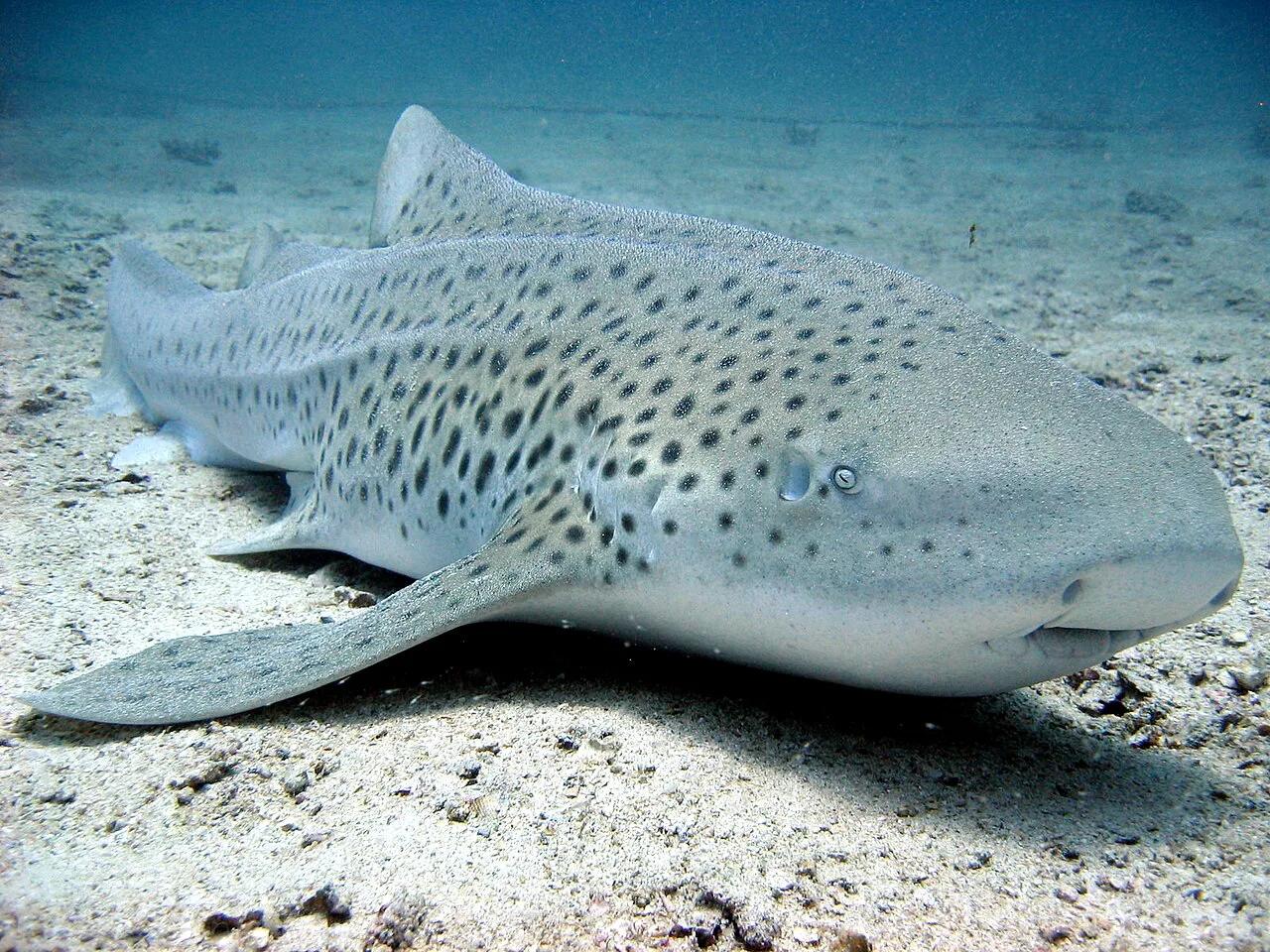
Featured image: Sigmund from Norway, CC BY 2.0, via Wikimedia Commons.
Quick answer: can you see a leopard shark in Thailand?
Yes, on the Andaman (west) coast. Divers report them resting on sand beside reefs at Hin Bida, Hin Klai, Shark Point (Hin Musang), Koh Phi Phi Leh and Koh Racha Yai. Most sightings come on scuba dives, and no operator can promise one.
In Thailand, "leopard shark" means the zebra shark, Stegostoma tigrinum. It is not the California leopard shark, Triakis semifasciata, which is a different species from the Pacific coast of North America. Ignore any page that mixes the two.
Leopard shark vs zebra shark: what you are looking for
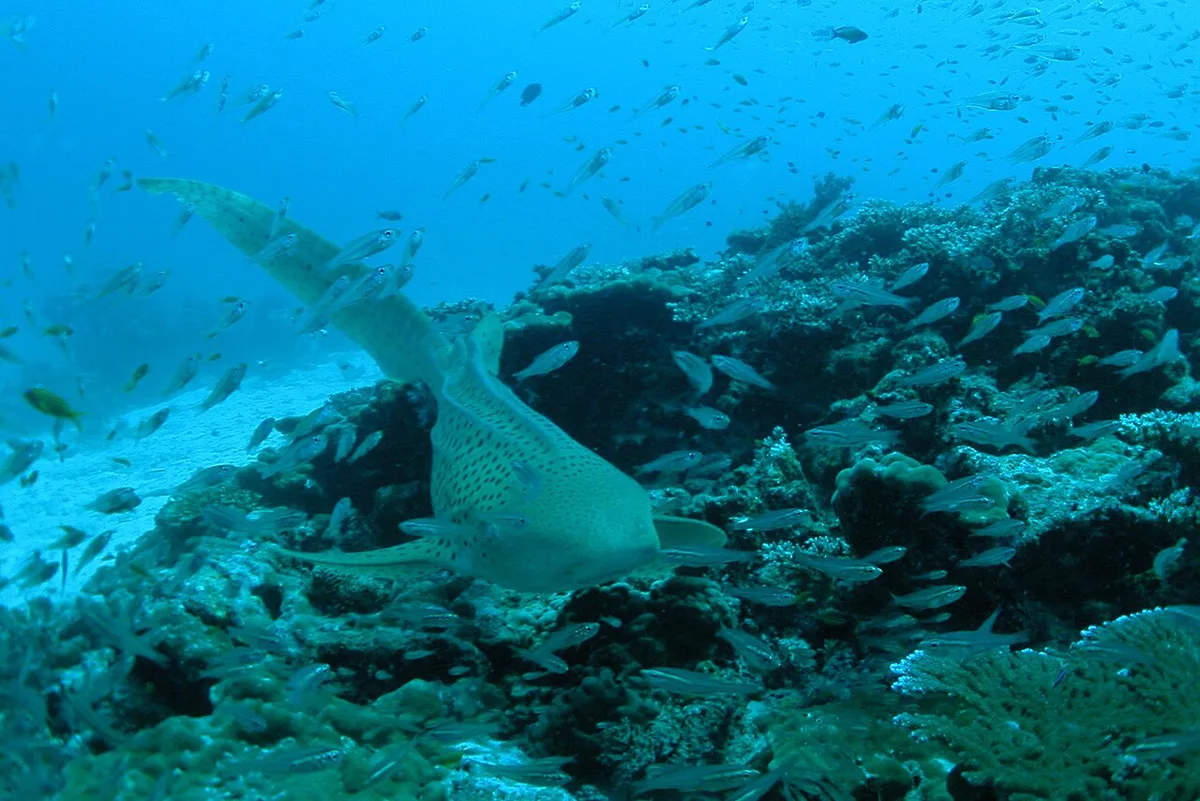
Thai dive centers use "leopard shark" and "zebra shark" for the same animal. The name changes with life stage. Juveniles carry light stripes on a dark body, which fade into spots as the shark grows past roughly 50-90 cm. Adults look leopard-spotted, which explains why the leopard name stuck in Thailand.
Spot the animal by its long, cylindrical body, flattened head and short blunt snout. Its tail is notably long. Adults are reported to reach about 3 m, though that figure varies by source. Individual spot patterns differ enough to identify each adult.
By day these sharks usually rest on the sand, propped on their broad pectoral fins and facing the current. They feed at night on crustaceans, molluscs and small fish. Their calm daytime behavior is why divers can approach them slowly, and why etiquette matters so much.
Best dive sites for leopard sharks
Hin Bida, a submerged reef system east of Phi Phi Leh, is the site most often named for sightings. Shark Point lies roughly halfway between Phi Phi and Phuket and is also visited regularly. Koh Lanta operators add Hin Klai as a likely site, and Koh Bida Nok and Koh Bida Nai as occasional ones.

Read the table as a shortlist, not a forecast. Depth, boat time and conditions change by operator and by day, so ask your dive center for current details.
| Site | Likely base | What reports say |
|---|---|---|
| Hin Bida | Phi Phi, Koh Lanta | Most frequented site for photo-identified sharks |
| Hin Klai | Koh Lanta | Named by Lanta operators as a likely site |
| Shark Point (Hin Musang) | Phuket | Regular sightings; reef system between Phuket and Phi Phi |
| Koh Phi Phi Leh | Phi Phi | Part of the acoustic receiver network |
| Koh Racha Yai | Phuket area dive centers | Part of the acoustic receiver network |
| Koh Bida Nok / Nai | Koh Lanta | Occasional, less likely |
When to go for leopard shark sightings
Andaman liveaboard operators run their main Thailand and Similan trips from mid-October to mid-May. That window also covers the calm-sea months of the dry season. Monsoon weather from roughly May onward closes or limits many sites, although some southern Andaman diving continues through July.
A day trip suits divers based in Phuket, Phi Phi or Koh Lanta. It keeps costs lower than a liveaboard and gives repeat visits to the same reefs. A liveaboard to the Similan or Surin islands costs more but reaches a wider range of sites in one trip. Neither option raises your odds at a specific rock, so choose by budget and time.
For base-town details, read our guides to shark diving from Phuket and Koh Lanta shark sites.
How to book and what to ask a dive operator
Check your certification first. Most Andaman reef dives suit Open Water divers, but the exact depth and current at each site changes the requirement. Ask the operator directly.
Ask these questions before paying:
- Which sites are on the schedule for your dates, and how long is the boat ride?
- What is the maximum group size per guide?
- Does the crew brief divers on leopard shark etiquette?
- Does the boat follow the rule of no touching and no chasing?
- Is the price per dive, per day or per trip, and what does it include?
Snorkelers and non-divers: realistic expectations
Leopard sharks rest on the seabed beside reef edges, usually deeper than a snorkeler can comfortably reach. Expect to see other marine life from the surface instead. A leopard shark is a bonus, not a plan.
If you want a shark encounter without a tank, look at whale shark sightings. Snorkelers and divers can both submit leopard shark photos if they do get one. For a Gulf-side comparison, our page on diving around Koh Tao covers what to expect on the other coast; leopard sharks are an Andaman-side sighting.
Etiquette and mistakes to avoid
Spot the Leopard Shark Thailand lists simple rules. Approach slowly with steady buoyancy. Give the shark space. Never block its head or its swimming path. Do not touch it or chase it. Avoid touching or kneeling on coral. If you must kneel, use sand. Keep photo time short so other divers get a turn.
- Do not pay for any feeding or touching experience.
- Do not expect a guaranteed sighting from any operator.
- Do not crowd a resting shark with a group of divers.
- Do not use flash at close range or follow it for a better angle.
- Avoid operators that ignore these guidelines.
Why leopard sharks are rare: the StAR Project Thailand release
The species is listed as Endangered on the IUCN Red List. Habitat degradation, overfishing and accidental capture in fishing gear have driven steep declines.
Receivers pick up a tagged shark's ID within 500 m, and Hin Bida is one of the reefs where that network sits.
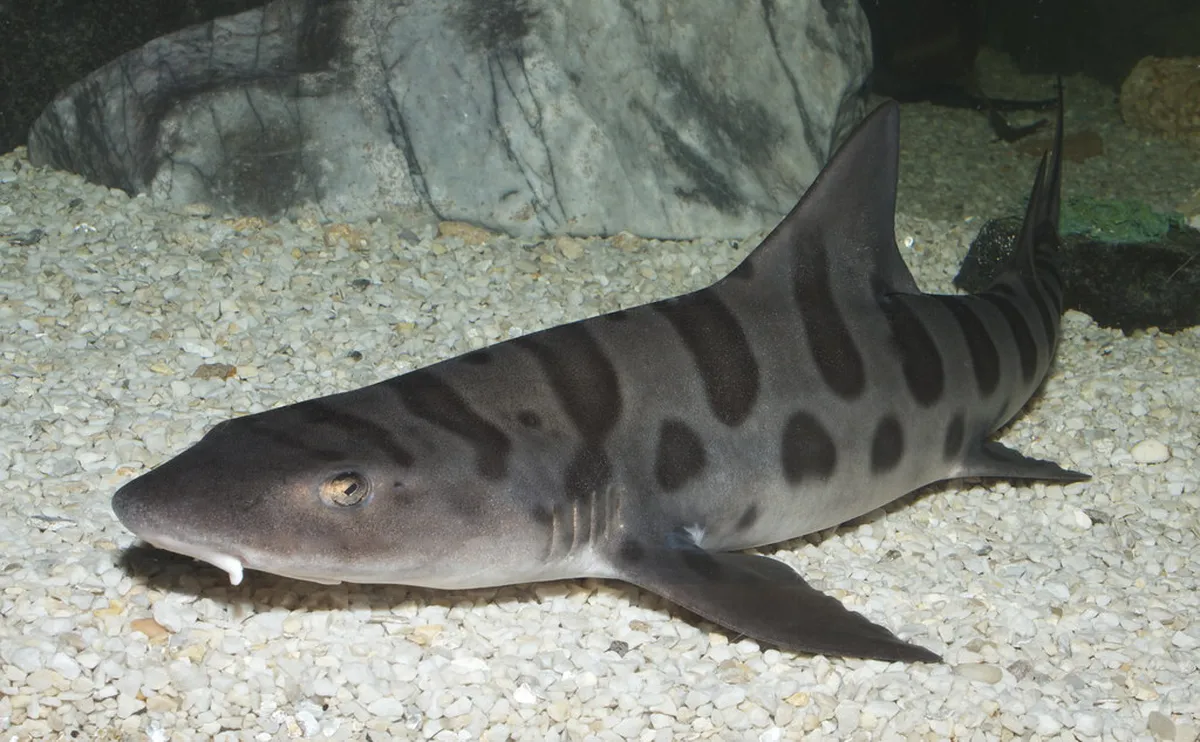
StAR Project Thailand (Stegostoma tigrinum Augmentation and Recovery) is trying to reverse that. On 9 September 2025, three juveniles named Maya, Similan and Ginger were released off Phuket. Aquaria Phuket bred them, and they adapted in a sea pen at Maiton Island before release. Each was about one and a half years old and carried an acoustic tag.
The project placed 20 underwater receivers across Phang Nga Bay. They log a tagged shark's ID within 500 m. The network includes Shark Point, Hin Bida, Bida Nai, Koh Phi Phi Leh and Koh Racha Yai. A population viability analysis is under way, and organisers said another release was being prepared. Partners include the Department of Marine and Coastal Resources and the Department of National Parks. Other species face their own pressures; see our pages on reef sharks and bull shark encounters.
Spot the Leopard Shark: how to contribute a photo
Spot the Leopard Shark launched on Koh Phi Phi in August 2013. Dr Christine Dudgeon and Dr Kongkiat Kitiwattanawong started it as a citizen-science project. It has identified 230 individual sharks on Thailand's west coast, and that count may have grown since.
Each adult's spot pattern differs enough to tell it apart, which is why a clear flank photo matters for the 230 individual sharks already identified.
Photograph the left flank, including the pectoral and dorsal fin area, and the first dorsal fin. Note your name, the date, the site and the depth. Then submit everything through the project's Google Form. Divers should also report any loose or damaged acoustic receivers they see. Your photos help scientists track the released sharks over time. For marine park rules at specific islands, check the Department of National Parks.
Frequently Asked Questions
Does Phuket have sharks?
Yes. Leopard sharks are reported at Shark Point, a reef system roughly halfway between Phuket and Phi Phi. Our guide to sharks around Phuket covers the other species.
Are leopard sharks aggressive?
No. Dive operators describe them as docile, and they spend the day resting on sand. Give them space and never block their path or touch them.
Notes for your next dive trip
Optional updates to our Thai diving guides.
You might also like

Continue reading
More guides you'll find useful