8 Best Koh Tao Diving Sites, Season, Courses and Costs
Plan Koh Tao diving: 8 best sites by level, when to go, course options, cost ranges, safety basics and how to choose a dive center.
On this page
Last updated November 2026: Koh Tao diving suits first-time Open Water students, certified divers after easy fun dives, and the few freedivers whose schools run courses here. This 21 km² island offers 20–30 m visibility and shallow training reefs, but big-animal diving is stronger in the Andaman Sea. We cover eight sites, the season, courses and costs below, then point you to the detail pages.
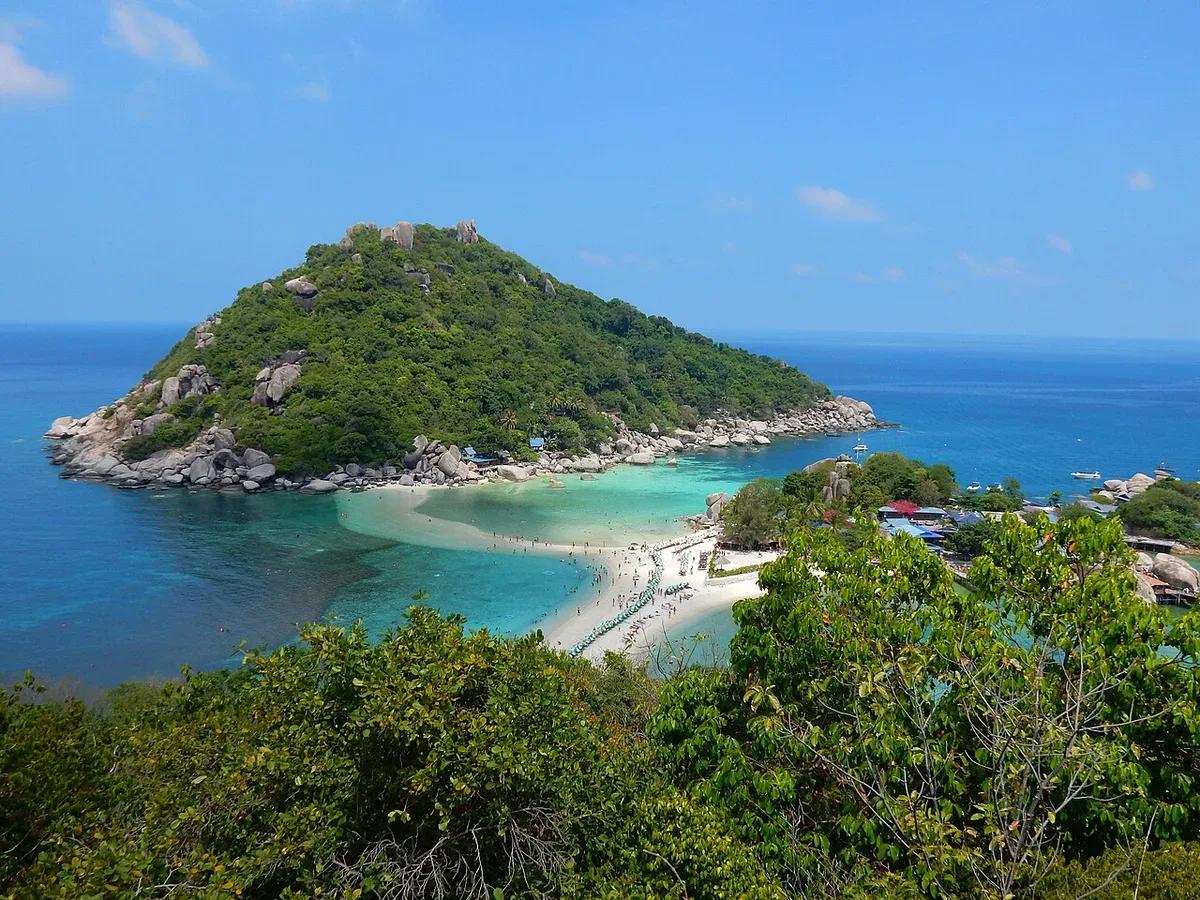
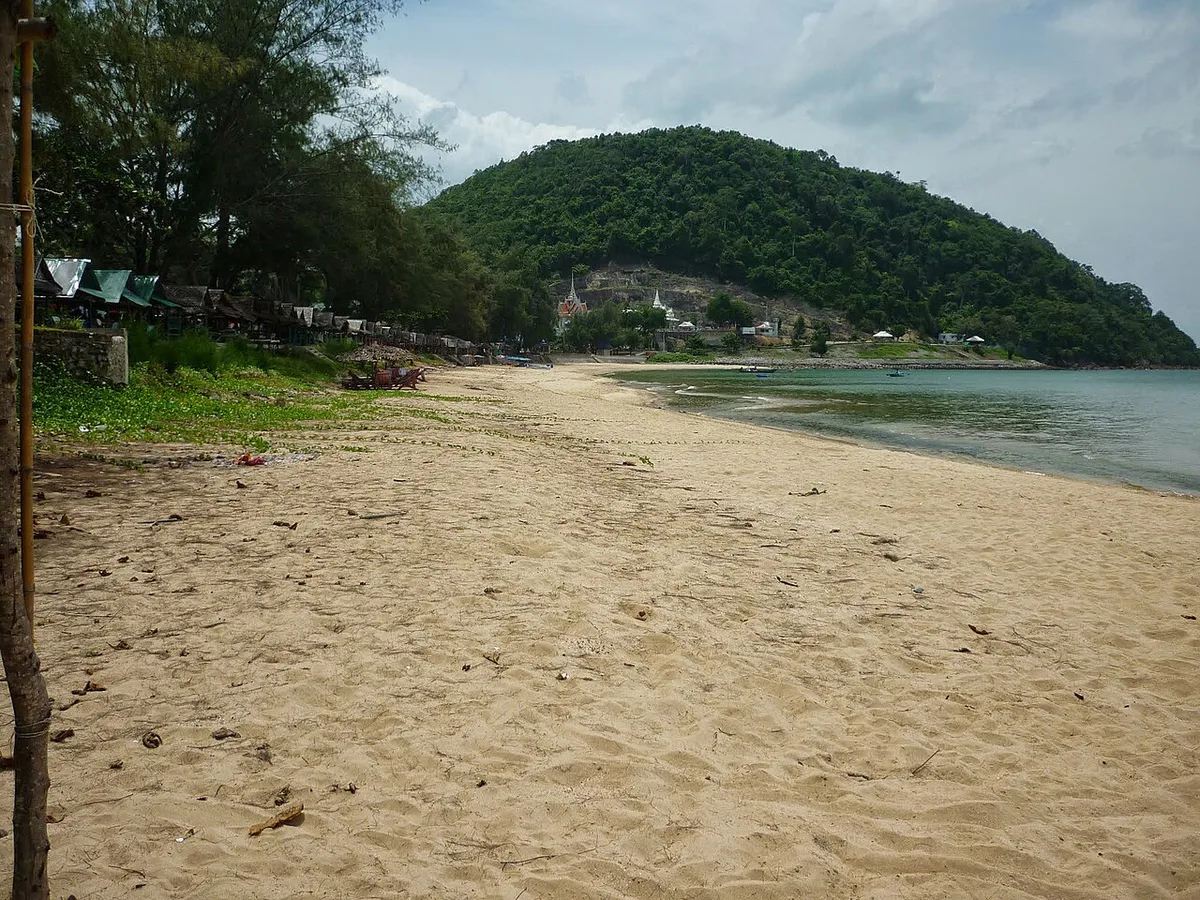
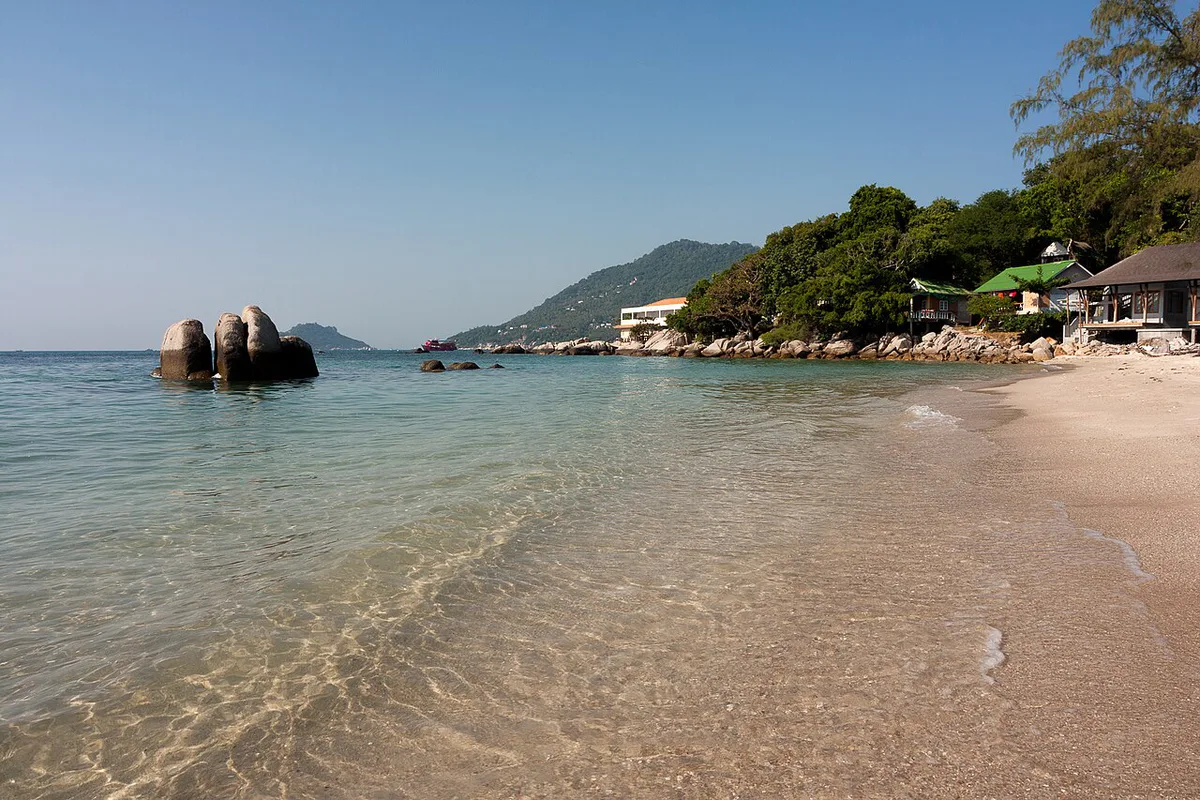
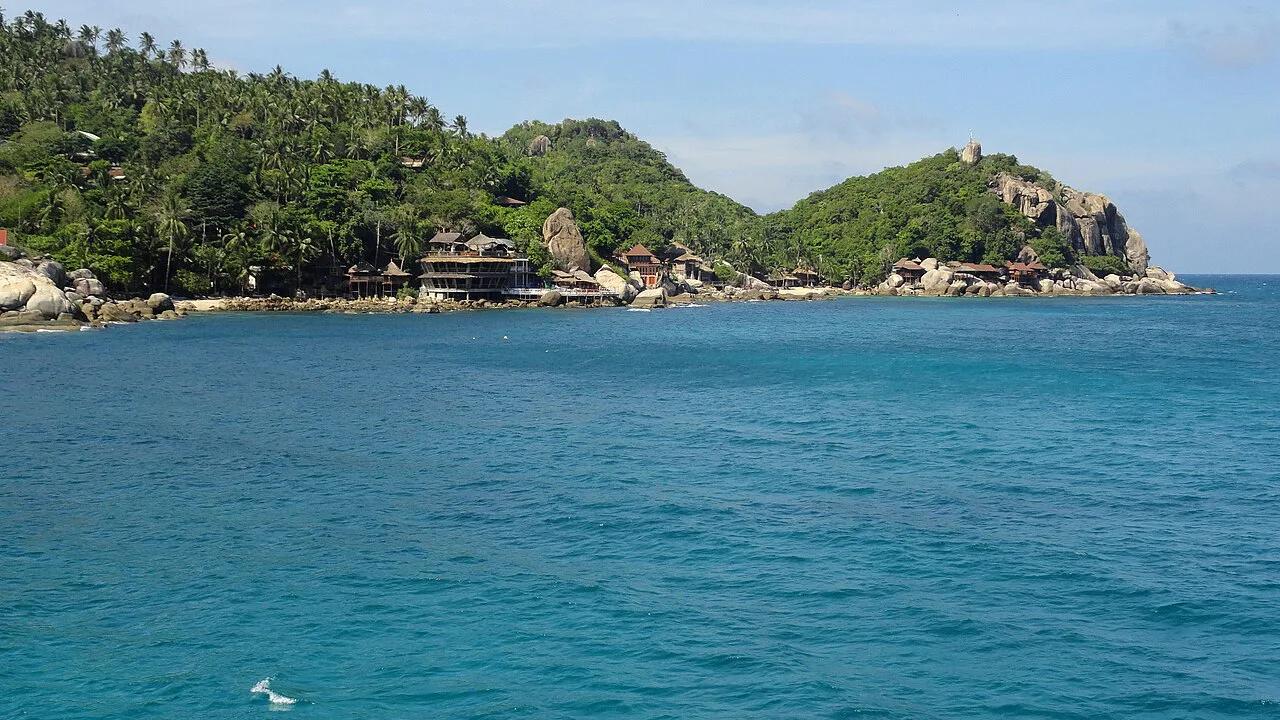
Featured image: Franz Winter at German Wikipedia (Original text: Franz Winter (Benutzer: Franz Winter, eigenes Foto)), CC BY-SA 3.0, via Wikimedia Commons.
Is Koh Tao Good for Diving? Our Quick Answer
Yes, for training and relaxed fun diving. Water sits around 29°C (84°F), and the island's pinnacles, wrecks and shallow reefs cover every certification level. Our judgement is that Koh Tao is a strong school island rather than a big-animal destination. Experienced divers chasing guaranteed large animals should pair it with Andaman Sea sites. Read our full verdict on diving here for the longer answer.
- Best for: Open Water and Advanced courses, easy boat dives, and a mix of pinnacles and wrecks.
- Not best for: guaranteed big animals or demanding advanced diving.
Best Time for Koh Tao Diving
Water stays near 29°C all year, so the season question is really about wind and visibility. Sources disagree on the sweet spot. PADI's island guide points to July to September, with visibility up to 30 m. One local operator names March to September. A third travel guide prefers May to August but flags windy June, with rougher crossings and weaker visibility. October and November are the monsoon months, with heavier rain and rougher seas that ease by December. Conditions vary by year, so treat the table as a planning guide. Our month-by-month dive calendar goes deeper. For warmth, see seasonal water temperatures. Check wind and rain forecasts with the Thai Meteorological Department before you lock in boat days.
| Period | Months | What reports say |
|---|---|---|
| Main season | March to September | Calmer seas; visibility up to 30 m in July to September; June can be windy |
| Monsoon | October to November | Heavier rain, rougher seas, dives depend on daily weather |
| Recovery | December | Conditions improve but still vary day to day |
8 Best Koh Tao Diving Sites by Level
Depths below come from published site guides and shift with mooring and tide. Prices and hours checked November 2026. Dive centers usually announce the next day's sites the evening before, based on weather and course needs. Ask for a specific site and most schools will schedule it if enough divers fill the boat. Shark Island, near Aow Leuk, is a 4–25 m site where current can pick up, so we'd leave it for confident divers.
Open Water certifies you to 18 m, so the wrecks at 20–30 m need Advanced training before you dive them.
| Site | Depth | Best for | Level note |
|---|---|---|---|
| Japanese Gardens | 1–14 m (3–45 ft) | Easy reef, small marine life | Open Water |
| Twins and Buoyancy World | 5–18 m (16–59 ft) and 10–15 m (32–49 ft) | Training and buoyancy practice | Open Water |
| Mango Bay | 2–18 m (6–59 ft) | Training plus fun dive | Open Water |
| Chumphon Pinnacle | 12–35 m (39–114 ft) | Anemones, schooling fish | Top suits Open Water; deeper parts need more training |
| Southwest Pinnacle | 5–30 m (16–98 ft) | Deeper pinnacle diving | Deeper sections suit Advanced |
| HTMS Sattakut and Hin Pee Wee | 20–30 m (65–98 ft) and 8–28 m (26–91 ft) | Wreck diving | Advanced Open Water for Sattakut |
| HTMS Suphairin | 20–30 m (65–98 ft) | Newer wreck, sunk in 2023 | Advanced; wreck certification to penetrate |
| Sail Rock | Up to 40 m (131 ft) | Day trip, barracuda schools | Deep sections; longer boat ride |
1. Japanese Gardens
Japanese Gardens sits just off Koh Nangyuan and runs 1–14 m deep. It earns a spot for beginners because the coral formations are shallow and the small marine life is easy to find. Look at the coral heads and the smaller reef residents rather than expecting big animals.
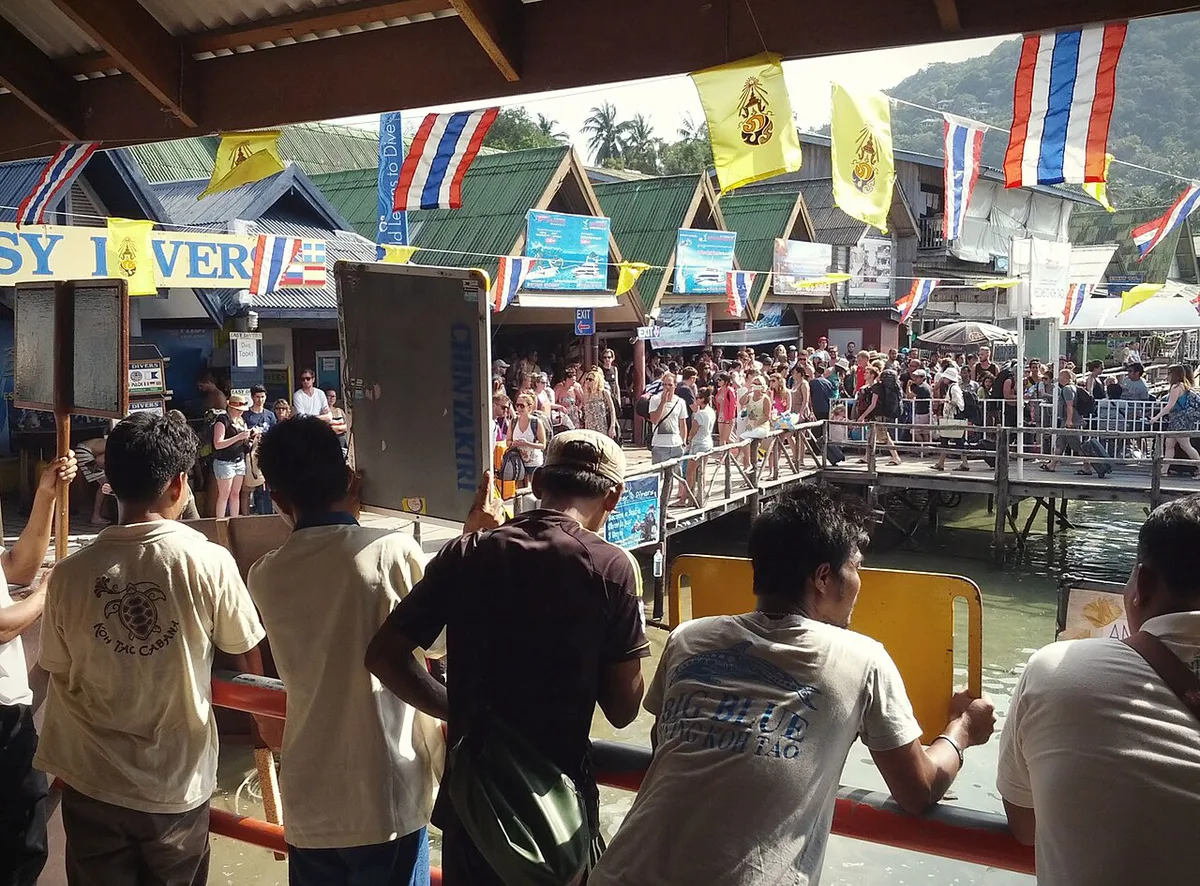
Snorkelers visit too, so the site can feel crowded at busy times. Plan on one boat dive here, ideally early in a trip while you settle your buoyancy. Skip it if you want current, big schools or depth, and pair it with a pinnacle on another day.
2. Twins and Buoyancy World
Twins is a shallow site of 5–18 m built around two main rock formations, and schools use it constantly for training. It is prettier than its training-ground reputation suggests, with coral, blue-spotted stingrays, moray eels and gobies. Next door, Buoyancy World runs 10–15 m and has concrete structures made for buoyancy practice and line work.
We'd send newly certified divers here to sharpen trim before heading deeper. Both spots are popular, so expect other training groups on the same reef. Skip them if you have logged plenty of dives and want something new.
3. Mango Bay
Mango Bay mixes training and fun diving at 2–18 m. Artificial reef cubes are useful for laying lines and practicing buoyancy. Coral heads and a decent range of sea life keep it interesting for certified divers too.
The bay itself makes a pleasant backdrop for your surface interval. It suits Open Water students and rusty divers coming back after a break. Skip it if you want pinnacle drama or schooling fish in numbers.
4. Chumphon Pinnacle
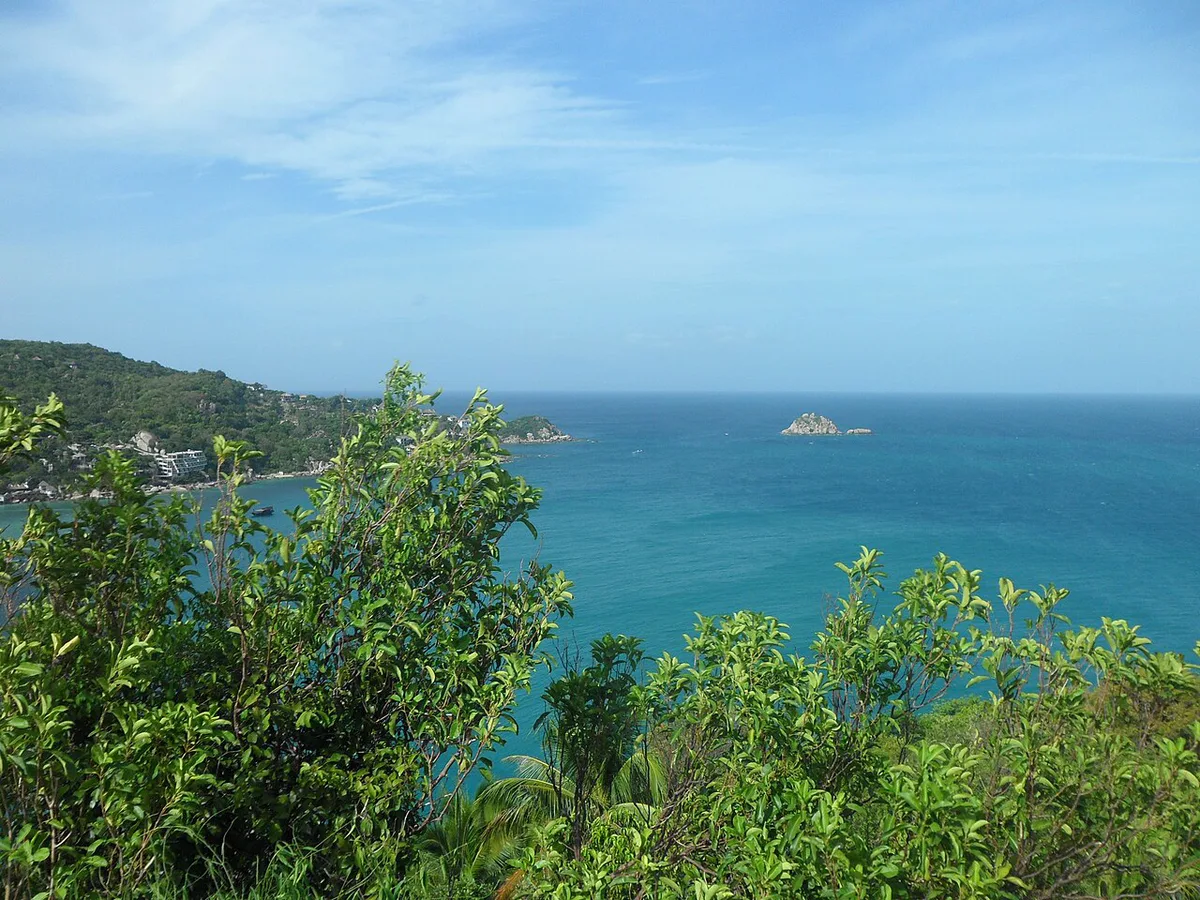
Chumphon Pinnacle ranges from 12 to 35 m and is one of the island's best-known sites. Granite towers are covered in anemones, and chevron barracuda, yellow snapper and big-eyed trevally gather around them. There is plenty to see on top of the pinnacle, so less experienced divers can stay shallow and still enjoy it.
Deeper sections suit deep-dive training. PADI notes that whale sharks sometimes cruise the deeper pinnacles, but treat that as luck rather than a plan. Skip the lower sections if you are not trained for depth, and stay on the top.
5. Southwest Pinnacle
Southwest Pinnacle lies about 10 km from Koh Tao and runs 5–30 m. It is a good choice for deeper dives with big schools of trevally and barracuda around the rock. A nearby Secret Pinnacle is worth a detour for more schooling fish.
Because of the distance, expect a longer boat ride than for the reefs near Sairee. Book it as a fun-dive day with a few dives in the same area. Skip it if you are newly certified and want shallow, sheltered water.
6. HTMS Sattakut and Hin Pee Wee
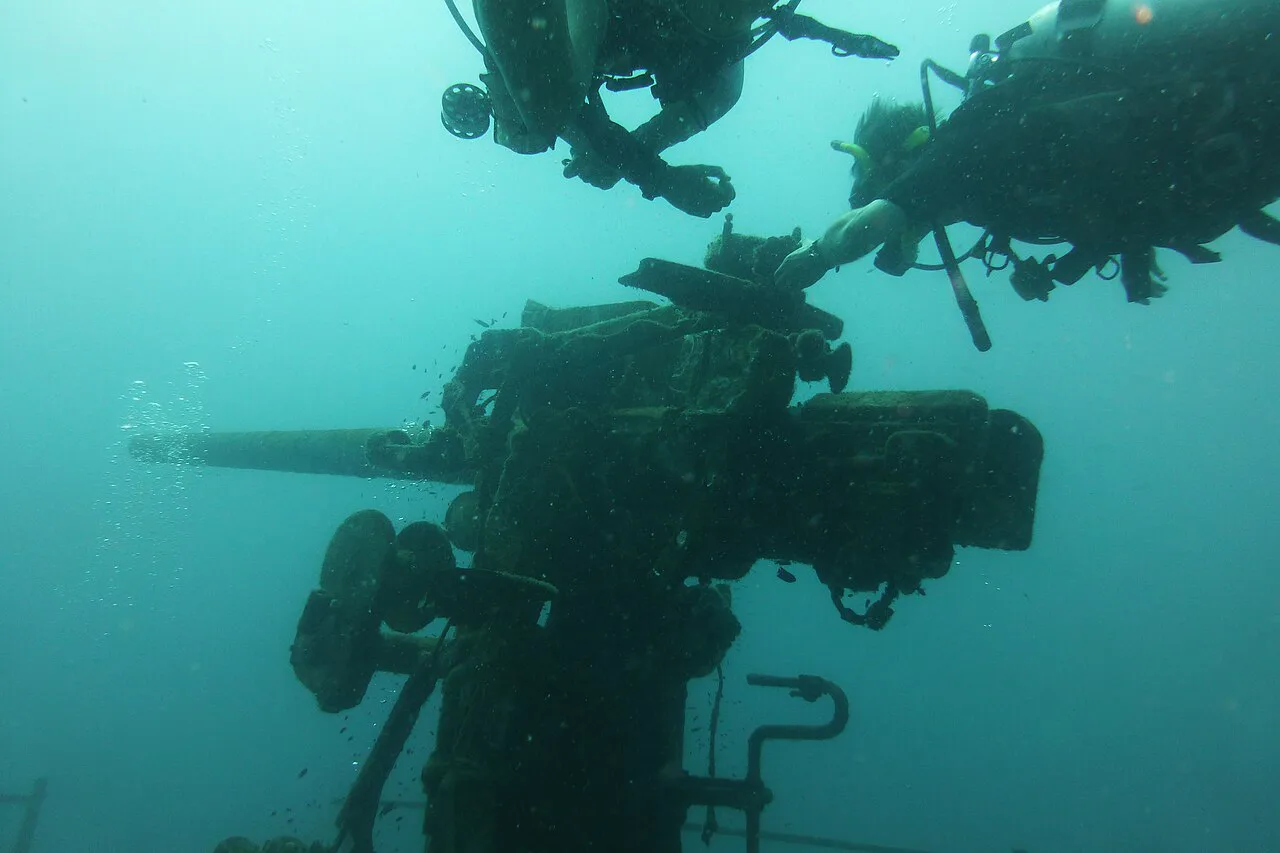
HTMS Sattakut is an old battleship that was sunk on purpose, which makes it less eerie than many wrecks. The deck sits at 20–30 m, so you need at least Advanced Open Water to dive it. Look for swim-throughs and two cannons, and note that schools also use it for wreck specialty and technical training.
Hin Pee Wee, at 8–28 m, sits next to it and lets you stay longer once you reach your no-decompression limit at the wreck. Visibility is not always the greatest here. Skip it if you hold only Open Water, and come back after an advanced course.
7. HTMS Suphairin
HTMS Suphairin is a Royal Thai Navy vessel that was purposely sunk in 2023. It rests close to No Name at 20–30 m, so it is an Advanced Open Water dive. Even without penetrating, you can see guns, the wheelhouse and fish activity around the hull.
Penetration requires wreck certification. Reports describe better visibility and busier fish life here than at Sattakut, though conditions change by day. Skip it if you are not wreck-curious or hold only Open Water.
8. Sail Rock
Sail Rock is the island's classic day trip and reaches 40 m. Boats take about 1.5 hours to get there from Koh Tao, so trips cost more than a standard boat dive because of fuel. Most trips offer 2–3 dives and include breakfast and lunch.
Expect huge schools of barracuda and a chimney to swim through. Whale sharks are possible but never guaranteed. Skip it if you are short on time or prone to seasickness, since you can also reach Sail Rock on a shorter run from Koh Samui.
Marine Life: What You Can Realistically See
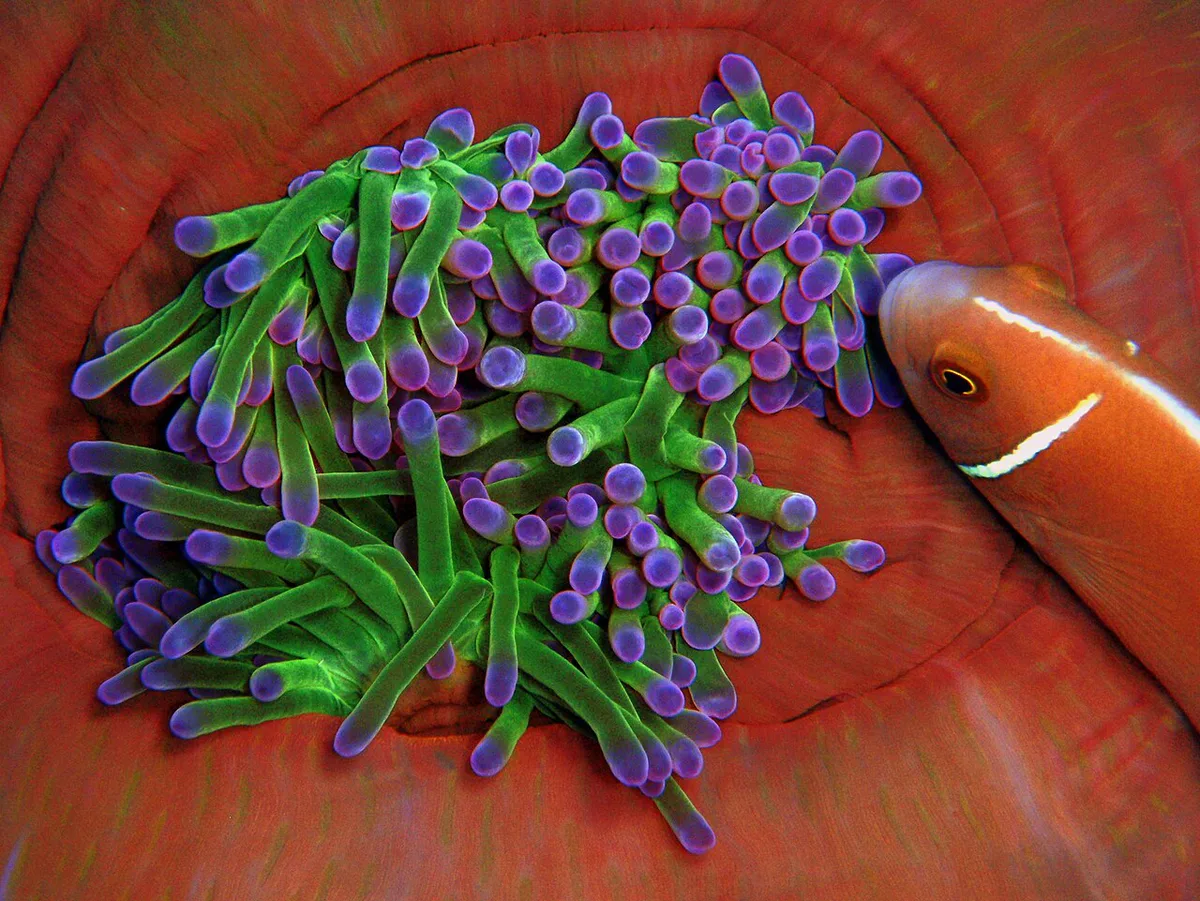
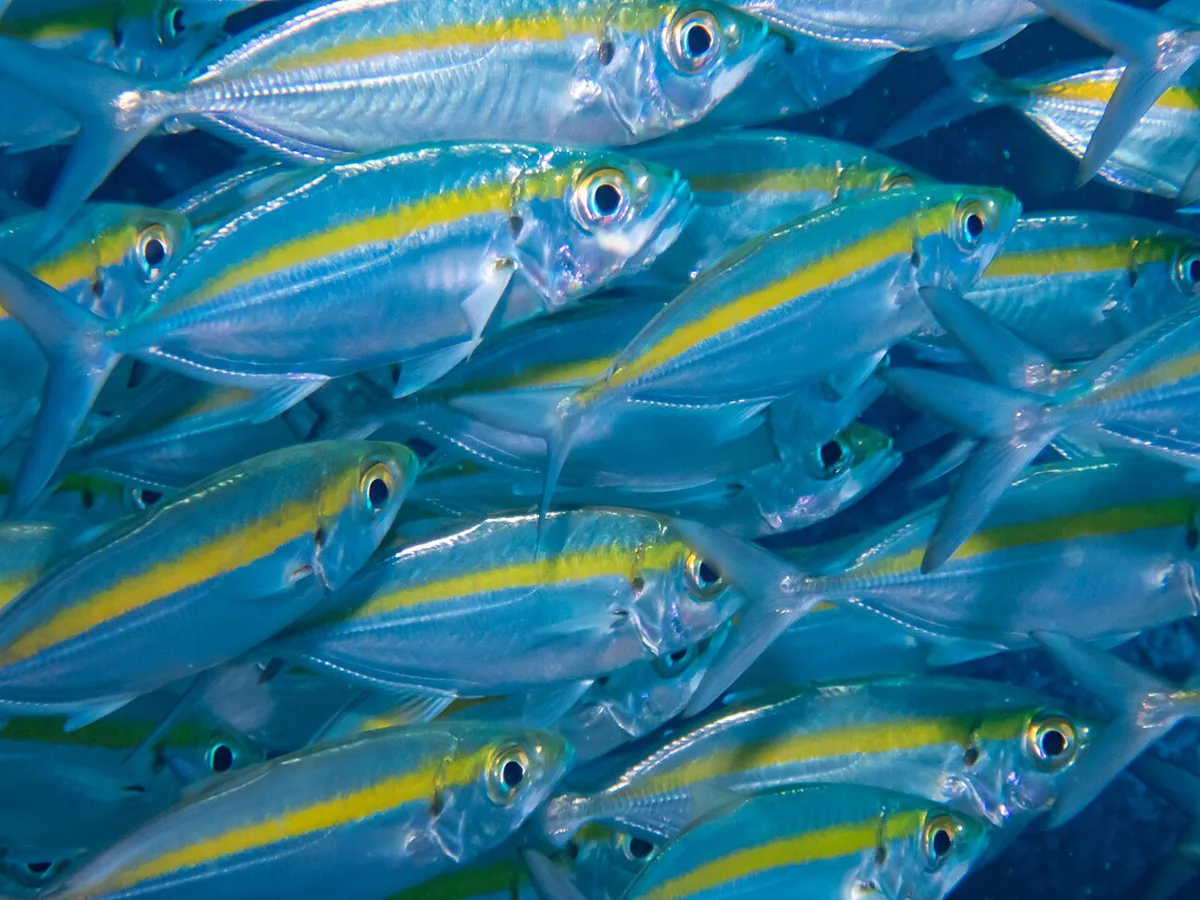
Reef fish and schooling fish are the reliable draw. Chevron barracuda, yellow snapper and big-eyed trevally circle the pinnacles. Stingrays and groupers patrol deeper water, and hawksbill and green turtles turn up too. Blacktip reef sharks glide through shallows near shore, according to PADI's island guide. Macro fans can look for nudibranchs and shrimp in crevices and on artificial reefs. Whale sharks are the wildcard. PADI says April and May are most common, while another guide says summer, so sightings are occasional and not guaranteed. Our marine life guide lists species by site. For timing, see whale shark sighting notes.
Koh Tao Diving Courses: Which One First?
Pick by how much time you have. Try Scuba is one day with two dives, listed at 3,800 THB by one SSI operator. Open Water takes three days with five dives and costs 11,900 THB there, and it certifies you to 18 m. Advanced Open Water is two days with five dives at 10,900 THB. Upgrading after Try Scuba costs 8,100 THB extra at the same operator, for 11,900 THB combined. Those are one shop's rates, not island-wide prices. SSI describes the entry certification on its Open Water Diver page.
| Course | Time | Dives | One operator's rate |
|---|---|---|---|
| Try Scuba | 1 day | 2 | 3,800 THB |
| Open Water Diver | 3 days | 5 | 11,900 THB |
| Advanced Open Water | 2 days | 5 | 10,900 THB |
- One day and no commitment: start with Try Scuba.
- Three days and you want a card: take Open Water.
- Already certified and eyeing wrecks like Sattakut: take Advanced Open Water.
- Want Nitrox, wreck, night or technical training: ask schools for specialty and technical programs.
- Freediving: a few schools teach it, so ask which agency certifies the course.
How to Choose a Dive Center
Dozens of centers operate here, mostly along Sairee's Walking Street, in Mae Haad and around Chalok Baan Kao. Location matters because schools avoid long boat rides, and tide can limit longtail boats at some beaches. Many divers arrange everything after arriving so they can meet instructors and see the gear. In peak season, message ahead instead. One Sairee Beach operator caps groups at 4 divers, so ask every school for its own limit. We don't rank operators. Start with dive resort comparisons if you want to bundle stay and dives.
- Group size: ask for the maximum per instructor or guide.
- Boat access: does the school run its own boat?
- Language: confirm the instructor teaches in yours.
- Instructor continuity: will one instructor stay with you through the course?
- Equipment: look at regulators and BCDs before paying.
- Insurance and cancellation: one operator allows free rescheduling with 24 hours' notice, so ask for written terms.
- Red flags: vague answers on group size, no clear cancellation terms, or pressure to pay before you have seen the gear.
Koh Tao Diving Costs: What to Budget
Use the operator figures above as a reference band: 3,800 THB for Try Scuba, 10,900 THB for Advanced and 11,900 THB for Open Water. Rates at other schools differ, so compare what each includes. Sail Rock trips cost more than a standard boat dive because of fuel for the 1.5-hour run, and they usually add breakfast and lunch. We have no verified island-wide fun-dive rate, so read the price board at each shop. Ask about equipment rental, certification fees and insurance before paying a deposit. Our diving price breakdown goes line by line.
Budget about 300 THB for a taxi to Sairee or Chalok Baan Kao on top of course fees, since taxis are expensive.
Night Dives, Sail Rock and Liveaboards
Night dives often use White Rock, Green Rock and Red Rock, three fun sites with swim-throughs and small reef life. White Rock runs 2–22 m, Green Rock 5–25 m and Red Rock 5–20 m. PADI describes its course on the Night Diver page. Our night dive planning guide covers sites and what to expect. Sail Rock trips need a full day. Liveaboards extend your range beyond day boats, and liveaboard options are worth a look if you want more dives per trip.
Safety, Insurance and Flying After Diving
Wait at least 18–24 hours after your last dive before boarding a flight, according to one dive operator's FAQ. Divers Alert Network publishes current guidance, so confirm it there. That same operator's included accident cover pays up to 1,000,000 THB for death or permanent disability. It also pays up to 500,000 THB per person per accident in medical costs, including hyperbaric chamber treatment. Evacuation is excluded, and patients pay upfront and are reimbursed in 2–3 weeks. Comprehensive dive insurance closes those gaps. Read chamber information for divers before you arrive.
Mistakes to Avoid
Avoid these four planning errors.
- Booking June without checking weather: wind can make crossings and dives rougher.
- Assuming whale sharks are guaranteed: sightings are occasional.
- Skipping insurance checks: basic operator cover can exclude evacuation.
- Flying too soon: leave at least 18–24 hours after your last dive.
Getting There, Getting Around and Where to Stay
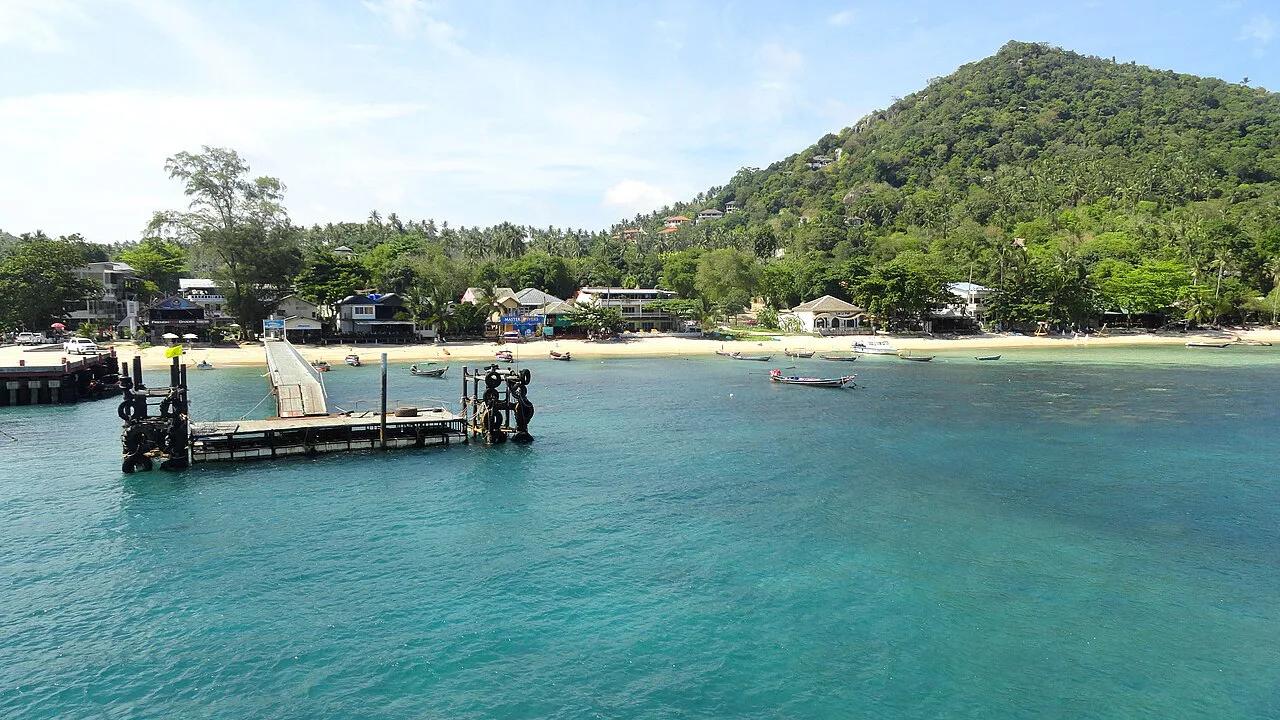
All boats dock at Mae Haad pier, where a 20 THB fee is paid on arrival. Lomprayah's high-speed catamaran runs from Koh Samui in under an hour. A six-hour sleeper ferry runs from Chumphon. Flights land at Chumphon (CJM) or Samui (USM) airports. Taxis are expensive, with about 300 THB to Sairee or Chalok Baan Kao, so ask your hotel or dive center about a transfer. Just two miles wide and five miles long, the island suits motorbikes. Stay close to your dive center unless you are happy on a scooter. Still choosing islands? See Koh Tao versus Koh Phangan. Ferry fees and times change, so confirm them with the operator.
Frequently Asked Questions
Why is Koh Tao famous for diving?
Easy conditions, shallow training sites and a large number of dive schools drive its reputation. Water near 29°C and 20–30 m visibility keep courses comfortable. Wrecks and pinnacles give certified divers somewhere to progress.
Are there big sharks in Koh Tao?
Not reliably. Blacktip reef sharks glide through shallows near shore, and whale sharks are occasional and not guaranteed. Shark Island is named for its fin-shaped outline, not a shark population.
Explore More Koh Tao Guides
Keep planning your Koh Tao trip with these guides.
Koh Tao Guides
- Koh Tao Diving Prices
- Best Time to Dive Koh Tao: Month-by-Month Guide
- Koh Tao Water Temperature by Month
- Koh Tao Whale Shark: Where, When & Your Real Chances
- Koh Tao Night Dive: Cost, Course & What to Expect
- Koh Tao Liveaboard: Options, Alternatives & When to Go
- Is Koh Tao Good for Diving? Honest Guide for 2026
- Koh Tao vs Koh Phangan: Which Island Should You Pick?
- Hyperbaric Chamber Koh Tao: Emergency Contacts & Dive Safety Guide
- Koh Tao Marine Life: What You'll See, Where and When
- Koh Tao Dive Resort Guide
Notes for your next dive trip
Optional updates to our Thai diving guides.
You might also like
Continue reading
More guides you'll find useful