Sea Urchins in Thailand: Species, Spots, Safety
Which sea urchins live in Thai waters, where snorkelers meet them, which ones sting, and what to do if you step on one.
On this page
Last updated November 2026. Sea urchin Thailand encounters are routine on reef edges and rocky shallows, and most end with nothing worse than a close look. A few species can sting or spike painfully, so the working rule is to look without touching and to wear footwear on rocky entries.
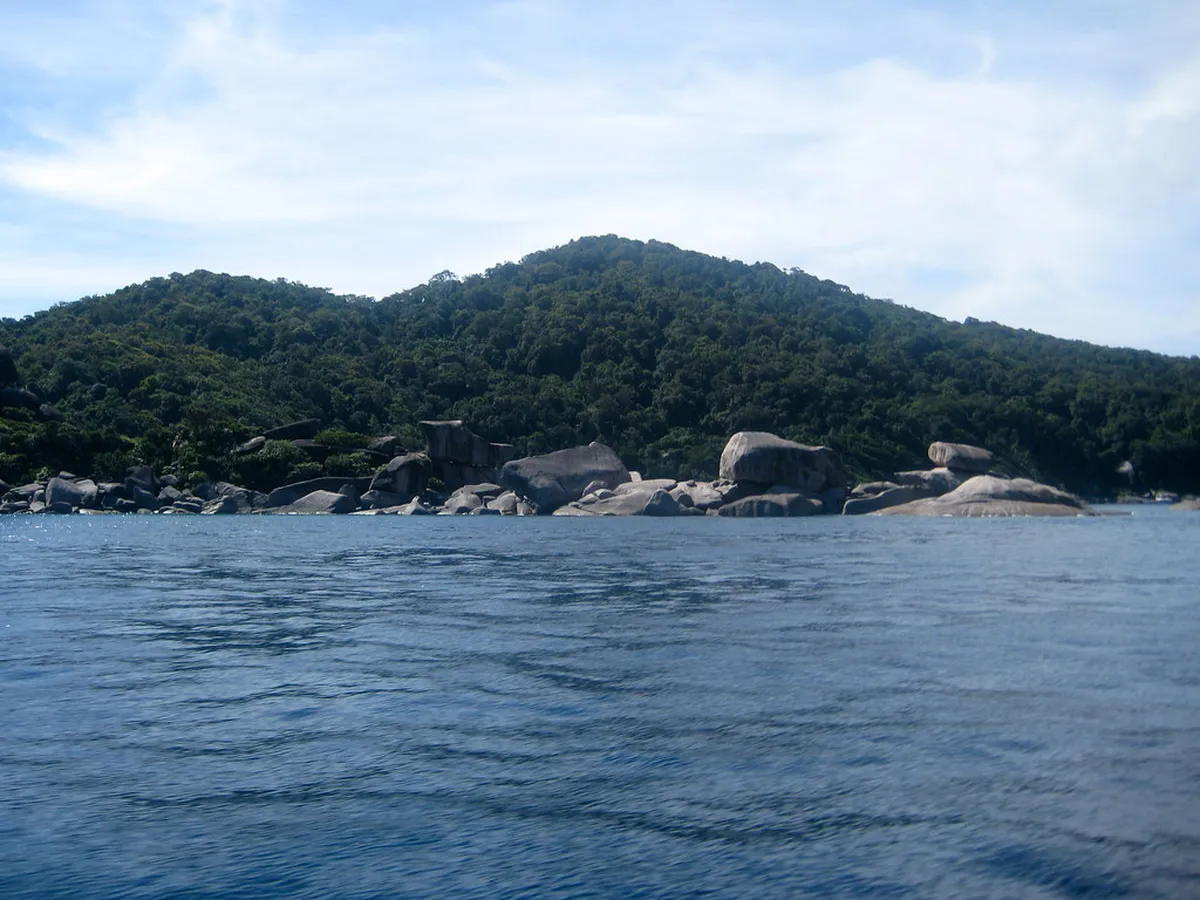
Featured image: Kane Sandoval, CC BY 4.0, via Wikimedia Commons.
Sea urchins in Thailand: the quick answer
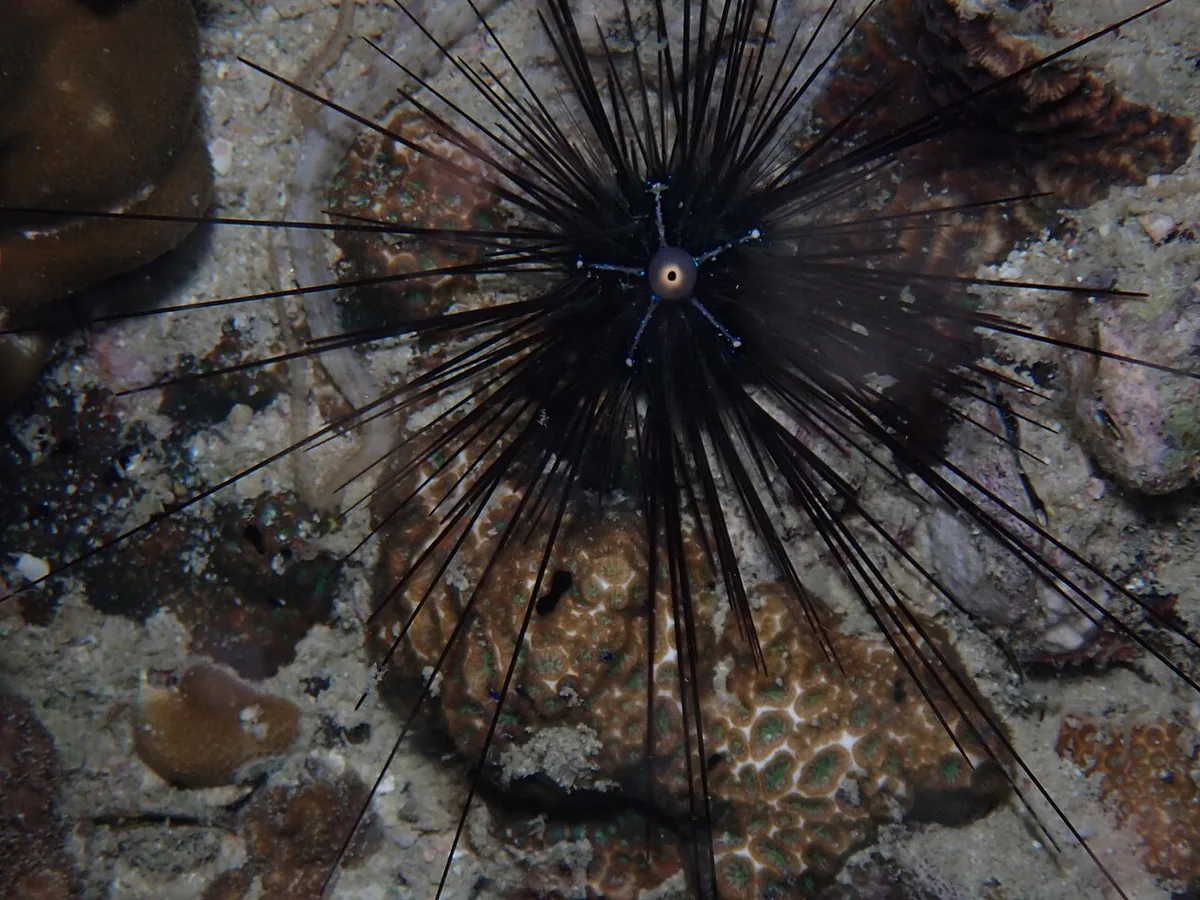
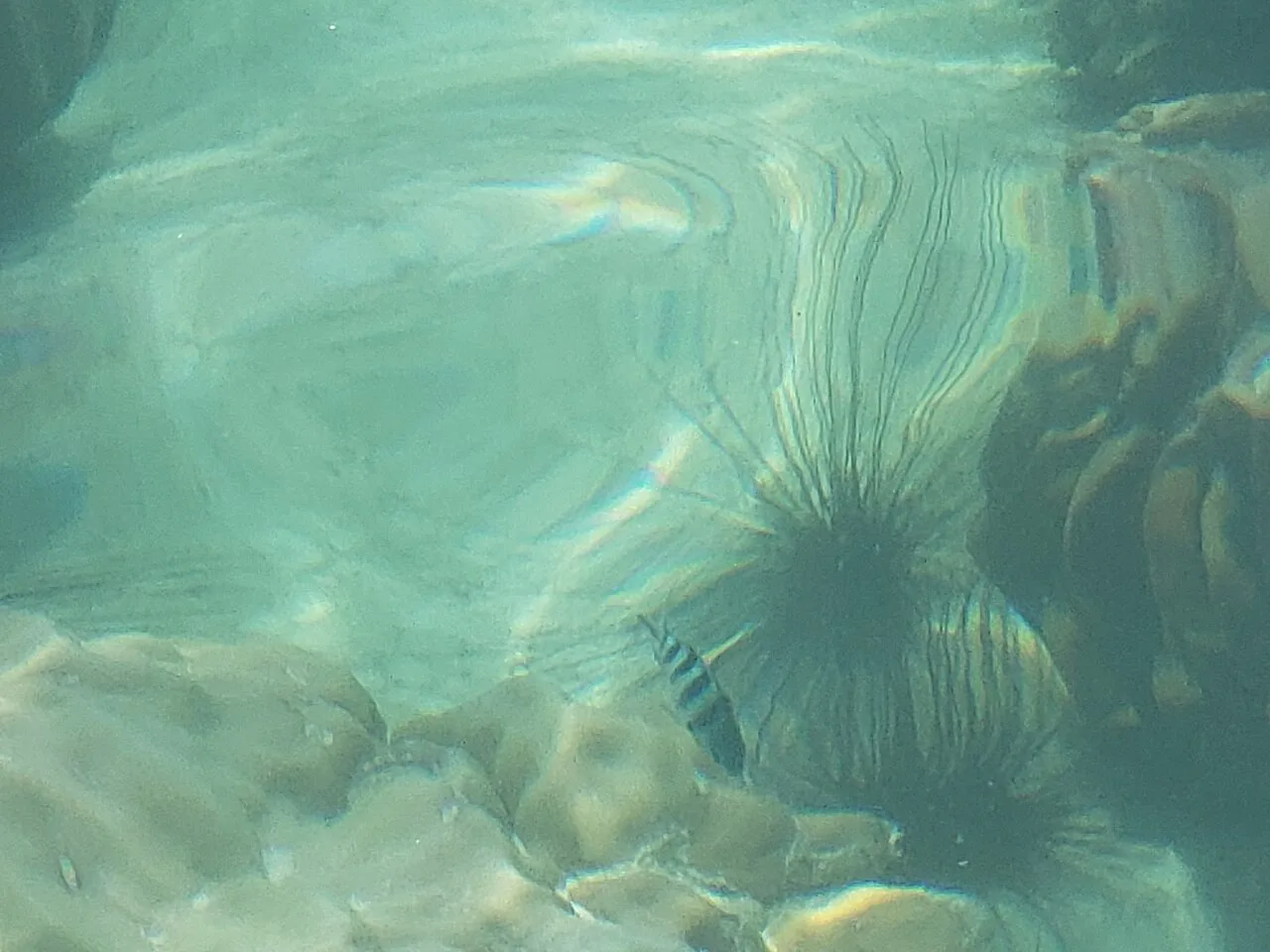
Sea urchins are echinoderms, relatives of sea stars and sea cucumbers. They move on tube feet and carry movable spines on a rounded shell called a test. Black, long-spined Diadema urchins are common on Thai reefs and rocky shallows, including around Koh Tao, Koh Phi Phi and Phuket's beaches. They rarely attack anything. Injuries happen when a swimmer stands on one, brushes one with a hand, or gets pushed onto one by surge. For the wider cast of reef animals, start with our Thailand marine life guide. Everything below is about avoiding the few bad moments.
Sea urchin species you may see in Thai waters
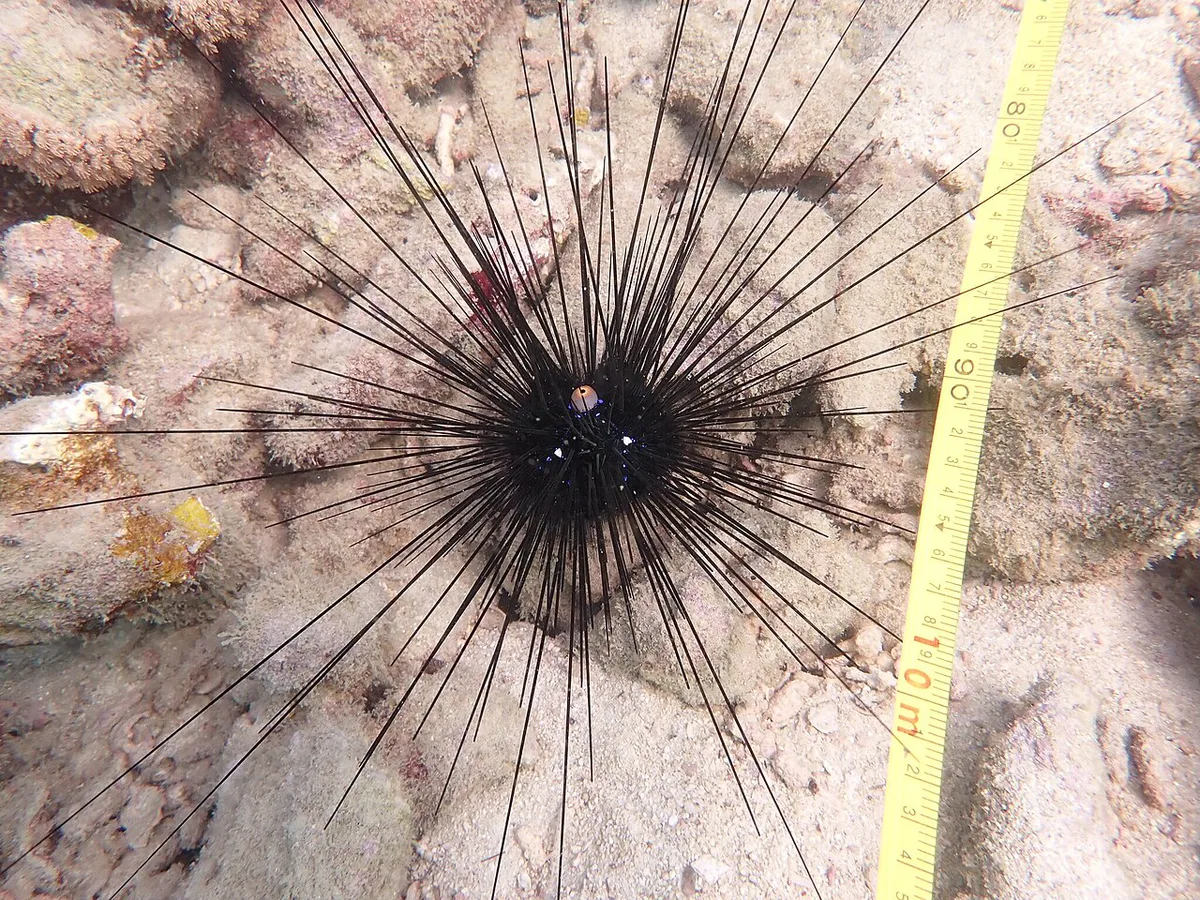
More than 900 urchin species live in the world's seas. Only a handful matter for a Thai snorkeling trip. The long-spined group has 3 species across tropical seas, with spines that can reach almost 30 cm. The Indo-Pacific long-spined urchin, Diadema setosum, is the black one most visitors meet. Other Indo-Pacific species are listed below for identification. Their presence at any given Thai beach is not established, so ask a local dive or snorkel operator what lives at your entry point.
| Urchin | What it looks like | Thai presence | Risk | Rule of thumb |
|---|---|---|---|---|
| Indo-Pacific long-spined urchin (Diadema setosum) | Small black test, very long thin spines | Common on Thai reefs and rocky shallows | High for step-on injuries | Never stand near one; keep fins clear |
| Double-spined urchin (Echinothrix calamaris) | Mixed long and short spines, banded look | Indo-Pacific species; local presence unconfirmed | Moderate to high | Treat like Diadema |
| Fire urchin (Astropyga radiata) | Long spines with bright pigment between them | Indo-Pacific species; local presence unconfirmed | Venom reported | Do not touch |
| Flower urchin (Toxopneustes pileolus) | Tube feet cover the body and mask the spines | Indo-Pacific species; local presence unconfirmed | Venom can cause serious reactions | Never handle, even if it looks soft |
| Collector urchin (Tripneustes gratilla) | Covers itself with shell and coral fragments | Indo-Pacific species; local presence unconfirmed | Venom reported | Do not pick up |
| Red pencil urchin (Heterocentrotus mamillatus) | Thick, rounded, blunt spines | Indo-Pacific species; local presence unconfirmed | Lower | Still look only |
Where snorkelers and divers meet them
Urchins turn up almost anywhere with hard bottom, including tidal pools and very shallow depths. Rocky shore entries and coral-rubble flats carry the most step-on risk. Sandy beach entries carry less, though urchins still sit on small rocks and reef edges just offshore. The Andaman Sea coast and the Gulf of Thailand islands both have reef and rock, so neither side is urchin-free. Koh Tao, Koh Phi Phi and Phuket's beaches are places where Diadema are regularly reported. Check the entry type before you commit to bare feet. Fringing reef flats behind a beach are the classic trap, because the water looks standable at low tide.
When to go: season, swell and tide effects on risk
Urchin numbers do not swing much by month, but your exposure does. Low tide exposes rocks and shrinks the depth over reef flats, so a casual stand-up becomes a stand-up on a spine. Swell and surge push swimmers sideways into the bottom. Calm, clear water lets you see where you are and hold a horizontal position. Monsoon timing differs between the Andaman coast and the Gulf. Check seasonal closures and sea conditions with the Department of National Parks before planning a marine park day.
How to avoid stings and spines
Most prevention is about where your feet and hands go. Use this checklist at every entry.
Spines on the long-spined group can reach almost 30 cm, so a stand-up in knee-deep water carries more risk than it looks.
- Wear reef shoes or fins with sturdy soles on rocky or rubble entries.
- Scan the bottom before each step and walk in only where it is sand.
- Float horizontally and kick above the reef; do not stand up in shallow water.
- Fix your buoyancy before drifting over reef edges, since novices are the likeliest to touch down.
- Avoid low tide on reef flats and skip entries in heavy surge.
- Carry a light for any dusk swim so urchins stay visible.
Mistakes that lead to spiked feet
Picking one up for a photo is the classic error. Standing on the reef to adjust a mask is the next. Chasing a shot in knee-deep water puts hands and knees onto the bottom. Night swimming without a light removes your chance to spot the black spines at all. Collecting shells or urchins is also a conduct problem, and the Department of Marine and Coastal Resources is the body to ask about rules on marine life. Urchins are only one hazard in the shallows. A buried stonefish is another. A lionfish has venomous spines too. Stinging drifters include the box jellyfish, and the wider jellyfish picture varies by season.
What to do if you are spiked
Get out of the water and stay calm. Spines can break off in the skin and remain there for a while. Long-spined stings are painful, and pain often settles within hours. Do not dig deeply with improvised tools. Seek medical care for severe pain, swelling, signs of infection, breathing trouble, or spines near a joint. The Divers Alert Network publishes diver-focused first-aid and emergency guidance. Island clinics can be limited, so ask your accommodation where the nearest clinic or hospital is before an injury happens. Tell staff you were spiked by an urchin so they can assess it properly.
Guided trip or DIY
A guided boat trip gives you identification help and a chosen entry point, often off a sandy patch or from a ladder. DIY beach snorkeling costs less and offers freedom, but you manage tide, footwear and entry yourself. Beginners benefit most from a guide who will point out Diadema before you drift into them. Experienced swimmers can go solo if they read the shore first and carry reef shoes. Ask operators about current conditions and prices directly, since rates change.
More than 900 urchin species exist, so beginners who want to know which few matter should book a guided trip.
Sea urchins as food and in the ecosystem
Urchins graze algae, which helps keep reef surfaces open for coral growth. Their mouths sit on the underside of the body. Fish such as the parrotfish do similar grazing work. Eating urchin roe is a tradition in several countries, but local Thai availability is not covered by our sources, so ask a trusted local restaurant rather than assuming. Never collect wild urchins yourself. Other reef residents are easier to enjoy: try the clownfish in anemones. Slow swimmers can spot a nudibranch on rock. A giant clam rewards a calm drift. Species status can be checked on the IUCN Red List.
Frequently Asked Questions
Are flower sea urchins venomous?
Yes, the flower urchin is listed among tropical species whose venom can cause serious reactions. Its tube feet often cover the whole body and hide the spines, so it can look soft. Never handle one.
What are the different types of sea urchins?
More than 900 species exist worldwide. They range from long-spined black Diadema to thick-spined pencil urchins and camouflaged collector urchins. Our species table covers the Indo-Pacific types relevant to Thailand.
What's inside a sea urchin?
A sea urchin has a rounded shell called a test, covered in movable spines and tube feet. Tiny pincer-like organs called pedicellariae sit among the spines. Its mouth is on the underside of the body.
Notes for your next dive trip
Optional updates to our Thai diving guides.
You might also like

Continue reading
More guides you'll find useful