Giant Clams in Thailand: Species, Where to Look & Reef Rules
Which giant clams live in Thailand's reefs, how to spot them while snorkeling or diving, and how to see them without harming them.
On this page
Last updated November 2026: spotting a giant clam in Thailand is realistic, but expect smaller Tridacna species rather than the meter-wide Tridacna gigas. Thai reef photo archives list the scaly giant clam and a boring clam. Below you will find how to tell them apart, how to search shallow reefs, and how to behave once you find one.
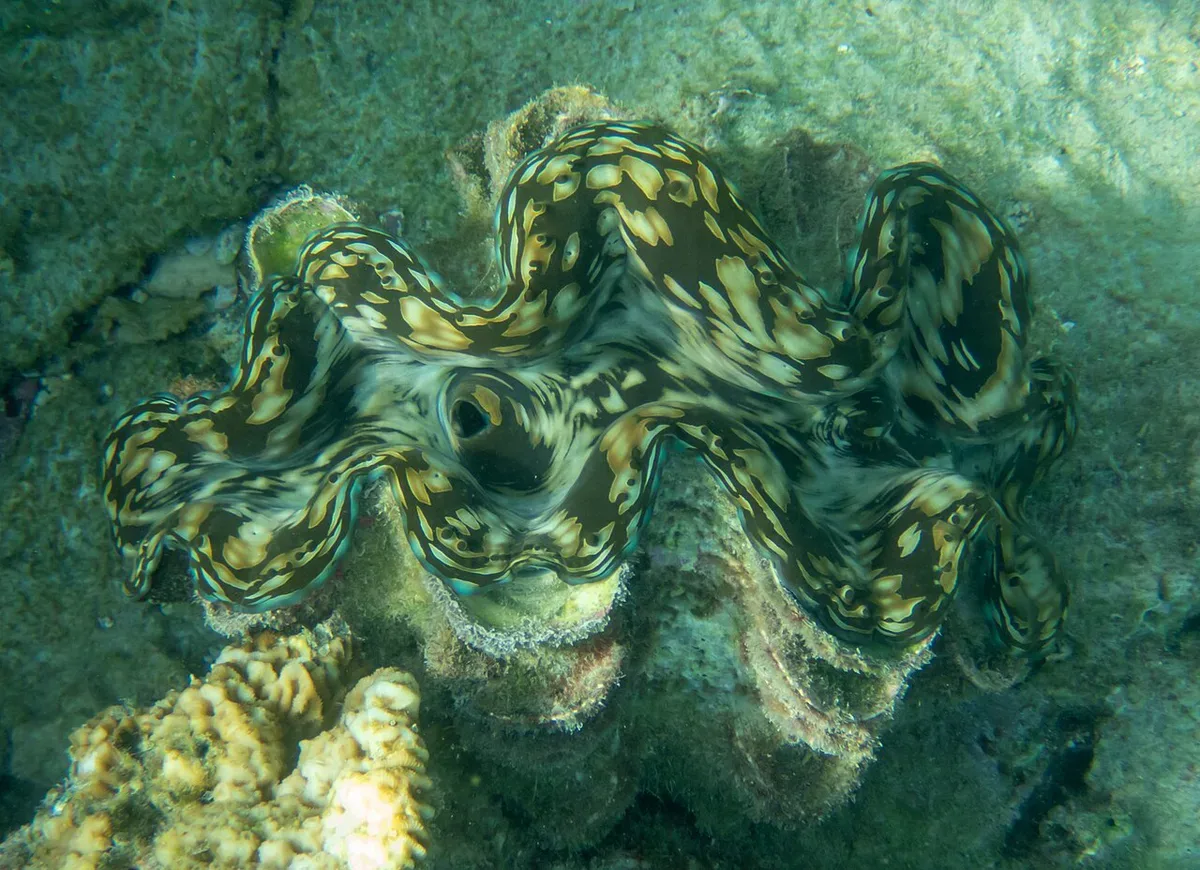
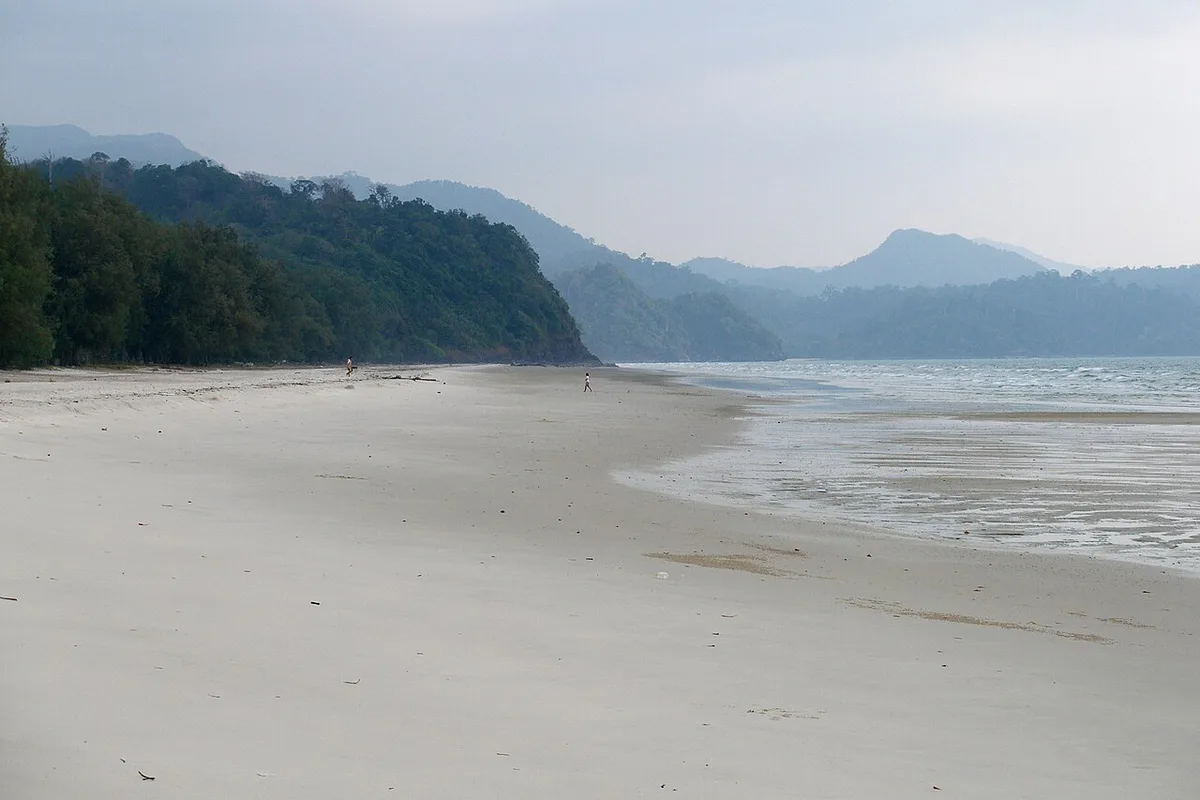
Featured image: portioid, CC BY-SA 4.0, via Wikimedia Commons.
Giant clam Thailand quick answer: what lives on the reefs
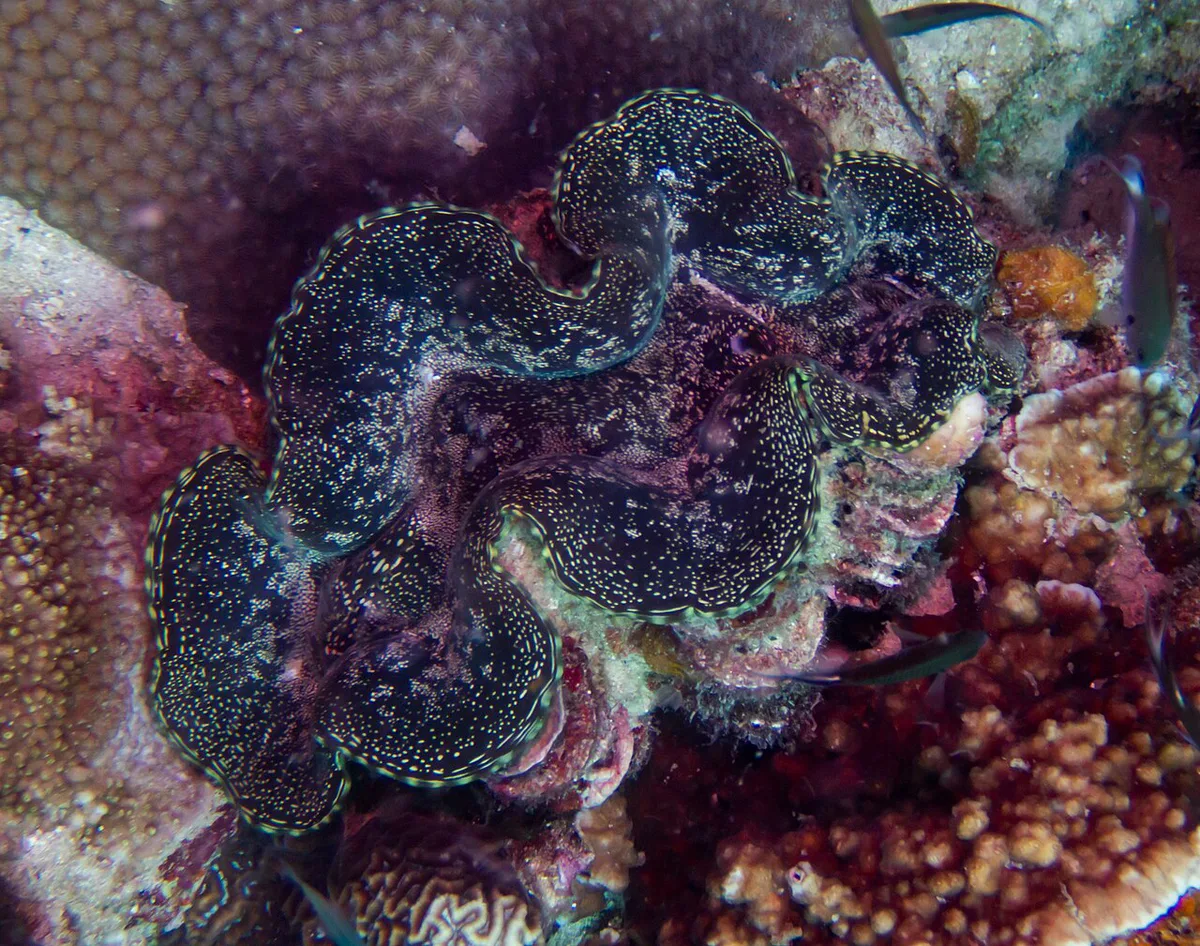
Yes, with a caveat. Thai reef photo archives list the scaly giant clam (Tridacna squamosa) and a boring clam (Tridacna crocea or Tridacna maxima). Tridacna gigas, the true giant clam, is the species that passes a meter across and 496 lb (225 kg). Its range reaches west to Myanmar, according to NOAA Fisheries. That is a regional range, not a Thai sighting, so treat T. gigas as unconfirmed here. Expect smaller clams tucked into shallow reef instead. For the wider cast of reef animals, see our guide to Thai marine life.
Giant clam species you may see in Thailand
Conservation status differs by species. Look up each name on the IUCN Red List rather than trusting a blanket label. Giant clams as a group are heavily regulated, but the category changes from one species to the next. Use the table below as a field cue only.
Expect smaller clams when scanning, since the true T. gigas can weigh 496 lb (225 kg) and is unconfirmed here.
| Species | Common name | Size cue | Mantle and shell cue | Thai status |
|---|---|---|---|---|
| Tridacna squamosa | Scaly giant clam | Smaller than T. gigas | Scale-like ridges on the shell give the name | Listed in Thai reef photo archives |
| Tridacna crocea / T. maxima | Boring clam | Smaller bodied, often nestled into the reef surface | Colored mantle visible along the shell opening | Listed in Thai reef photo archives |
| Tridacna gigas | True giant clam | Over a meter wide, up to 51 inches | Yellowish-brown to olive-green mantle with blue-green rings; deep folds in a thick shell | Not confirmed for Thailand |
How giant clams live and why depth matters
Giant clams share a partnership with algae called zooxanthellae that live inside their tissues. The algae gain protection, and the clam grows large on the sugars they produce. Because the algae need sunlight, clams sit between about 6 and 65 feet deep. Once settled, a clam stays attached to that spot for life, and it can live 100 years or more. Its soft body is only about 10 percent of total weight, and the rest is shell. Siphons draw in seawater so the clam can filter feed. Reef fish often shelter around clams or feed on what they release.
Where and how to look in Thailand
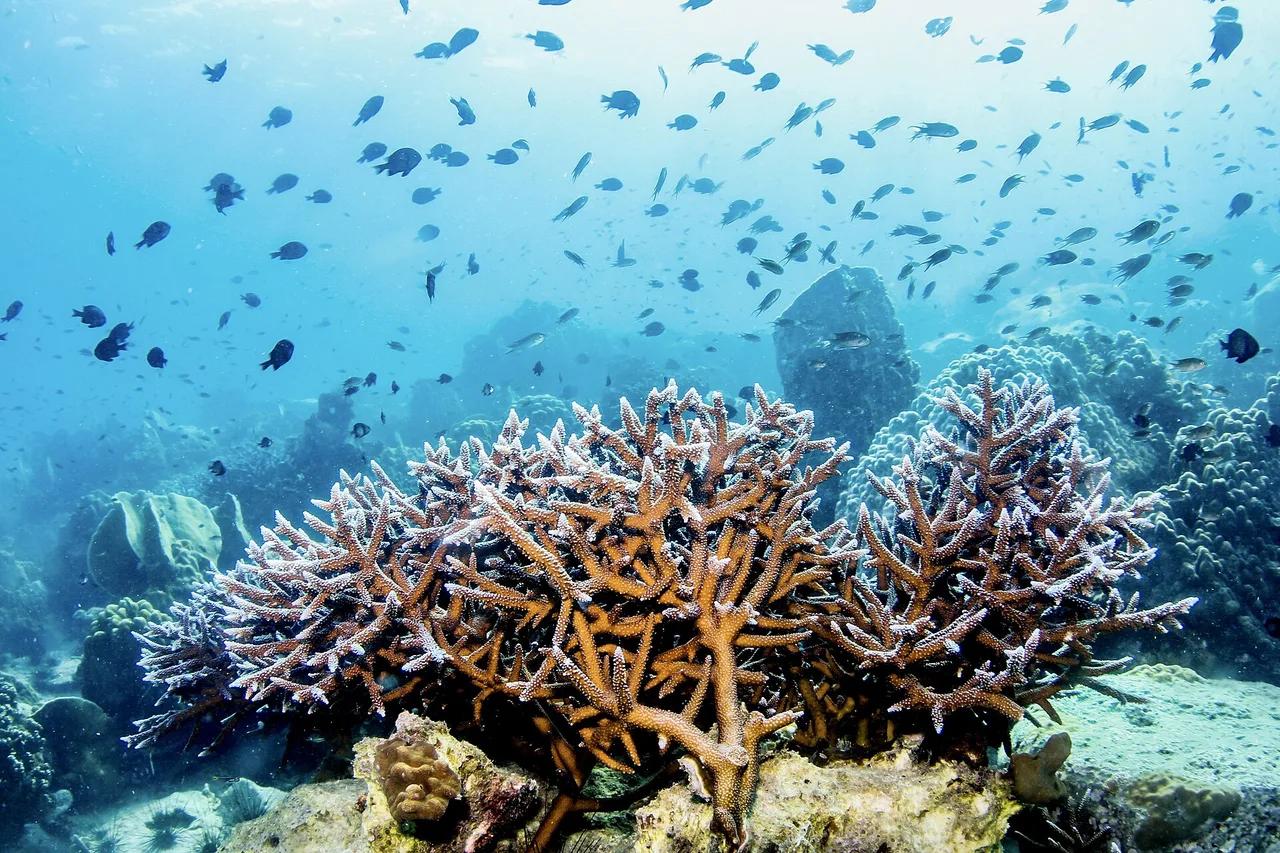
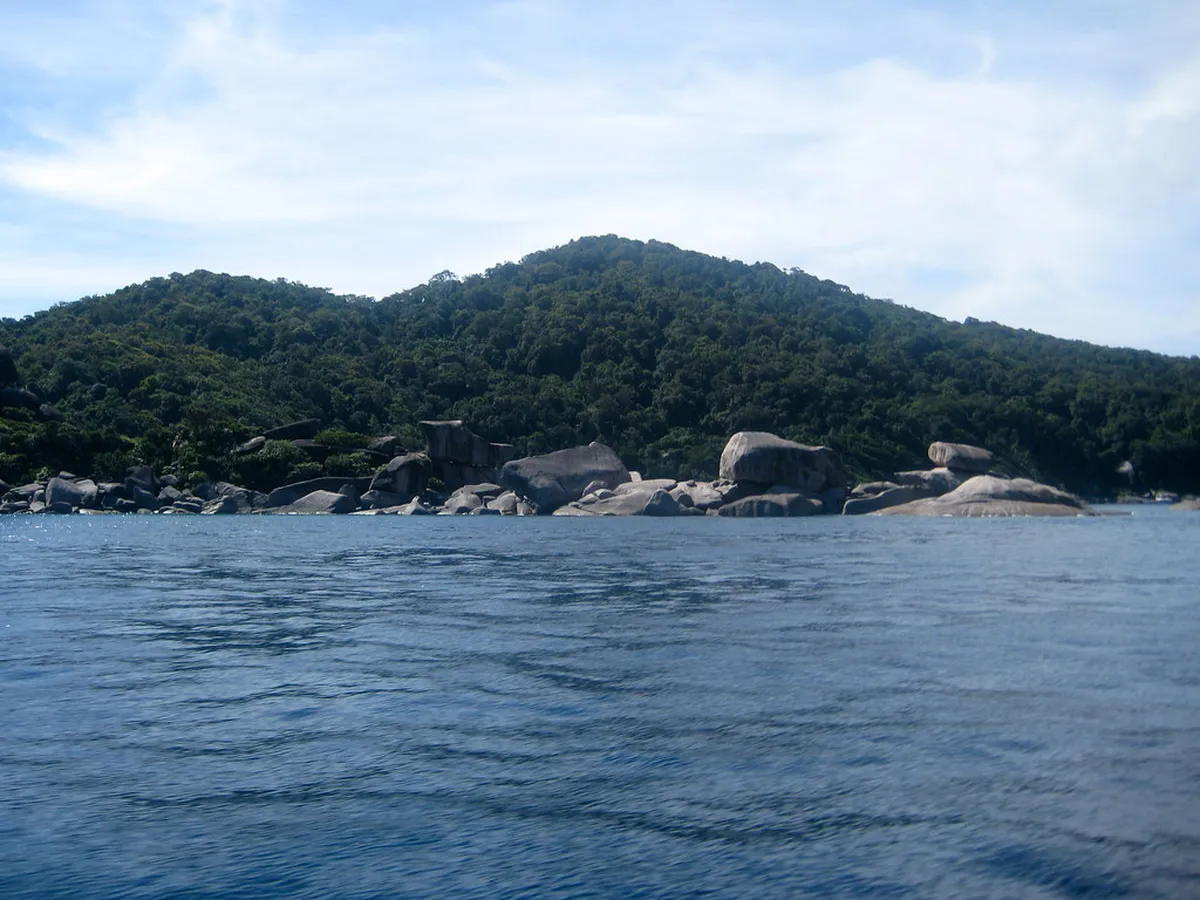
Because clams live from 6 to 65 feet, snorkelers can reach many of them over shallow reef flats. Scuba adds the deeper end of that range. Andaman Sea marine national parks such as the Similan Islands are common reef-trip destinations. Published records name no specific Thai clam site, so ask operators what they have seen lately. Reef fish shelter around clams. Scan the same flats for clownfish. Slow passes along the reef edge also turn up nudibranchs. Ledges nearby may hide a moray eel, so keep hands out of holes.
| Option | Best for | Trade-off |
|---|---|---|
| Self-guided beach snorkel | Shallow reef flats near shore | No guide to point out clams; you need your own ID skills |
| Day snorkel trip | Reaching marine national park reefs by boat | Fixed stops; ask whether clams are on the route |
| Dive day | Covering the full 6 to 65 foot range | Needs certification and more gear |
- Ask the operator which clams they have seen in recent weeks.
- Read the park's current rules and closures before you go.
- Check sea state and visibility on the day; calm, clear water makes mantles easier to spot.
- Pick a guide if you want fast identification.
- Keep fins, hands and cameras clear of the reef.
Cost, time and access trade-offs
Park fees and trip prices change by operator and season, so this guide quotes none. Current park fees are listed by the Department of National Parks.
Scuba covers the 6 to 65 foot range, but it needs certification and more gear.
Reef etiquette and legal protection
Look, photograph, leave. Keep hands, fins and gear off the mantle. Never stand on the reef flat. Leave shells where they lie. NOAA lists Tridacna gigas under CITES Appendix II throughout its range. NOAA also proposed endangered status under the US Endangered Species Act, and a rule dated July 25, 2024 covers 10 giant clam species. That is US law and does not govern Thai waters. Thai rules on collecting sit with agencies such as the Department of Marine and Coastal Resources, so read its current pages before handling anything. Harvest for meat and shells is the main threat to giant clams. Spiny neighbors matter too. Watch for sea urchins before you plant a hand or foot. A camouflaged stonefish can look like rock. A lionfish may hover beside a clam.
Common myths and mistakes
The "killer clam" story is fiction. No human death has ever been attributed to a giant clam. Once fully grown, clams cannot even close their shells. The real risk runs the other way, since juveniles are eaten by fishes, octopus, crabs and predatory snails. Decades of unregulated harvest have driven T. gigas to very low abundance across much of its range, so bigger does not mean easier to find.
- Touching or poking the mantle.
- Standing on the reef to get a closer look.
- Collecting shells as souvenirs.
- Expecting a meter-wide Tridacna gigas on a Thai reef.
- Trusting a single blanket conservation label for every species.
Notes for your next dive trip
Optional updates to our Thai diving guides.
You might also like

Continue reading
More guides you'll find useful