Octopus in Thailand: Species, Dive Spots and Safety
Which octopus live in Thai waters, where divers and snorkelers may spot them, how to stay safe around blue-ringed octopus, and what to expect when eating it.
On this page
Last updated November 2026. Yes, there are octopus in Thailand, and divers and snorkelers can spot them, though sightings come down to chance. One species, the blue-ringed octopus, is dangerous. This guide sorts out octopus Thailand questions about wildlife, safety and street food, and it sits inside our wider Thailand marine life guide.
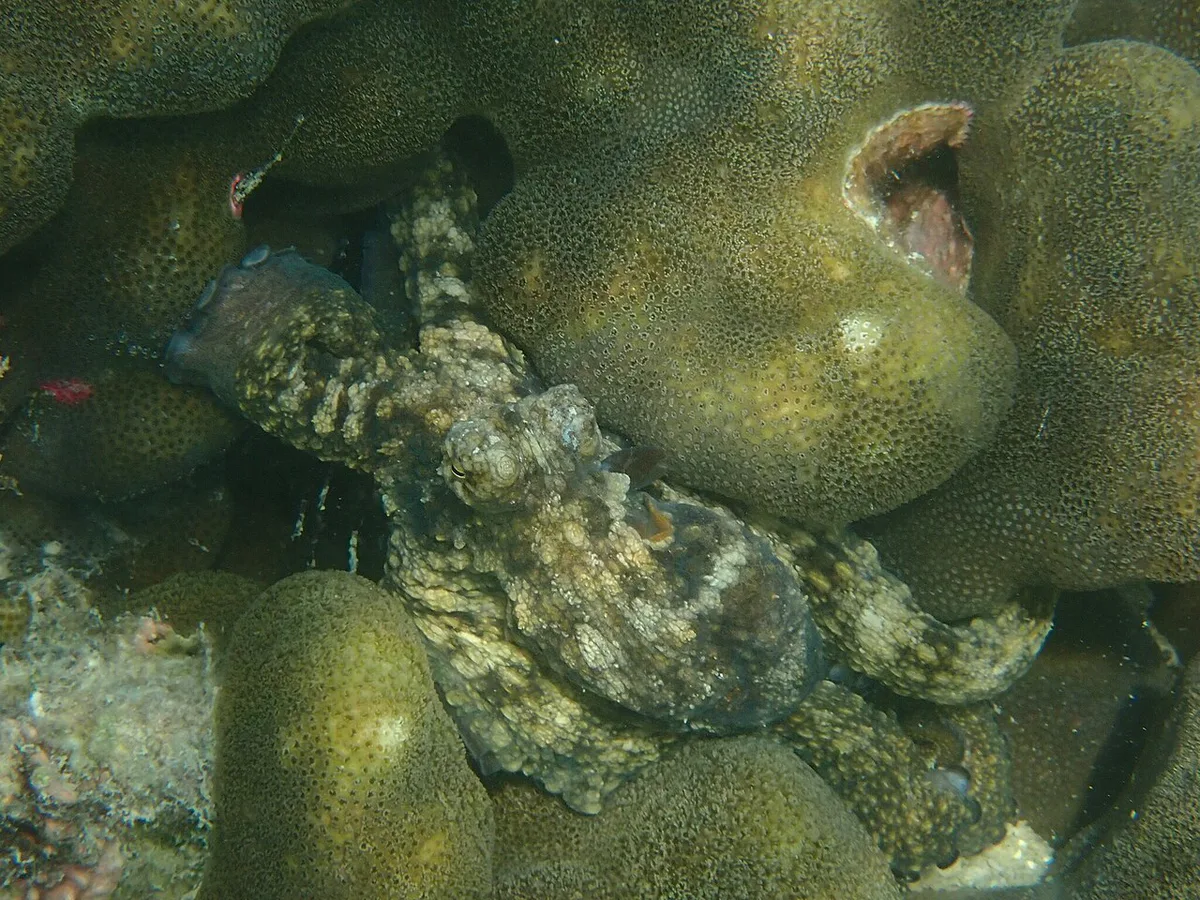
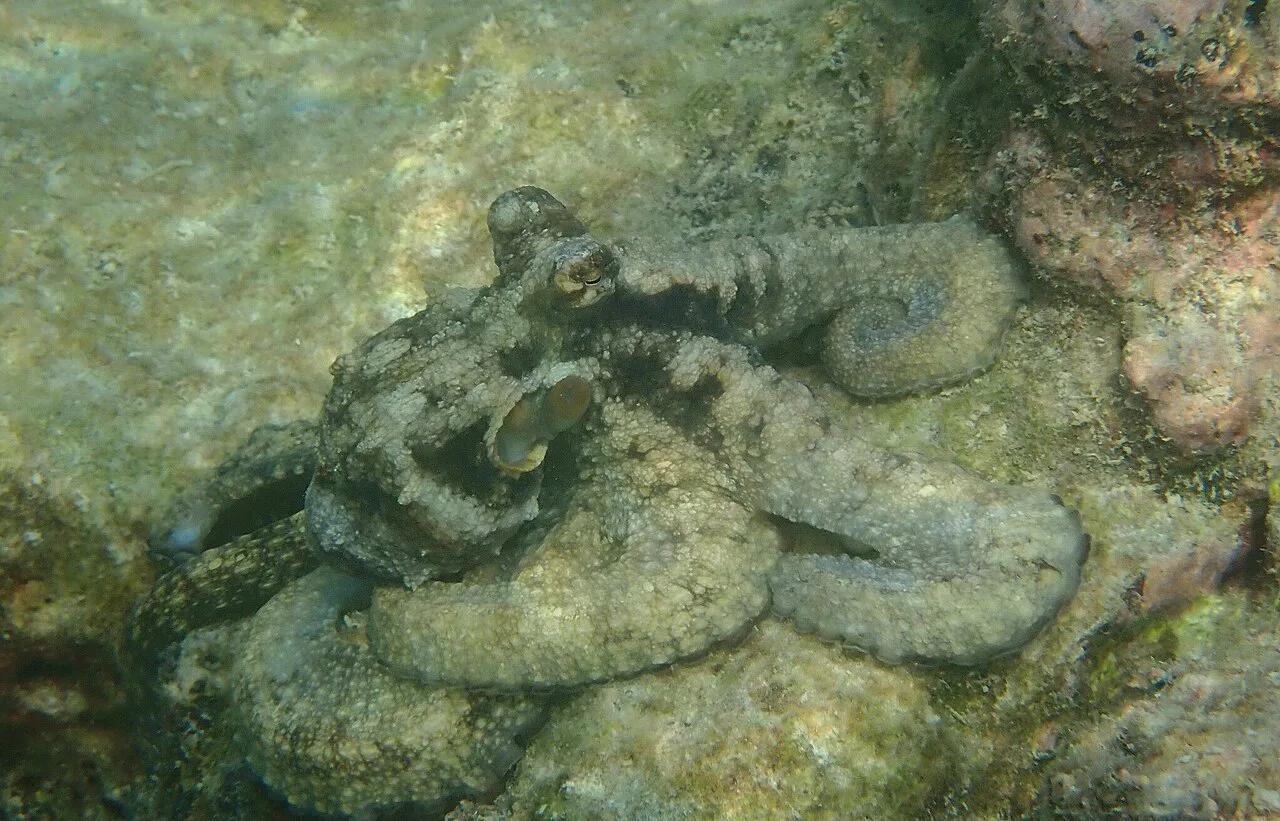
Featured image: wingwatcher48, CC0, via Wikimedia Commons.
Octopus in Thailand: the short answer
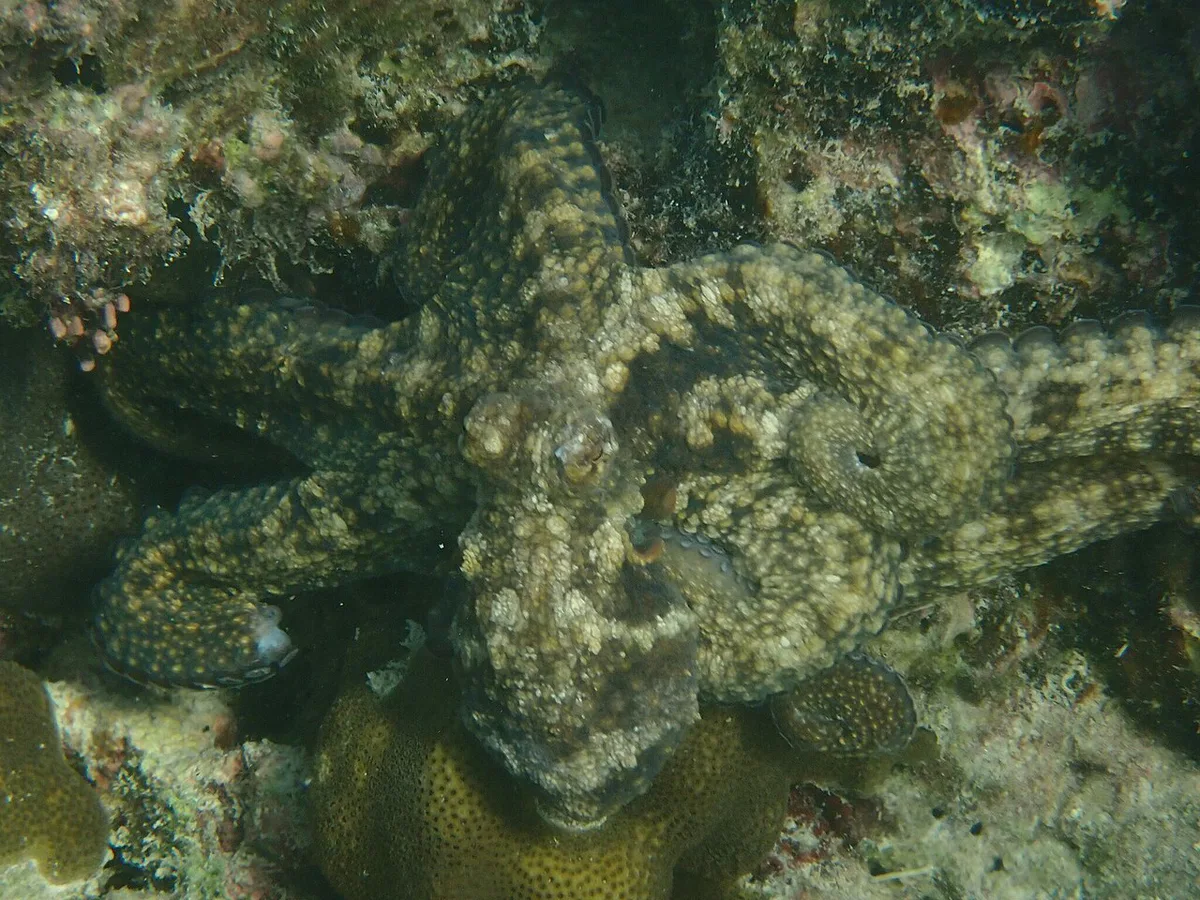
Thai waters hold several octopus species, from reef dwellers to sand and rubble hunters. Octopus are soft-bodied, have eight arms and rely on camouflage, so they are easy to swim past. Most are harmless if left alone. Blue-ringed octopus are the exception and deserve distance. Guides often point out octopus that visitors would never spot alone. Nobody can promise a sighting on any given dive.
Octopus species you might meet in Thai waters
Dive centers around Koh Tao, Koh Lanta and Phuket commonly talk about a few kinds of octopus. Only the blue-ringed octopus is confirmed in Thailand by a dated news report. Treat the other rows as types to ask your guide about rather than guaranteed residents. Exact species lists and sizes vary by site, so ask the operator what they have recently seen.
| Type | Rough size | Habitat | Recognition cue | Risk |
|---|---|---|---|---|
| Common reef octopus | Mid-sized, arms span a forearm or more | Coral reef and rocky crevices | Changes color and skin texture; often seen sliding into a hole | Harmless if not handled |
| Day octopus types | Medium | Reef flats and rubble, sometimes active in daylight | Mottled body that flashes patterns when it moves | Harmless if not handled |
| Mimic octopus | Slender and mid-sized | Sandy and muddy slopes | Imitates other animals by shape and posture; striped arms | Harmless if not handled |
| Blue-ringed octopus | Small, often hand-sized or less | Reef rubble, shells and sand | Blue rings that flash when it is disturbed | Dangerous: potent toxin |
Where and when you are most likely to see one
Octopus hide in dens, crevices and under debris, so a reef scan is rarely enough. Night dives raise your odds because many species hunt after dark. Day dives still turn up octopus, usually a tentacle poking from a hole. Sand and rubble slopes reward slow, close looking more than a fast tour of coral heads. Snorkelers can spot one on shallow reef flats, but scuba gives more time at depth. Ask your guide which side of the island has had recent sightings, as the Gulf of Thailand and Andaman Sea differ in visibility by season. If you want other small residents, mantis shrimp and nudibranchs use the same habitats.
- Night scuba dive: best odds for hunting octopus, more effort and a guide required.
- Day scuba dive: moderate odds, best on rubble and sand with a patient guide.
- Snorkeling: lower odds, shallow reef flats only, never reach into holes.
Blue-ringed octopus: safety essentials
Blue-ringed octopus carry a potent toxin, and cooking does not destroy it. Their rings flash bright blue when the animal feels threatened. Never handle any small octopus, even one that looks dull and calm. A bite may be painless at first and still become an emergency. Treat any bite as one: get the person to medical care right away and tell staff what bit them. Divers can read emergency guidance from Divers Alert Network. Other animals worth watching for include stonefish and lionfish.
- If you see a small octopus with blue rings: do not touch it.
- Stay back and keep your fins off the bottom.
- Tell the guide, and never lift shells or rubble with bare hands.
Eating octopus in Thailand
Grilled octopus and squid are sold at Bangkok night markets, including Chinatown. Seafood from established vendors is a normal part of eating in Thailand. One dated warning is worth knowing. On 1 Dec 2020, the Bangkok Post reported that a blue-ringed octopus was found at a Pathum Thani street market. The Department of Marine and Coastal Resources told consumers and vendors to be careful. A buyer reportedly found it among grilled seafood on sale on a Sunday night. Treat that as an isolated, dated case, not a pattern. Squid and cuttlefish are different animals, and our cuttlefish guide explains the difference.
- Buy from vendors who show the whole animal or label it clearly.
- Skip any small octopus with blue rings or blue markings.
- Do not buy a mixed grill if you cannot see what is in it.
- Ask the vendor if you are unsure what an item is.
Responsible encounters
Good practice is simple. Do not touch or chase an octopus. Do not pull one from its den, and keep your fins off the bottom. Use a guide, and follow the operator's night-dive briefing. These are general dive-ethics rules. Thai park and marine regulations can differ by area, so check the Department of National Parks for local rules in marine parks.
Frequently Asked Questions
Do they have blue-ringed octopuses in Thailand?
Yes. A blue-ringed octopus was reported at a Pathum Thani street market on 1 Dec 2020. Treat any small octopus with blue rings as dangerous and do not touch it.
What are some key features of an octopus?
An octopus has a soft body, eight arms and no shell. Many can change color and skin texture to blend into reef, sand or rubble.
Notes for your next dive trip
Optional updates to our Thai diving guides.
You might also like

Continue reading
More guides you'll find useful