Cuttlefish in Thailand: Where to See Them and When to Go
Where divers see cuttlefish in Thailand, what to expect by season, how to spot them, and how to watch responsibly. Includes a quick note on Thai cuttlefish snacks.
On this page
Last updated November 2026. Cuttlefish Thailand sightings come mostly from scuba divers on Andaman Sea reefs, with Racha Noi near Phuket and Palong at Phi Phi the best-reported sites. Snorkelers have slim odds, and cuttlefish also appear on Thai menus, covered in the food section below.
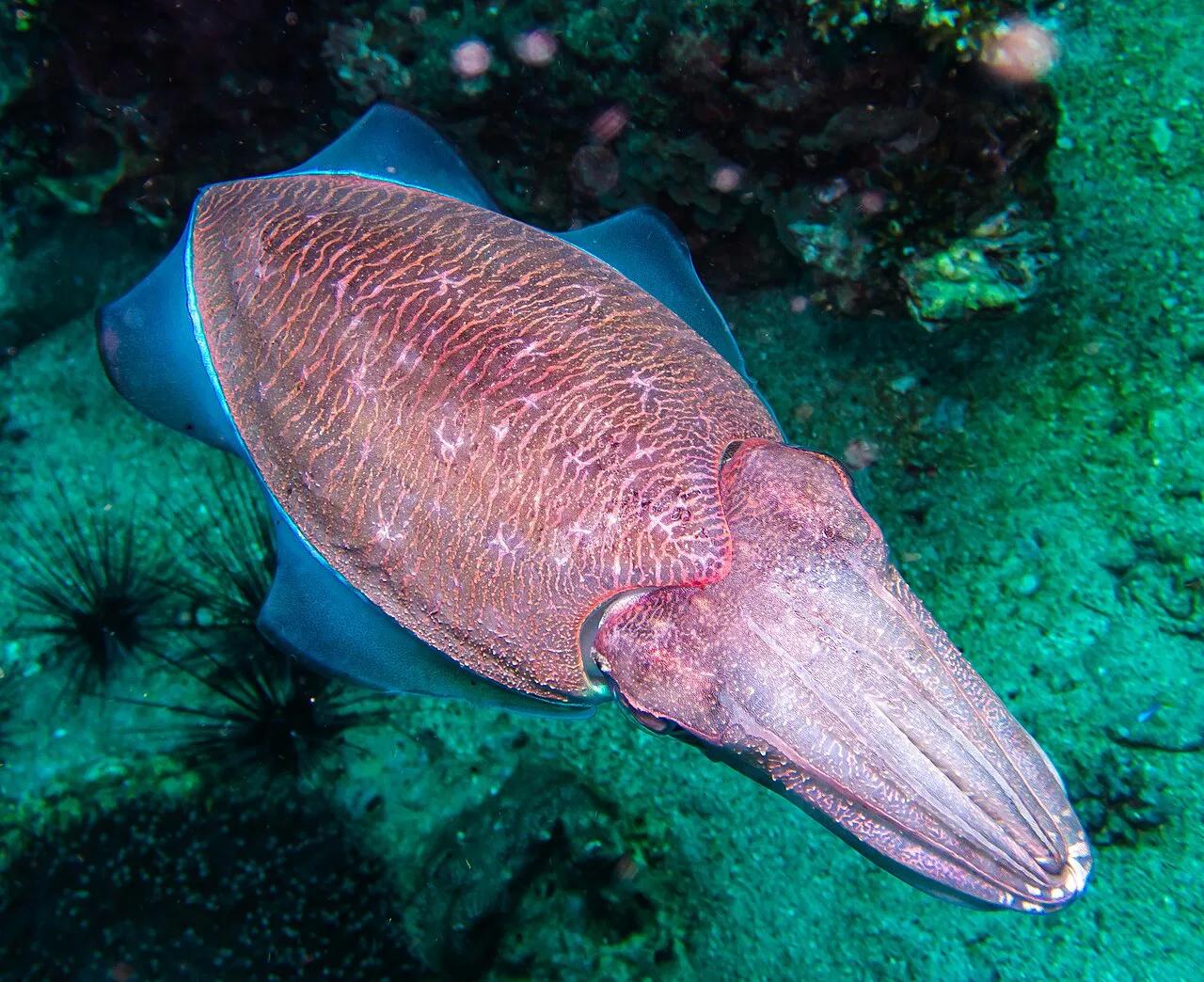
Featured image: portioid, CC BY-SA 4.0, via Wikimedia Commons.
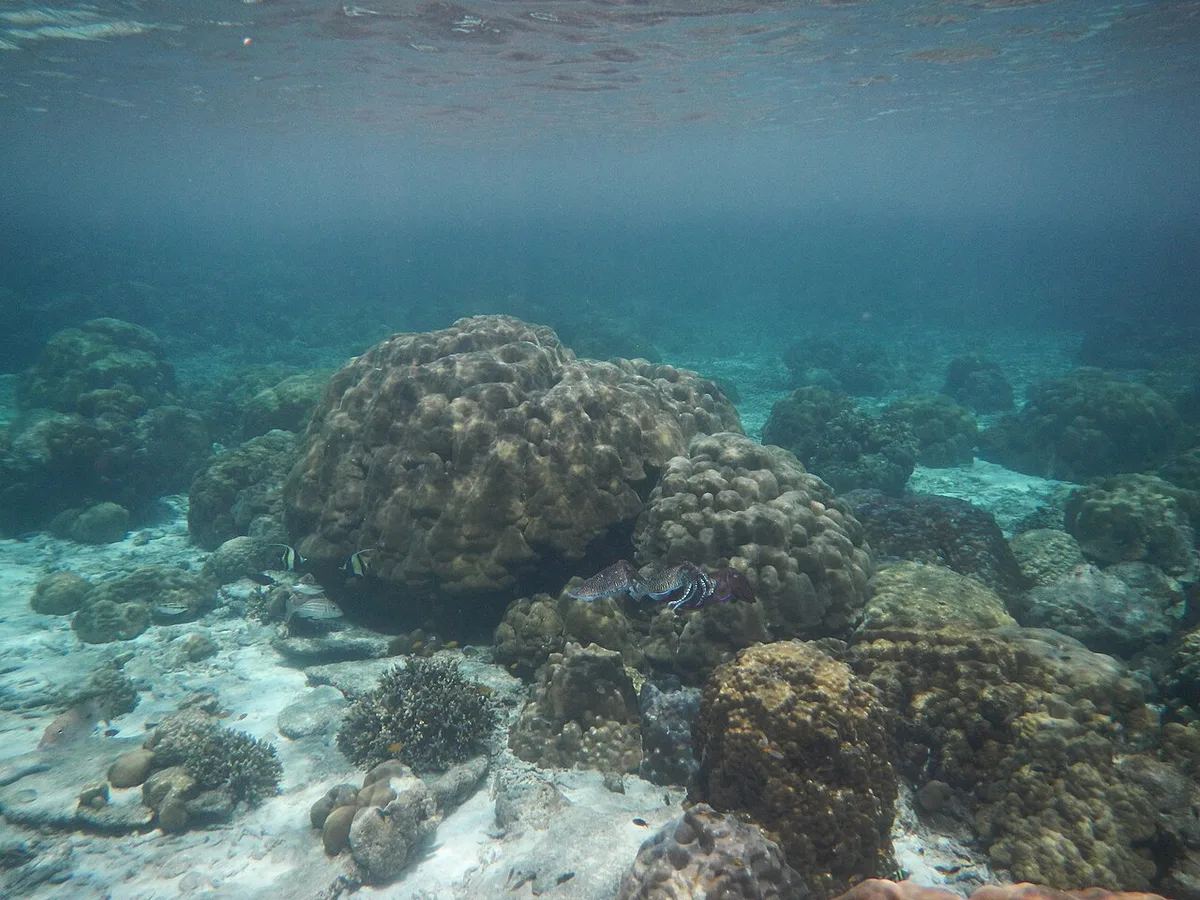
Where to see cuttlefish in Thailand
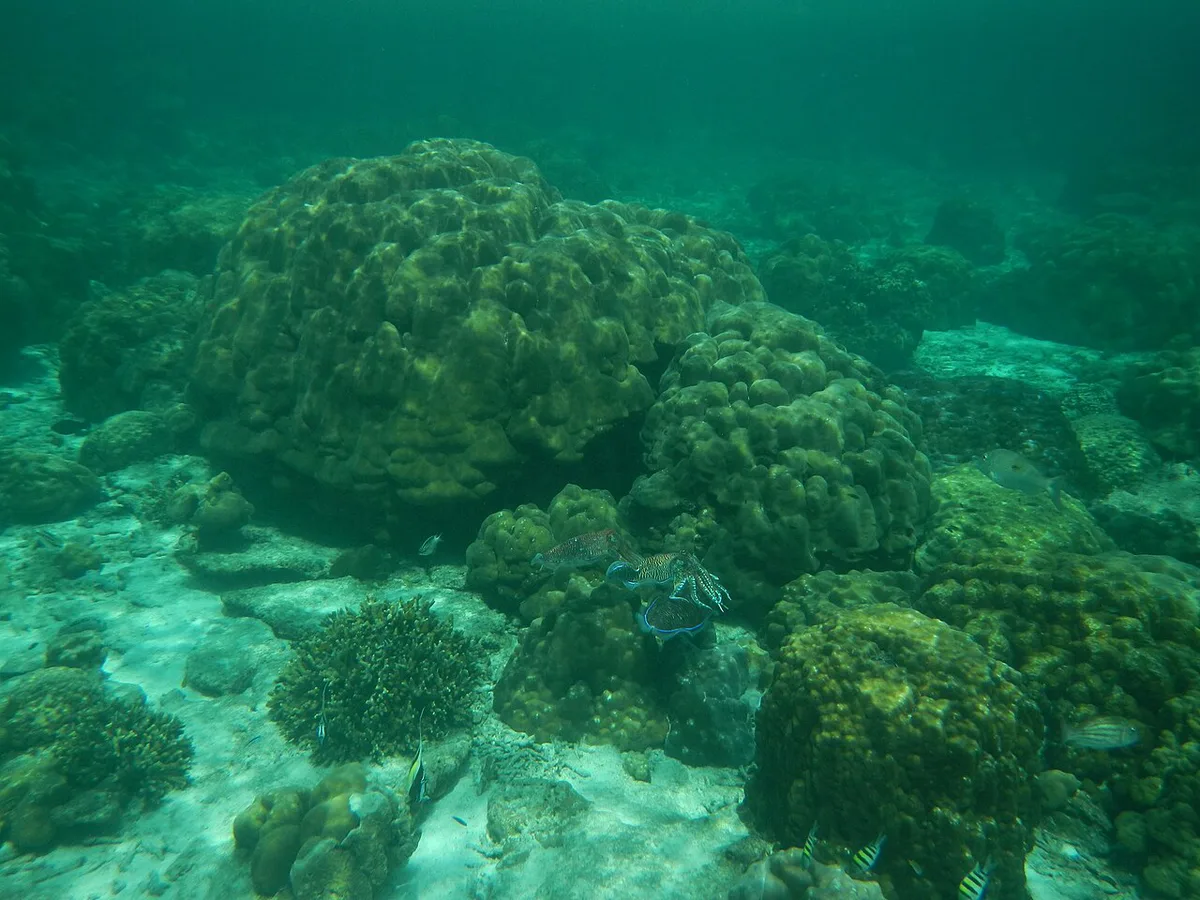
Cuttlefish are mostly a scuba sighting in Thai waters. Divers see them far more often than snorkelers. Start with our guide to Thailand's reef wildlife for the wider picture. Racha Noi, an offshore trip from Phuket, has a reported mating display at a site called Banana Bay. Males put on a show there and compete for the attention of a smaller female. Palong, a dive site at Phi Phi, is listed as a place where cuttlefish are photographed. Operators on Koh Tao, Koh Lipe and the Similan Islands may know further spots. Ask them what they have logged recently.
| Site | Coast | What is reported | Ask your operator |
|---|---|---|---|
| Banana Bay, Racha Noi | Andaman Sea | Shallow-water mating display posted by a Phuket dive center | Whether pairs are showing now |
| Palong, Phi Phi | Andaman Sea | Cuttlefish photographed at this dive site | Whether recent dives have found them |
| Similan Islands | Andaman Sea | Named by local operators as a dive area | Recent cuttlefish logs and trip length |
| Koh Lipe | Andaman Sea | Named by local operators as a dive area | Which sites suit a cuttlefish search |
| Koh Tao | Gulf of Thailand | Named by local operators as a dive area | Recent sightings and visibility |
Cuttlefish, squid or octopus? How to tell
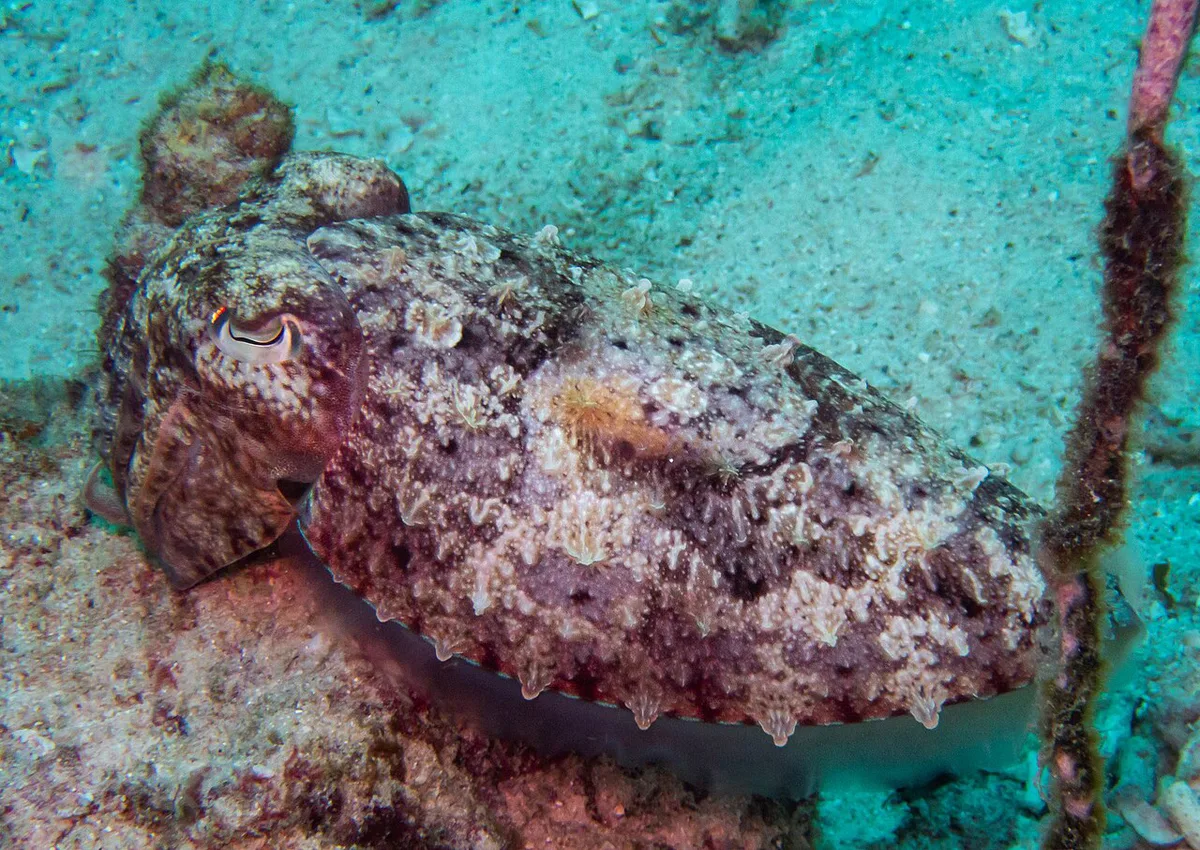
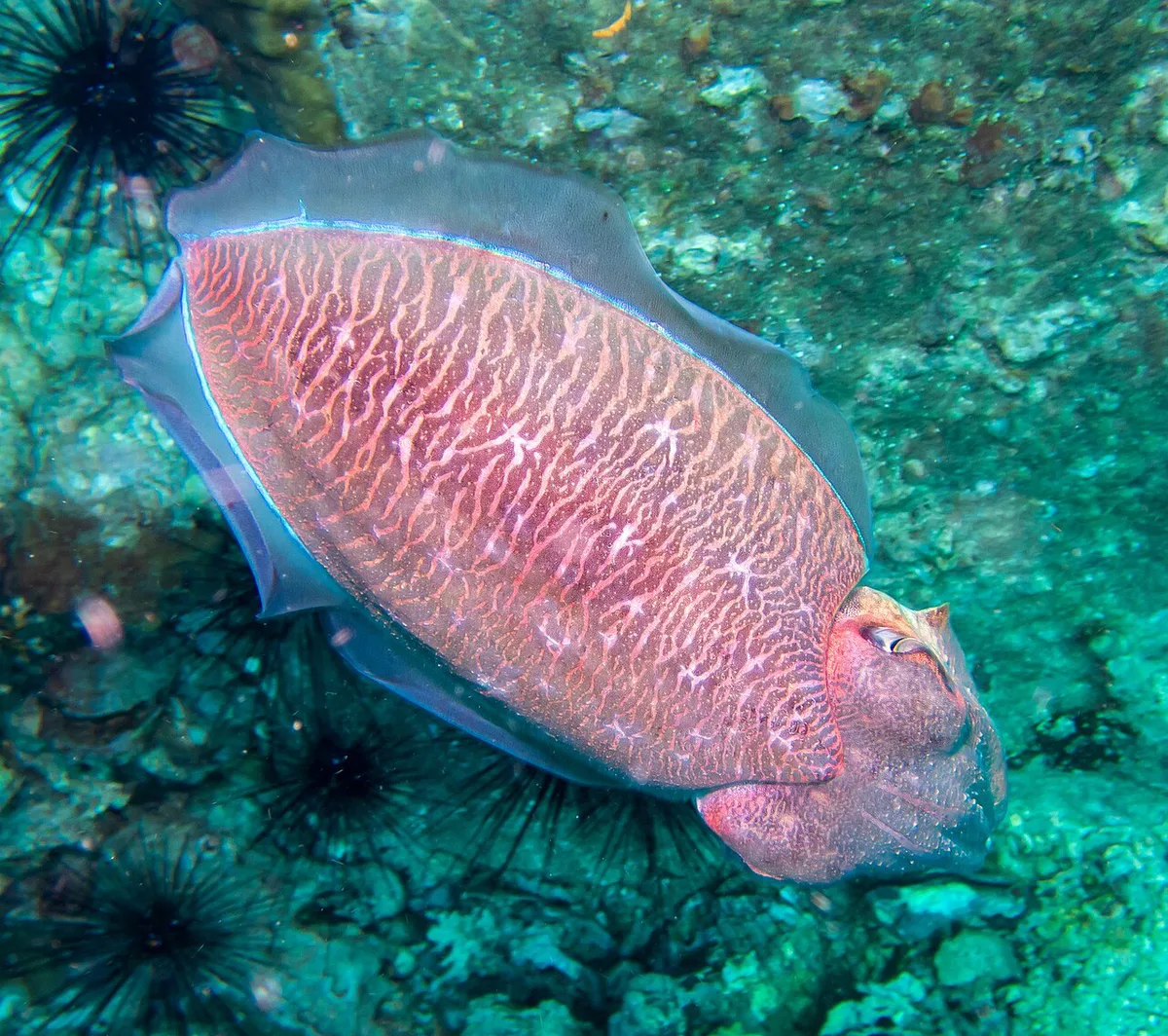
Cuttlefish, squid and octopus are all cephalopods, yet a diver can separate them quickly. Cuttlefish have eight arms plus two longer feeding tentacles. Their oval body carries a narrow fin fringe along each side. Inside sits a chalky cuttlebone that controls buoyancy, so they hover over sand and rubble. Octopuses lack that fin and crawl more than they hover, as our octopus guide explains. Squid are torpedo-shaped and usually hold station in open water.
Color change is the giveaway. Skin cells called chromatophores expand and contract, so a cuttlefish can shift from sandy brown to dark with pale bands in moments. Raised bumps on the skin help it match coral or rubble. Pharaoh cuttlefish are among the species reported on Thai reefs. Species names vary between operators, so ask your guide what they have logged. Conservation status for each species sits on the IUCN Red List. Another reef animal with unusual eyes is the mantis shrimp.
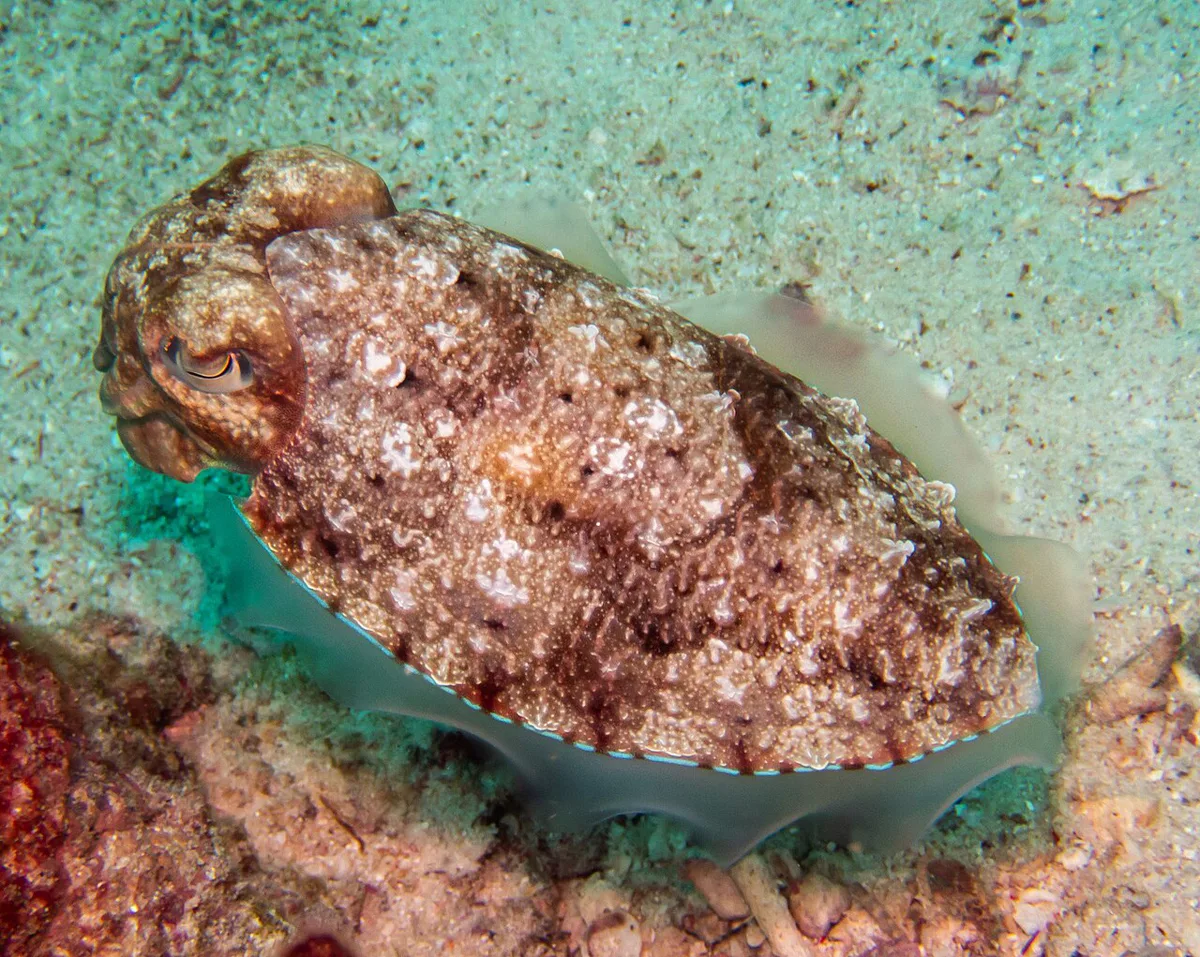
Best time to see cuttlefish and mating behavior
No dependable month range exists for Thai cuttlefish, so treat any promised date with caution. The reported Banana Bay display shows mating in shallow water around Racha Noi. The dive center that posted it gave no month. Males compete visibly during mating, which makes the season easy to spot once you are in the water.
Seas matter as much as season. Andaman Sea reefs, including Racha Noi, Phi Phi, Koh Lipe and the Similan Islands, follow a different monsoon pattern from Gulf of Thailand reefs such as Koh Tao. Rough water can close trips on one coast while the other stays workable. Ask your dive operator three things before booking. When were cuttlefish last seen, are mating pairs or eggs showing, and how is visibility right now?
Diving versus snorkeling: what is realistic
Divers have the realistic chance. Most reef sightings come on scuba dives, so an entry-level Open Water certification is the practical starting point. Snorkelers depend on shallow sites. The Banana Bay display was reported in shallow water, which is the best case for surface watchers. No snorkel-only sighting is documented, so set expectations low.
- Certified diver: book fun dives at Racha Noi or Palong and request a guide who scans sand and rubble.
- Snorkeler: ask operators which shallow sites held cuttlefish this month.
- Photographer: favor small groups, patient guides and slow, low approaches.
- Casual observer: join a regular reef dive and ask the guide to point out camouflage.
Planning the trip: Phuket, Racha Noi and Phi Phi
Racha Noi is an offshore trip from Phuket. Boat time is therefore a major cost driver, alongside boat type and the number of dives. Palong is reached from Phi Phi, which suits travelers already staying on the islands. Liveaboards reach farther sites such as the Similan Islands, while day trips keep you flexible. Weather can cancel offshore runs, so leave a spare day. Between cuttlefish searches, watch for nudibranchs on the reef wall. Sand patches may hold a seahorse.

| Base | Best for | Trade-off |
|---|---|---|
| Phuket, Racha Noi day trip | Divers chasing the reported Banana Bay mating display | Longer offshore crossing and weather cancellations |
| Phi Phi, Palong | Island stays with a short run to the dive site | Sightings depend on recent conditions |
| Liveaboard, Similan Islands | Several dive days in one trip | Multi-day commitment and a fixed itinerary |
| Koh Tao | Gulf of Thailand dive base with its own weather pattern | Different monsoon timing from the Andaman Sea |
Watching cuttlefish responsibly
Never touch or chase a cuttlefish. Handling strips protective mucus and stresses the animal. Hold a respectful distance for photos and let the animal approach on its own terms. Skip flash near mating pairs and egg-laying animals, because bright bursts can disturb them. Eggs sit attached to reef structure, so keep fins and gauges clear of coral. Thailand's national park authority sets the rules inside its marine parks. Follow ranger and operator briefings on arrival.
Cuttlefish as food in Thailand
Cuttlefish is eaten across Thailand, usually grilled at seafood stalls or sold dried and shredded as a snack. Shredded packs make an easy souvenir. Read the ingredient label first. One shredded snack lists cuttlefish and seasoning as its ingredients, with a 12-month shelf life from manufacture. Look for a Halal mark if that matters to you. Treat packaged dried snacks and fresh grilled seafood separately. Shelf-stable labels say nothing about the freshness of a street-stall plate. For grilled cuttlefish, pick a busy stall with fast turnover and food cooked to order.
A shredded cuttlefish snack has a 12-month shelf life from manufacture, so a souvenir bought early in a Thai trip can travel home with you.
Frequently Asked Questions
Is the cuttlefish an octopus?
No. Both are cephalopods, but cuttlefish have eight arms plus two feeding tentacles, a fin fringe and an internal cuttlebone. Octopuses have eight arms, no fin and no cuttlebone.
Notes for your next dive trip
Optional updates to our Thai diving guides.
You might also like

Continue reading
More guides you'll find useful