Seahorses in Thailand: Where, When and How to See Them
Wondering where to see seahorses in Thailand? Learn which species to expect, what habitats to look for, and how to spot them without harming them.
On this page
Last updated November 2026. Seahorse Thailand searches often land on a Koh Samui ferry operator, so a quick note: this guide covers the animal, and the Seahorse Ferry is a separate transport service. Yes, you can see seahorses in Thai waters, but sightings are never guaranteed. Success depends on choosing a macro-focused dive or snorkel setting and a guide who knows how to find camouflaged animals.
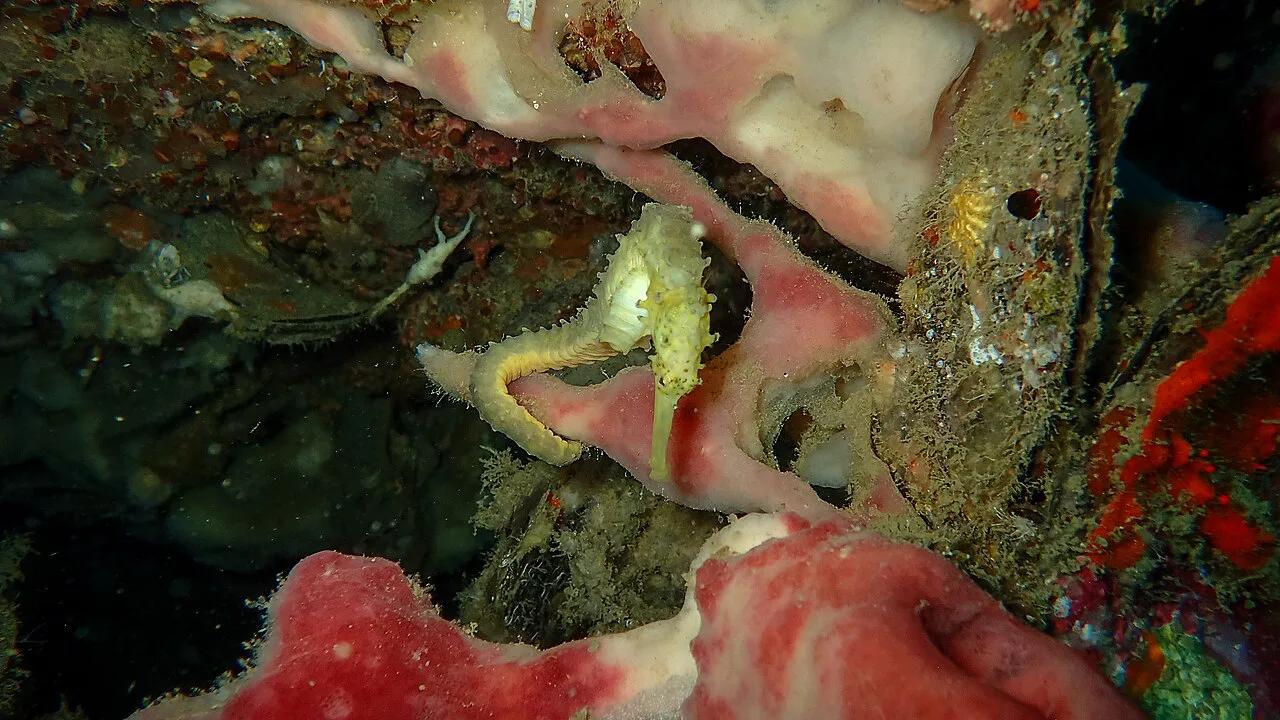
Featured image: Weldon Kennedy from London, UK, CC BY 2.0, via Wikimedia Commons.
Seahorses in Thailand within the wider marine-life picture
Seahorses belong to the genus Hippocampus, and they sit at the quiet, small end of Thai marine life. Our Thailand marine life guide covers the full range, from manta rays to reef shrimp. Seahorses reward a different style of looking. You search slowly, in a small area, for an animal that is built to go unnoticed. Expect a few minutes of patient scanning to turn into a single memorable encounter. Treat any sighting as a bonus rather than a promise.
Seahorse species you might see in Thailand
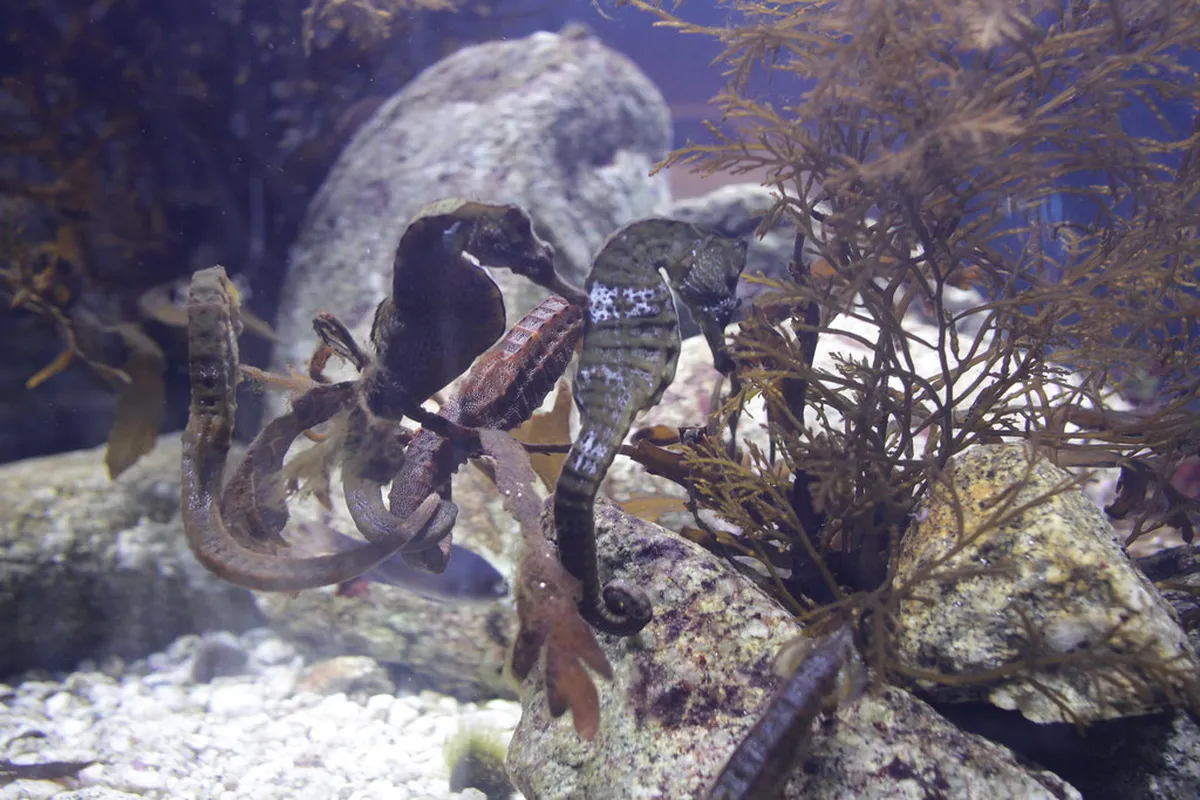
Several Hippocampus species are reported from Thai and wider Indo-Pacific waters. Common names vary by guide and dive center, so ask your operator which species they usually find. Check species names and conservation status on the IUCN Red List before you rely on a label.
| Species | Look | Typical habitat |
|---|---|---|
| Hippocampus kuda | Variable color, often yellow or dark, with a smooth to slightly bumpy body | Seagrass, sheltered shallows, estuary edges |
| Hippocampus trimaculatus | Flattened head, dark spots along the back | Sandy or muddy bottoms, open slopes |
| Hippocampus comes | Slim build with a distinct tiger-striped tail | Weed, coral and sponge |
| Hippocampus histrix | Long spines along the body | Rubble, reef edges, soft bottoms |
- Spotted or yellow seahorse (Hippocampus kuda): a widespread species often linked with seagrass, estuaries and sheltered shallows.
- Three-spot seahorse (Hippocampus trimaculatus): associated with sandy and muddy bottoms and trawl-impacted areas across the region.
- Tiger tail seahorse (Hippocampus comes): a small species typically found clinging to weed, coral or sponge.
- Thorny seahorse (Hippocampus histrix): a spiny, larger species that can turn up on rubble and reef edges.
Where seahorses live: habitats and where to look
Seahorses are weak swimmers, so they stay close to something they can grip with their tails. That holdfast is the key to finding them. Seagrass blades, coral branches, sponges, sea whips and floating weed all work. Pygmy seahorses are a special case. Elsewhere in the Indo-Pacific they live on specific gorgonian sea fans. Whether a given pygmy species occurs at a Thai site is something to ask a local guide, and you can cross-check species ranges on the IUCN Red List. Never assume a pygmy seahorse will be on offer.
| Habitat | What to scan for | Who it suits |
|---|---|---|
| Seagrass beds | Slow-moving shapes among blades near the base | Snorkelers and shallow divers |
| Coral rubble and weed | Tails curled round dead branches or algae | Divers on a slow macro dive |
| Sponges and soft coral | Color-matched animals pressed against the host | Divers with a guide |
| Gorgonian sea fans | Tiny, fan-matched animals | Experienced divers with an expert guide |
| Sandy or muddy slopes | Animals on debris, sticks or sea whips | Muck-dive groups |
Choosing between the Andaman Sea and the Gulf of Thailand
Thailand has two coasts, and the choice shapes your trip more than any single dive site. The Andaman Sea lies on the west, around the Phuket and Krabi region. The Gulf of Thailand lies on the east side of the peninsula, with islands such as Koh Tao and Koh Samui. Both coasts have seagrass, coral and soft-bottom areas where seahorses can occur. Seasons, visibility and sea conditions differ between coasts and change from year to year. Ask your operator which coast is working best for macro life on your dates. Pick a base where you can book several macro-focused outings rather than one generic reef trip. Several dives in different habitats give you better odds than a single outing.
How to find them: dive, snorkel or guided muck dive
Seahorses are small, camouflaged and often motionless. Guides find them by recognising odd outlines against a background, not by spotting color. That eye comes from experience at a specific site, so a guide who dives the same spots regularly is worth more than a bigger boat. If you enjoy this kind of hunt, you may also like finding a nudibranch on a macro dive. A mantis shrimp burrow is another macro target. Shallow seagrass sometimes rewards snorkelers too, but the odds are lower. Cephalopod spotters can add an octopus hunt or a look for a cuttlefish to the same itinerary.
| Option | Cost level | Time | Skill needed | Sighting chance |
|---|---|---|---|---|
| Snorkel in shallow seagrass | Low | Short | Basic swimming | Low to medium |
| Standard reef dive | Medium | Half day | Certified diver | Low |
| Guided macro dive | Medium to high | Half day | Certified diver, good buoyancy | Medium |
| Dedicated muck-dive trip | Higher | Full day | Comfortable, controlled diver | Medium to high |
Responsible viewing and legal rules
Do not touch, chase or reposition a seahorse for a photo. Handling strips protective skin and stresses an animal that already struggles to feed. Keep your fins off the bottom and avoid stirring silt over the holdfast. If your operator advises against flash, follow that advice. Every Hippocampus species is listed under CITES Appendix II, which regulates international trade. Many species are also assessed on the IUCN Red List, with several listed as Vulnerable or Data Deficient. Thai collection and export rules apply as well, so read current guidance from the Department of Marine and Coastal Resources. National park rules are published by the Department of National Parks. Skip dried seahorses and seahorse-based products in markets. They fuel the trade that puts wild populations at risk.
Best time and trip logistics
No single month guarantees seahorses. Weather, visibility and plankton levels shift by coast and by year, and operators adjust their routes accordingly. Decide in this order: choose your coast, pick a base island with macro-capable dive centers, then ask about the seasonal window. Tell the center in advance that seahorses are your goal. That lets them assign a guide and a site suited to small animals. Divers should also review medical and safety guidance from Divers Alert Network before a multi-day trip. Longer stays beat day trips, since a missed sighting on day one can be repaired on day three.
Common mistakes when looking for seahorses
A few predictable errors lower your odds of a good encounter.
- Expecting a guaranteed sighting. Treat a seahorse as a bonus, not the trip's purpose.
- Booking only a generic snorkel tour with no macro plan.
- Arriving with a wide-angle lens and no macro setup for small subjects.
- Disturbing animals for a closer photo or a better angle.
- Mixing up the animal with the Seahorse Ferry, which is a separate Gulf of Thailand ferry service.
If seahorses are not showing up
Many divers pair the search with other camouflage masters. A stonefish sits motionless on rubble, so look carefully before you place a hand on the bottom. A lionfish or moray eel often shares the same reef habitat. A clownfish anemone is an easy macro stop for beginners. Readers who want larger animals can look at sea turtle sightings or manta ray trips instead.
Notes for your next dive trip
Optional updates to our Thai diving guides.
You might also like

Continue reading
More guides you'll find useful