HTMS Sattakut Wreck Dive Koh Tao: Depth, Level & Tips
Plan the HTMS Sattakut wreck dive on Koh Tao: depth, certification level, visibility, penetration rules and how it compares to other deep sites.
On this page
Last updated November 2026. HTMS Sattakut is a decommissioned Thai Navy vessel sunk off Koh Tao as an artificial reef, and it is one of the island's deep wreck dives. Plan it as an Advanced Open Water dive to 30 m (about 98 ft). This guide covers who can dive it, what you will see, penetration rules, and how it fits among the other 12 Best Koh Tao Dive Sites by Level, Depth & Boat Time.
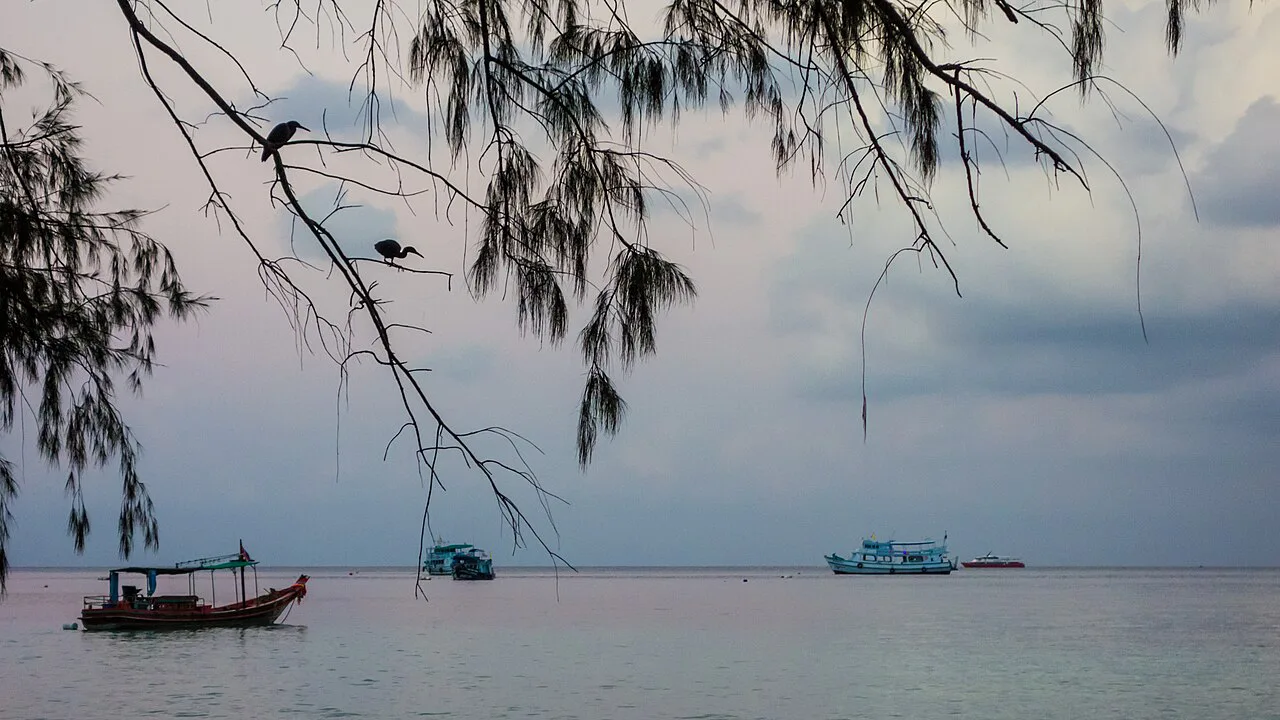
Featured image: Amada44, CC BY-SA 3.0, via Wikimedia Commons.
What the HTMS Sattakut is
HTMS Sattakut is a former Thai Navy vessel that now sits on the seabed off the west side of Koh Tao. Local dive centers report it was sunk in 2011 under Thailand's DMCR. Divers use it for wreck, deep and nitrox training, and Advanced divers use it for a wreck adventure dive. Figures below come from dive-center site descriptions and shift slightly with the tide.
| Fact | Detail |
|---|---|
| Seabed depth | About 30 m (98 ft), deepest at the stern |
| Top of wheelhouse | About 18 m (59 ft) |
| Hull size | About 49 m long (161 ft) and 7 m wide (23 ft) |
| Boat ride | About 20 minutes from the main pier |
| Minimum level | Advanced Open Water |
| Average visibility | 2 to 10 m (7 to 33 ft), and it can be poor |
Who can dive the Sattakut
Advanced Open Water is the practical minimum. The seabed sits near 30 m, so you need steady buoyancy, a calm breathing rate and comfort at depth. Open Water divers are normally kept shallower and should choose another site. The Twins Pinnacle dive and the Japanese Gardens reef are easier options for non-Advanced divers. White Rock, Red Rock and Shark Island also work as second dives on a shallower day.
- You hold Advanced Open Water or a higher certification.
- You have logged dives at 30 m and know how you handle nitrogen narcosis.
- Your air consumption leaves a comfortable reserve at depth.
- You can hold a neutral position without touching the hull.
- Skip it if you are Open Water only, feel uneasy in low visibility, or want a guaranteed fish show.
What you will see on the wreck
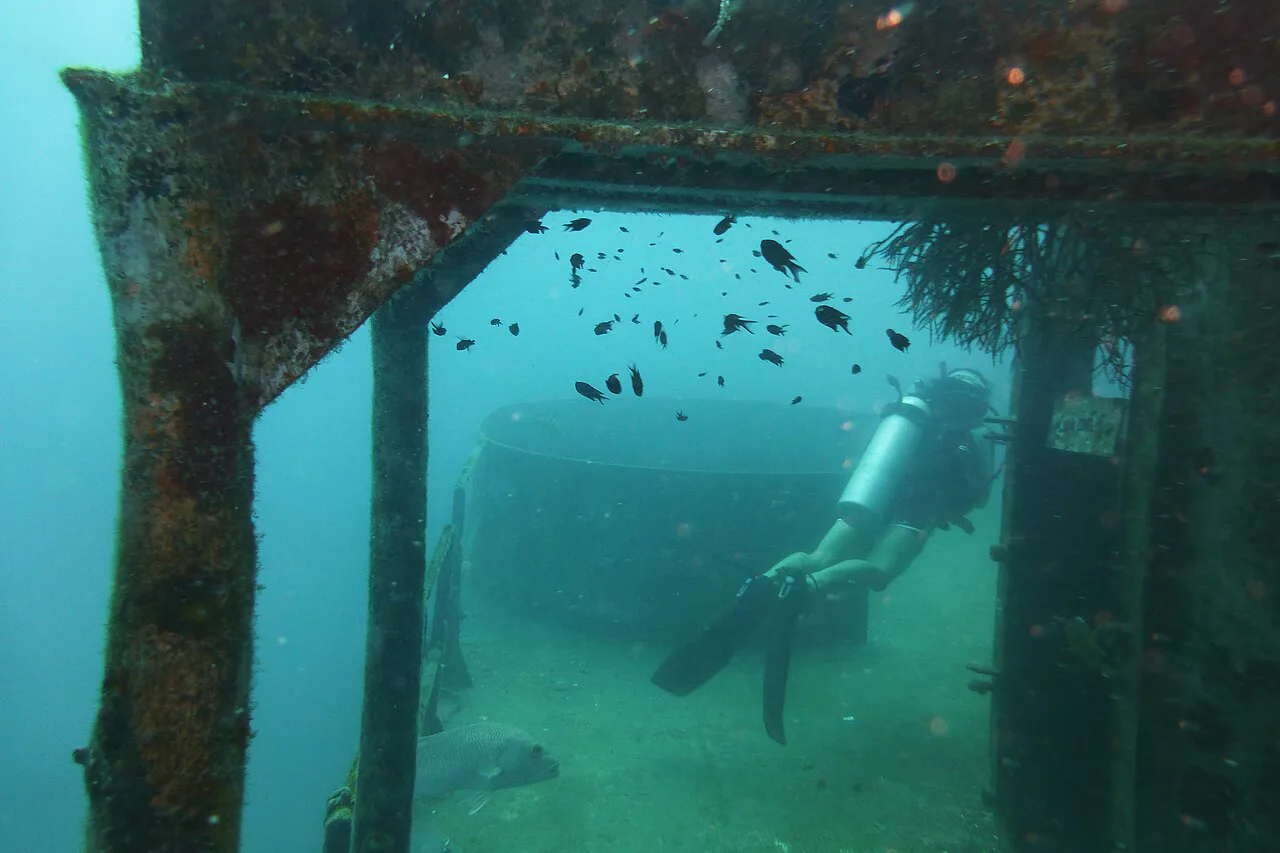
Two large guns anchor the layout. One sits at the stern and one near the bow. The stern is the deepest point, and a small school of single-spot snapper is often reported under the rear gun. A two-level wheelhouse rises over the hull, and its top at about 18 m is the shallowest part of the wreck. Swim along the hull and you can look into rooms through the portholes. Divers sometimes report scorpionfish at doors and portholes, Durban dancing shrimp on the interior stairs, sea snakes hunting near the wheelhouse, and rarely a whale shark. Treat all of this as a possibility, not a promise.
Penetration versus exterior diving
Going inside needs wreck training. The hull has many entry and exit points. One sits under the rear gun and leads into a long corridor with rooms on both sides. Three more lie just below the wheelhouse toward the bow. Two others sit under the forward gun and lead below deck. Without a wreck certification you can still see a lot from outside, including the portholes and the guns. Inside, silt, scorpionfish and tight spaces make trim critical, and a torch is recommended even where light reaches in. Build your control with buoyancy practice in Koh Tao before you try overhead spaces. A PADI Wreck Diver course is the usual route to penetration. Follow your own training limits and the briefing of a local professional. Divers Alert Network publishes safety guidance if you want a refresher on depth and decompression risks. This guide is not dive instruction.
Conditions and best time
Visibility averages 2 to 10 m, so the dive can disappoint on a murky day. On a good day you may see the whole wreck from above or from both sides. General Koh Tao seasonality is a rough guide only. February to April and July to October are rated better, January and May to June are middling, and November to December are weaker. Since it is mid-November 2026, expect to be in that weaker window, so ask the shop how the site looked in recent days. Request a recent visibility report before you commit to the deep dive. If conditions are poor, ask for a backup site and move the wreck to a clearer day.
Visibility of 2 to 10 m makes the 30 m stern hard to judge. Plan your descent around the wheelhouse top at about 18 m.
Planning and booking the Sattakut
Many Koh Tao boats run two daily trips of two dives each, and most sites are minutes from Sairee Bay. The Sattakut is farther out, at about 20 minutes from the main pier. Dive centers set their own rates, so ask for a written price. Check whether nitrox and torch hire are extra line items. A single fun dive costs least. Course dives add instructor time, and a Wreck Specialty spans several dives, so it costs more than one fun dive. Ask the shop these questions before you book:
| Option | Who it suits | Penetration | Cost driver |
|---|---|---|---|
| Fun dive | Certified Advanced divers who want a look | Exterior only unless you hold wreck training | Lowest, plus any nitrox or torch extras |
| Advanced course dive | Divers finishing Advanced Open Water | Usually exterior, per instructor | Part of the course fee |
| Wreck Specialty | Divers who want to go inside | Yes, with instructor supervision | Highest, because of multiple dives |
- What is the maximum depth rule for my certification?
- Is penetration allowed on a fun dive, or only on a course?
- What is the guide-to-diver ratio?
- Is nitrox available, and is it included?
- How was visibility on the last few days?
How it compares with other deep Koh Tao sites
The Sattakut gives you structure, while the pinnacles give you fish life. If you want big schools and current, the Chumphon Pinnacle dive and the Southwest Pinnacle dive are common picks. Sail Rock's offshore pinnacle and the Green Rock dive site are other deep alternatives. The No Name Pinnacle dive is a further option if you are comparing sites. After the wreck, a short swim of about 30 m leads to Hin Pee Wee for a possible second leg. Ask the briefing for the exact direction before you go.
| Choose | If you want | Trade-off |
|---|---|---|
| HTMS Sattakut | Structure, guns, wheelhouse and portholes | Visibility can be poor |
| Chumphon Pinnacle | Fish life | No wreck features |
| Sail Rock | Fish life and a deep pinnacle | Less structure to explore |
| Southwest Pinnacle | Pinnacle diving | No ship to look into |
| Green Rock | Reef and boulders | Less wreck interest |
Managing Your Dive Profile at the Sattakut
The Sattakut rewards a deliberate profile. The stern and seabed reach about 30 m, where no-decompression time is shorter and air use rises faster than on shallow reefs. The wheelhouse top sits near 18 m, so it can offer a shallower part of the same wreck to explore when the briefing allows.
Ask the guide how they plan the descent, the deepest point, and the time around the wheelhouse. This matters when visibility is only 2 to 10 m. A quick descent or an unclear route can use valuable time before you find the features you wanted to see.
Nitrox can be useful for a conservative profile, but it does not remove depth limits or replace good gas planning. Confirm the blend, your maximum operating depth, and whether nitrox is included before leaving the main pier. Stay within your certification, computer limits, and the dive center's plan.
Notes for your next dive trip
Optional updates to our Thai diving guides.
You might also like
Continue reading
More guides you'll find useful