White Rock Koh Tao Dive Site: Depth, Night Dive & Who It Suits
Planning a White Rock dive on Koh Tao? Depth, visibility, marine life, night diving, and how it compares to Green Rock and Japanese Gardens.
On this page
Last updated November 2026: White Rock Koh Tao (Thai: Hin Kao) is one of the island's largest dive sites, a boat-only cluster of granite pinnacles that Open Water divers can handle. Night diving is its best-known draw, when barracuda hunt and triggerfish sleep in the rock. Use this guide to plan the dive, then browse Koh Tao's full dive site list for alternatives.
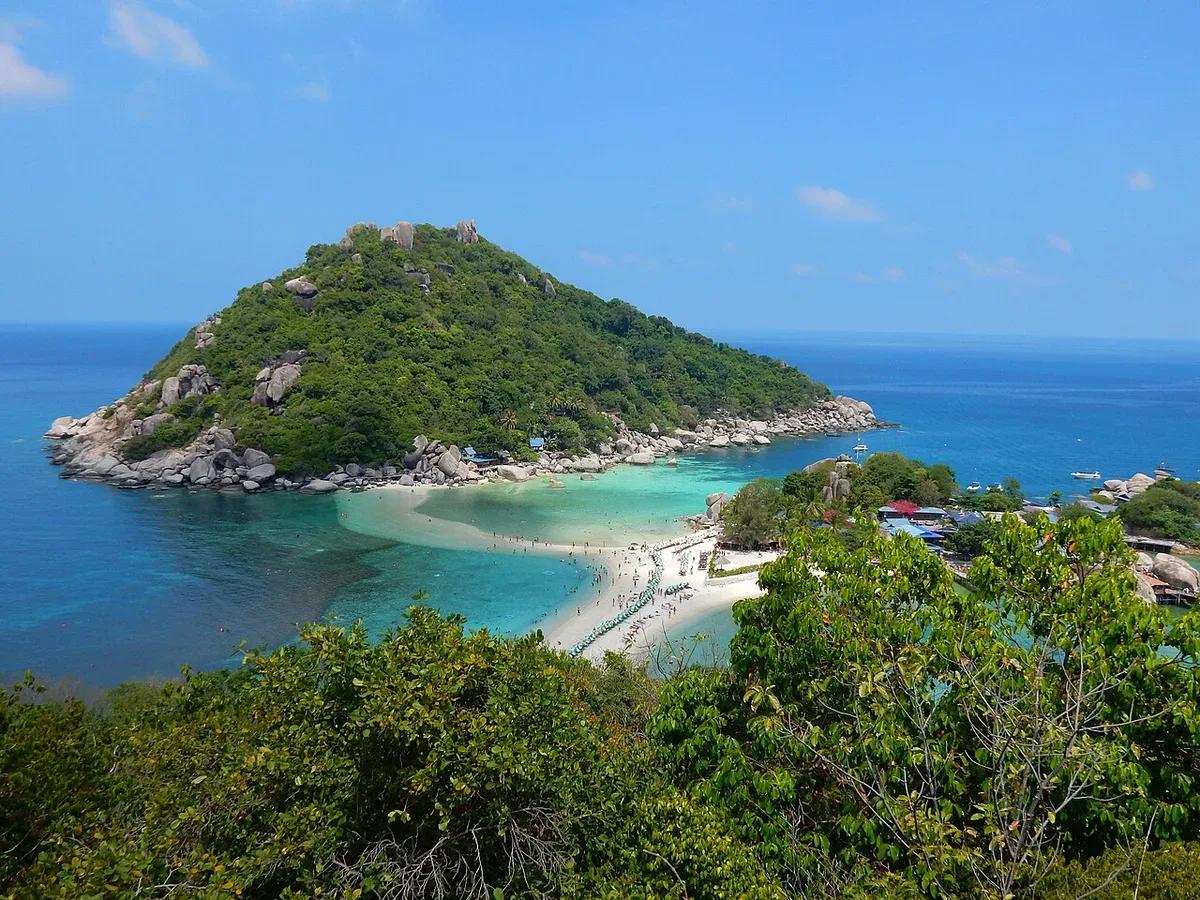
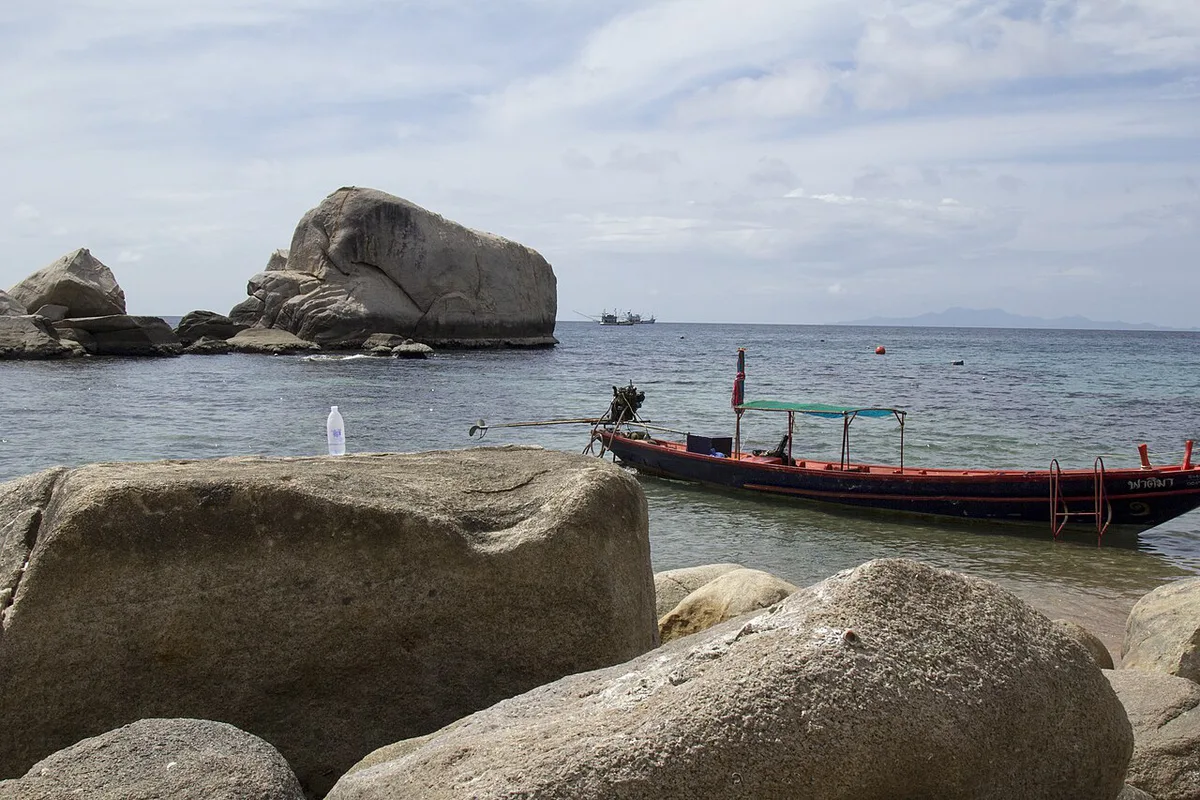
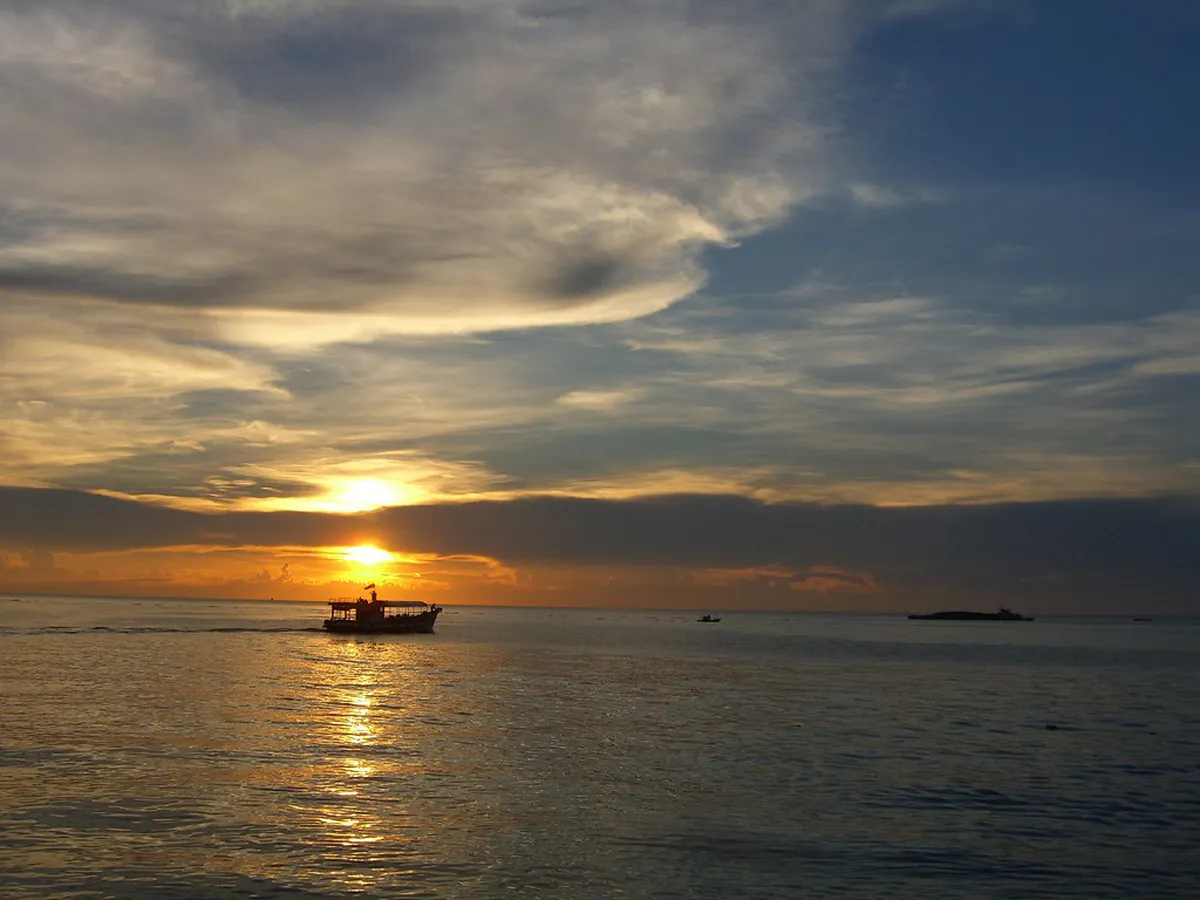
Featured image: Fabio Achilli from Milano, Italy, CC BY 2.0, via Wikimedia Commons.
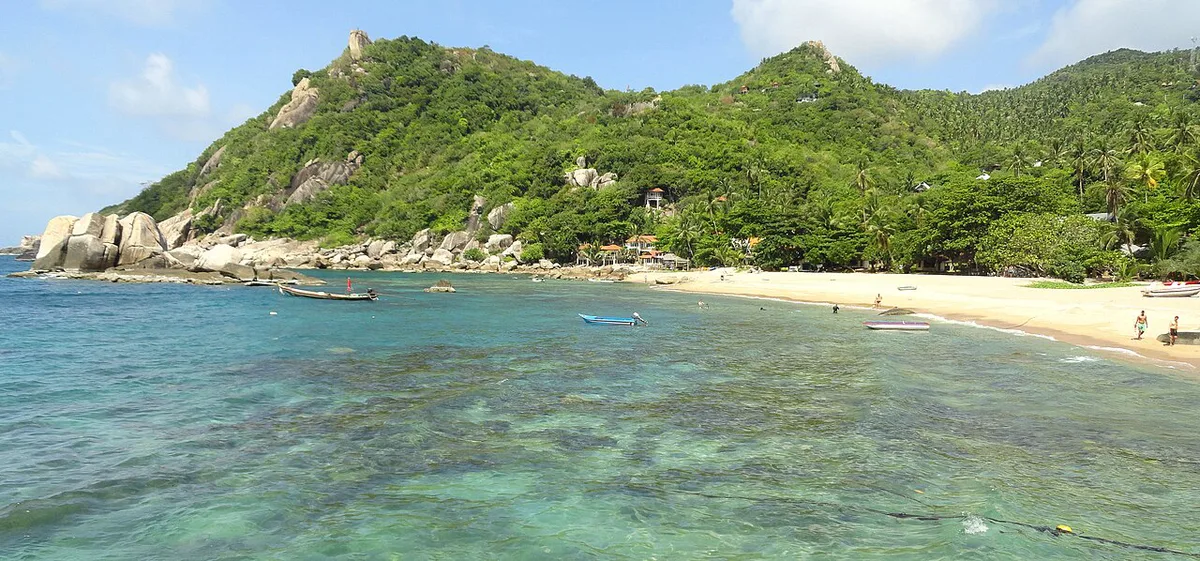
White Rock at a glance
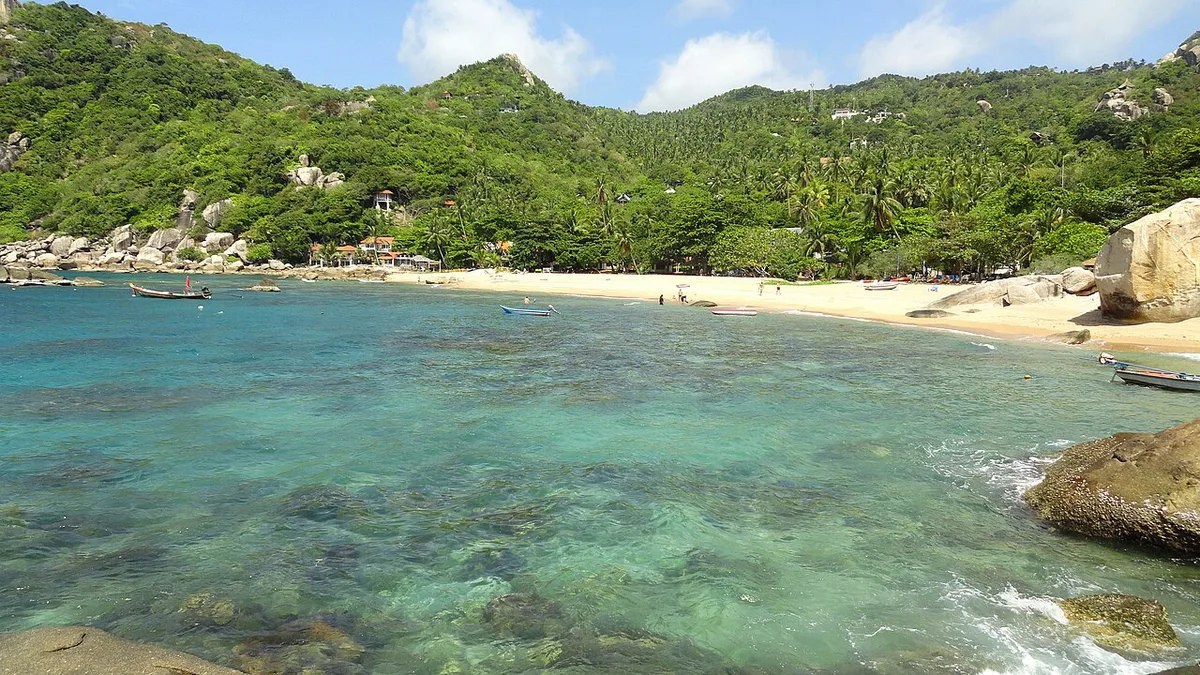
White Rock sits close to Koh Tao's coast near Koh Nang Yuan. Operators describe its exact position differently, so ask your shop for the site map on the day. Depth runs from about 2 m (7 ft) at the north pinnacle top to roughly 24 m (79 ft) at the south end. Published maximums range from 22 m to 26 m (72–85 ft). Listings put the site about 2 km (1.2 miles) offshore. Boat time depends on whether your shop departs from Sairee Beach or Mae Haad, and on sea state.
| Detail | What to expect |
|---|---|
| Depth | About 2 m (7 ft) to 24 m (79 ft); average near 12 m (39 ft) |
| Visibility | Typically 10–20 m (33–66 ft); up to 30 m (98 ft) on good days |
| Level | Open Water suits it; Advanced divers get the deeper south end |
| Current | Usually none to mild |
| Access | Boat only, booked through a dive shop |
| Best for | Night dives, training dives, macro photography, rest dives |
Is White Rock worth diving?
Yes, if you value variety and low stress over drama. One dive can mix granite pinnacles, a coral garden and open sand. Conditions are usually gentle, which suits students and divers easing back in after a break. Experienced divers should adjust expectations. Visibility can be flat on some days, and the site is better described as reliable than spectacular. If you want deep, pelagic action, step up to advanced Sail Rock dives. Chumphon Pinnacle's deeper water is another step-up option. Macro photographers can still do well here, because coral close-ups work even in mediocre water.
- Good fit: new Open Water divers and course students.
- Good fit: photographers shooting macro by day or night.
- Good fit: anyone who wants a low-stress rest dive.
- Poor fit: caves and swim-throughs, which belong to Green Rock.
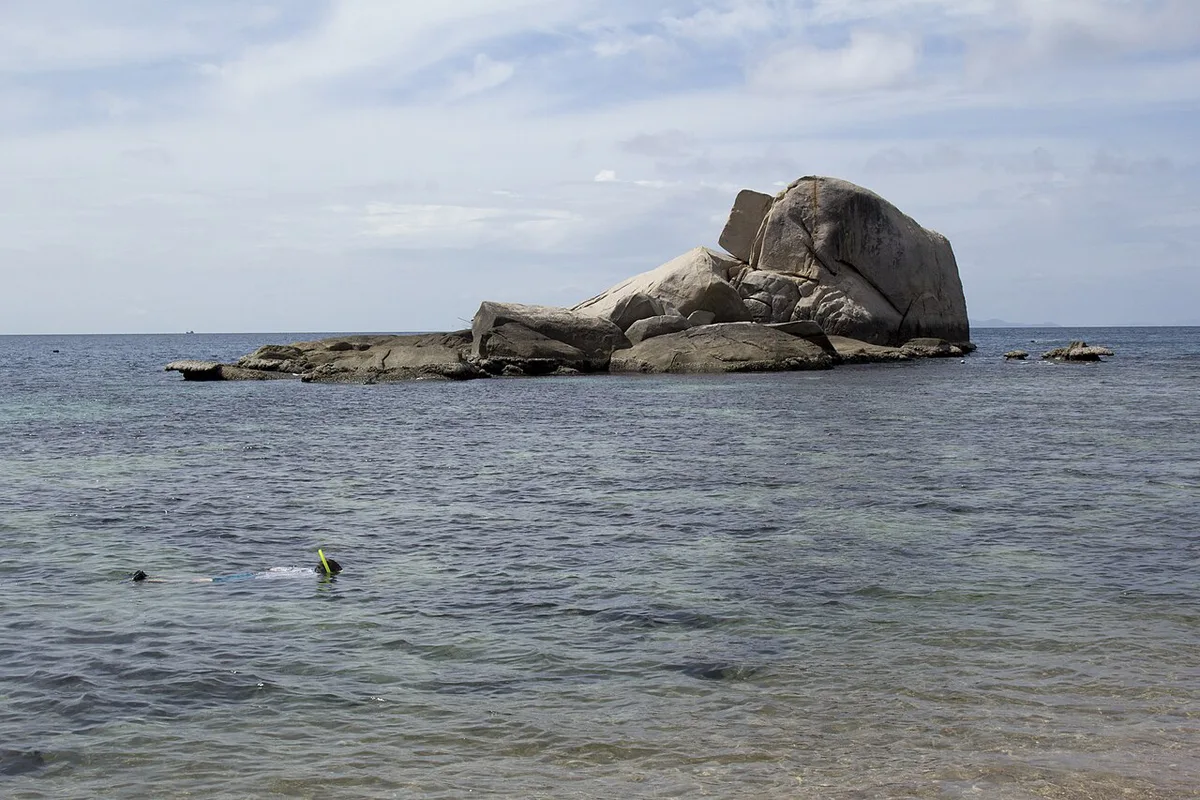
White Rock Koh Tao dive site layout: what you'll find at each part
White Rock runs along a south–north axis, and three zones make a natural dive plan. Open Water divers stay within 18 m (59 ft). That covers the saddle, the north pinnacle and the upper south pinnacle. Advanced divers can work down the south pinnacle toward 24 m (79 ft). Sand and shale surround both formations, so keep the rock in sight while you navigate.
- South pinnacle: drops to about 24 m (79 ft) and is often the best place to start. Yellowtail barracuda circle near the south buoy line.
- Sand saddle and coral garden: a small coral garden and sandy patch sit around 9 m (30 ft) between the two main formations.
- North pinnacle: the shallowest part, rising to within about 2 m (7 ft) of the surface. Its pale top gives the site its name, since Hin Kao means White Rock in Thai.
Marine life: what's common, what's lucky
Regular residents are easy to find. Blue-spotted stingrays hide under overhangs. White-eyed morays sit in small holes and watch you pass. Look for blue-ringed and six-banded angelfish, bannerfish and butterflyfish on the rock faces. Titan triggerfish live here too, and they turn territorial in breeding season. Turtles are reported regularly, often feeding on soft coral. Give them space and never chase them. Luckier sightings include eagle rays, mola mola and whale sharks. Treat those as rare bonuses, not promises.
Night diving at White Rock
Night diving is the site's signature. Hunting barracuda patrol the edge of your torch beam. Cuttlefish and pufferfish drift through the light. Check rock cracks for sleeping triggerfish and, occasionally, a sleeping turtle. Operators describe the dive as suitable for Open Water, Adventure and speciality divers. The PADI Night Diver speciality teaches the skills. Carry a primary torch and a backup. Agree light signals with your buddy before you descend. Wait for a night dive until your buoyancy is steady in daylight. Confirm that your insurance covers boat dives after dark, for example through dive accident cover from DAN.
| Day dive | Night dive | |
|---|---|---|
| What you see | Coral garden color, barracuda schools, rays under overhangs | Hunting barracuda, cuttlefish, pufferfish, sleeping triggerfish |
| Skills needed | Open Water certification | Night briefing, torch handling, ideally the Night Diver speciality |
| Best for | Training, photography, relaxed fun dives | Divers wanting a different side of the same reef |
| Watch for | Flat visibility on murky days | Disorientation; stay close to the rock |
Conditions, visibility and best time to dive
Operators describe a flat sea for most of the year and weak or no current. Typical visibility is 10–20 m (33–66 ft). Some listings quote up to 30 m (98 ft). Expect the low end on milky days and treat anything above it as a bonus. Season and swell change which sites boats choose, so ask which morning boats head here. Triggerfish nesting is described as April–May at neighboring Green Rock. Ask your shop whether the same window applies at White Rock.
Typical visibility is 10–20 m (33–66 ft). Pair that with the 18 m (59 ft) Open Water limit and expect the low end on milky days.
White Rock vs nearby sites
White Rock trades drama for ease. Compare the options before you pick a boat.
| Site | Character | Typical level | Pick it if you want… |
|---|---|---|---|
| White Rock | Large granite pinnacles, coral garden, strong night dive | Open Water | A forgiving day or night dive |
| Green Rock | Caves and swim-throughs, 3–28 m, exposed to current | Advanced | Swim-throughs and bigger fish |
| Japanese Gardens | Shallow, protected, easy | Beginner to Open Water | Gentle first dives |
| Sail Rock / Chumphon Pinnacle | Deeper, more demanding | Advanced | Deep and pelagic action |
Which White Rock dive should you pick?
Match the dive to your goal rather than diving the whole site every time.
- First dives: stay on the saddle and north pinnacle, within 18 m (59 ft).
- Training dive: use the saddle near 9 m (30 ft) for buoyancy and navigation drills.
- Photography: work the coral garden and shallow pinnacle top for macro.
- Night dive: book after you complete the Night Diver speciality or with a guide.
- Relaxed fun dive: start at the south pinnacle and drift north as you rise.
How to dive White Rock: boats, courses and what to ask your shop
White Rock is boat-only, and you book it through a dive shop. Shops often pair it with a second site on the same trip. Japanese Gardens is a natural partner, about 1.2 km away on mapped distances. Mapped distances also put HTMS Sattakut about 0.5 km away. Open Water students, Adventure divers and Night Diver students all use the site. Ask your shop four questions before you commit:
Mapped distances also put HTMS Sattakut about 0.5 km away. Your shop may combine it with Japanese Gardens, about 1.2 km away, on one boat.
- Which pier does the boat leave from, and when?
- What maximum depth is planned for this dive?
- What is the guide-to-diver ratio?
- Is a night dive scheduled at White Rock?
Mistakes to avoid at White Rock
Most problems here come down to buoyancy and expectations. Keep your fins off the reef and never rest on the rock. For more sites nearby, try Twins Pinnacle. Another option is Red Rock Pinnacle. Divers ready to go further can add Southwest Pinnacle Koh Tao Dive Site: What to Know or Shark Island.
- Touching coral or granite near the north pinnacle, which sits within about 2 m (7 ft) of the surface.
- Over-weighting, which makes buoyancy harder over shallow reef.
- Crowding nesting triggerfish instead of giving them wide space.
- Chasing or approaching turtles feeding on soft coral.
- Expecting caves, which belong to Green Rock.
- Assuming 20 m (66 ft) visibility is guaranteed.
Notes for your next dive trip
Optional updates to our Thai diving guides.
You might also like
Continue reading
More guides you'll find useful