Sea Snakes in Thailand: Where Divers See Them & How Safe It Is
Are there sea snakes in Thailand? Learn which species divers meet, where sea kraits are reported, how risky they really are, and what to do if one swims past.
On this page
Last updated November 2026. Yes, sea snakes live in Thai waters, and the sea snake Thailand divers meet most often is a banded or yellow-lipped sea krait. Kraits are venomous but rarely bite divers, so observe from a distance and never touch or chase one.
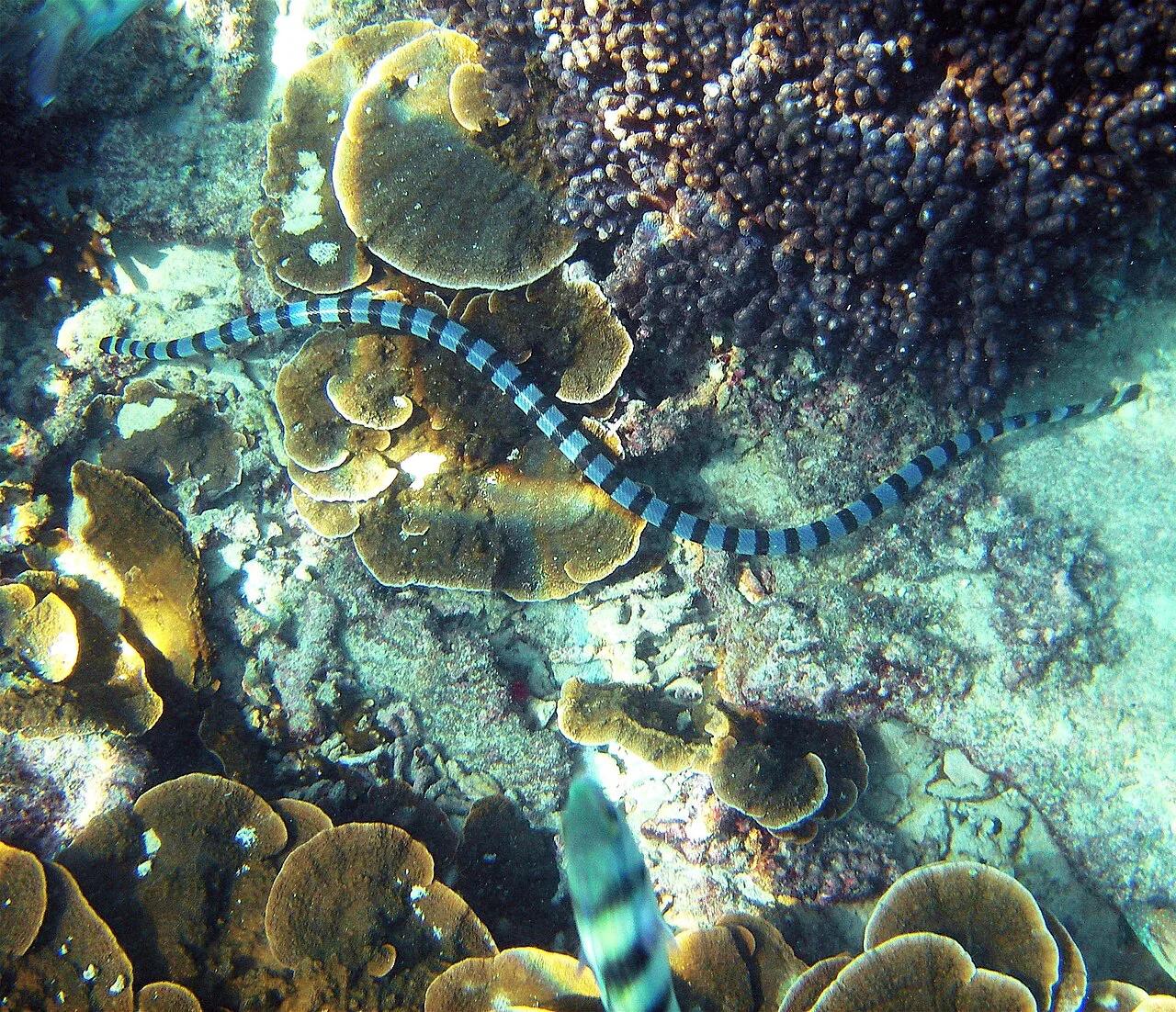
Featured image: jurvetson, CC BY 2.0, via Wikimedia Commons.
Quick Answer: Are There Sea Snakes in Thailand?
Sea snakes are part of Thai marine life, alongside turtles, rays and eels. Our overview of marine life in Thailand covers the wider cast. Divers and snorkelers usually meet sea kraits of the genus Laticauda. Dive operators report them around Koh Tao, Koh Phi Phi and the Similan Islands. Sightings are never guaranteed, and a krait is usually busy hunting eels rather than watching you. Beaked sea snakes (Hydrophis schistosus) also occur in Thai waters, but they are a coastal and fishing-net story, not a reef-dive sight.
Sea Kraits vs True Sea Snakes: How to Tell Them Apart
Two different animals share the label "sea snake", and the difference drives how risky an encounter is. Sea kraits hunt on reefs and return to land to digest prey, shed skin and lay eggs. True sea snakes stay in the water for their whole lives. Yellow-lipped (Laticauda colubrina) and blue-lipped (Laticauda laticaudata) kraits are the species named most often for Thailand. Ask your guide to confirm species, or log a photo on iNaturalist rather than guessing from color alone.
| Feature | Sea kraits (Laticauda) | True sea snakes (e.g. Hydrophis schistosus) |
|---|---|---|
| Lifestyle | Amphibious: reef hunting, then rocks and beaches | Fully aquatic |
| Typical Thai encounter | Reef dives and snorkel sites | Coastal waters and fishing nets |
| Who meets them | Divers and snorkelers | Mostly fishers handling nets |
| Behavior | Curious, unbothered, moves on | Linked to many sea snake bites worldwide |
Where Sea Kraits Are Reported in Thailand
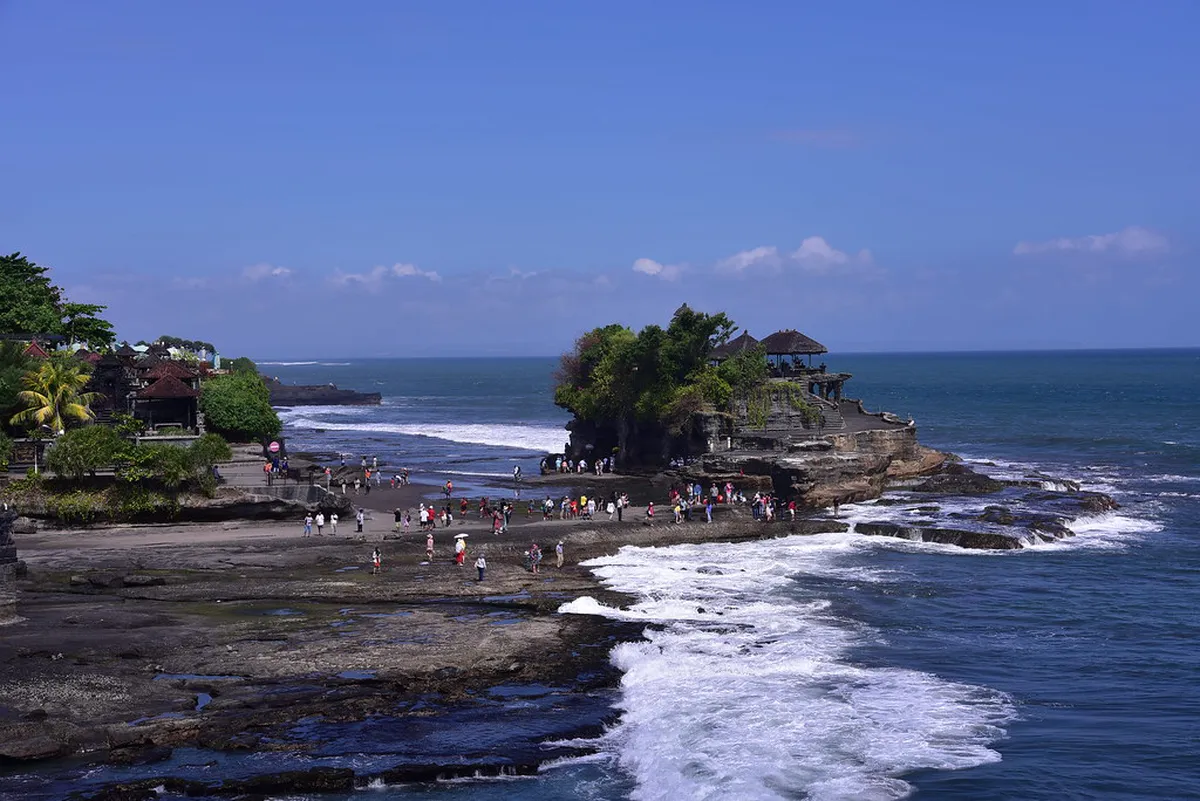
Most site detail comes from dive operators, so treat it as reported, not guaranteed. Koh Bida Nok near Phi Phi is described as the busiest spot. In the Gulf, Koh Tao sites host kraits, usually along boulder edges at 5–15 m (about 16–50 ft) on morning dives. On the Andaman side, liveaboard season runs October to May. Operators report most foraging at 10–30 m (about 33–98 ft). Wikipedia also shows a blue-lipped krait photographed on a reef off Ko Samui. Choose the Gulf for day trips from Koh Tao. Choose the Andaman for a liveaboard that also visits manta and whale shark sites.
| Site | Sea | Reported season | Best fit |
|---|---|---|---|
| Koh Bida Nok (Phi Phi) | Andaman | Year-round per operators | Day-trip divers wanting the best odds |
| Japanese Gardens, Red Rock, Green Rock, Hin Wong (Koh Tao) | Gulf | Year-round, best January to April | Beginners and day-trip divers |
| Koh Bon and Koh Tachai | Andaman | Liveaboard season, October to May | Liveaboard divers |
| Richelieu Rock | Andaman | Occasional, Andaman season only | Divers there for other wildlife |
How Dangerous Is a Sea Snake in Thailand?
Krait venom is potent in the lab. Operators cite a mouse LD50 of 0.45 mg/kg, which explains the "most venomous" headlines. Potency is not the same as risk. Kraits have short fixed fangs and a narrow gape, and eels are their prey, not divers. Operators report no recorded diver fatalities from banded sea kraits. Documented bites mostly involve handling or net work. Fishers face more risk than divers because they grab snakes tangled in gear. The IUCN lists the blue-lipped sea krait as Least Concern. Beaked sea snakes, also Least Concern, are the species most tied to bites worldwide. Other reef hazards deserve more attention, such as stonefish and lionfish.
What to Do When One Swims Past
Kraits often investigate bubbles, camera housings and boots before losing interest. Curiosity is not aggression. Follow your guide's briefing and use these rules:
Koh Tao krait habitat sits at 5–15 m, while Andaman foraging is reported at 10–30 m, deeper than most snorkel reach.
- Hold still, keep your hands in and watch.
- Never touch, grab or prod the snake.
- Do not chase it for photos or pose with it.
- Leave its path to the surface clear, because it must breathe.
- Watch your buoyancy near crevices, where kraits search for eels.
- Book with a licensed dive operator and tell the guide you want to see one.
If a Bite or Net Encounter Happens
Bites are rare. Get out of the water, stay as still as possible and call local emergency services. Head to the nearest hospital. Divers Alert Network publishes marine envenomation guidance worth reading before a trip. Neurotoxic signs such as numbness, muscle ache and weakness can start between 30 minutes and several hours after a bite, per operator reports. A mild first hour does not mean you are clear. Get checked regardless. Jellyfish are the more common sting, so see our guides to box jellyfish and other jellyfish.
Beach and Shore Encounters
Sea kraits come ashore on some islands to rest, digest and shed. Individuals often return to the same stretch of rocky coast. Never pick one up, even if it looks stranded. Watch where you step on rocks and beaches at night, and use a torch. Leave it alone and it will usually head back to the water by itself. Sea turtles also use Thai beaches, so our guide to sea turtles in Thailand covers shared etiquette. Park rules on island access are set by the Department of National Parks.
Why Sea Kraits Matter: Eels and Conservation
Banded sea kraits specialize in eels. They probe crevices for prey that few other predators can reach. That makes them quiet regulators of moray eel populations. Rays often share the same dives, so see manta rays in Thailand as well. Conservation pressure on true sea snakes is real. A 2014 Conservation Biology study found that sea snake harvest in the Gulf of Thailand reaches about 82 t a year, roughly 225,500 snakes. Squid fishers land them at Vietnamese ports in Ca Mau Province, not Thai ones. Harvested mass fell about 30% over four years, and the authors call for monitoring.
Can You See Sea Kraits While Snorkeling?
Yes, but treat a sea-krait sighting as a bonus rather than a reason to leave a marked snorkeling area. Around Koh Tao, reported krait habitat includes boulder edges at 5–15 m. That puts many encounters below comfortable surface-snorkeling depth, even in clear water.
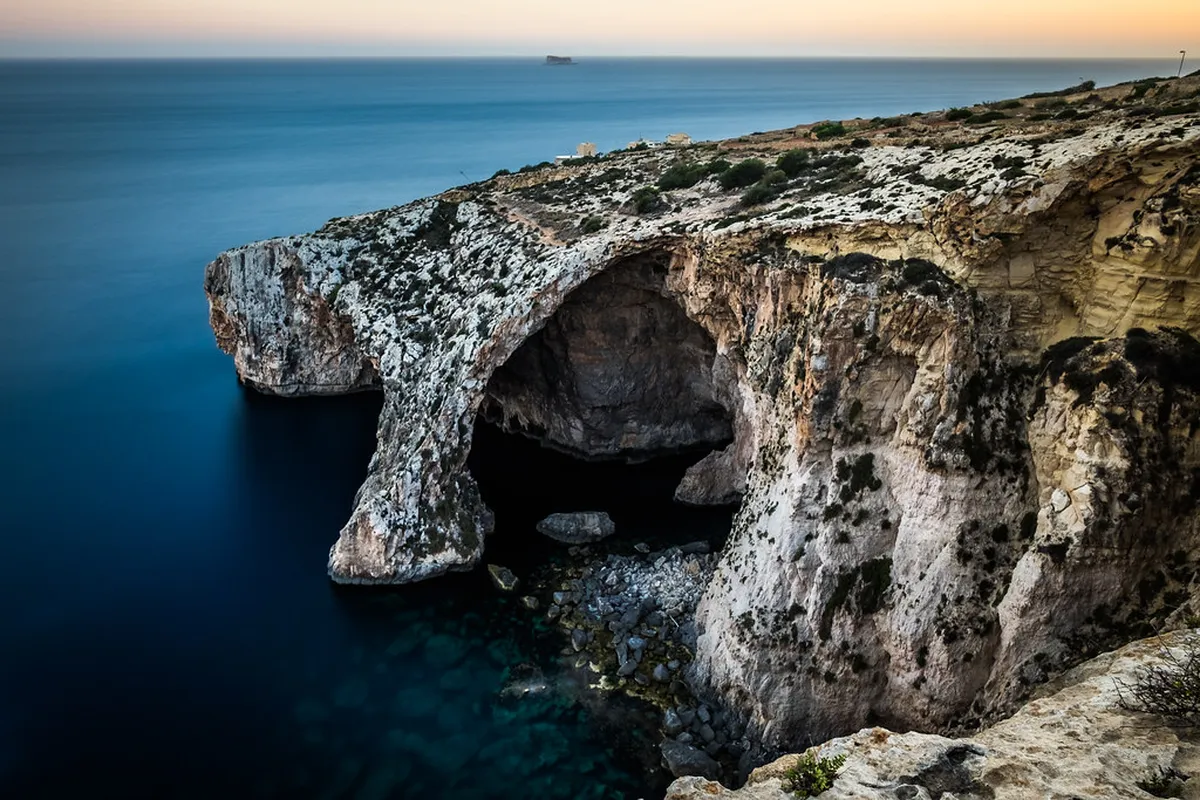
Japanese Gardens, Red Rock, Green Rock and Hin Wong are the Koh Tao sites most often mentioned by local operators. Stay on the surface, use a buddy, and do not dive down or reach into holes for a closer look. Sea kraits hunt eels in crevices and need an open route to the surface to breathe.
Andaman sites can be deeper: operators report much foraging at 10–30 m, especially on liveaboard routes. Snorkelers are therefore more likely to have a brief surface view than a sustained encounter there. If one appears, float calmly, give it space, and let it choose its own direction.
Frequently Asked Questions
Are sea snakes venomous to humans?
Yes, all sea snakes are venomous, and kraits have potent venom in lab tests. Real-world bites on divers are rare and mostly involve handling or fishing nets.
How likely are you to see a snake in Thailand?
Underwater, a sea krait sighting is possible at reported sites but never guaranteed. Koh Bida Nok and Koh Tao's Gulf sites give the best odds according to dive operators.
Notes for your next dive trip
Optional updates to our Thai diving guides.
You might also like

Continue reading
More guides you'll find useful