PADI vs SSI: Which Dive Certification in Thailand?
Both are accepted worldwide. Compare PADI vs SSI on course style, eLearning, cost, upgrades and Thai dive centers, then choose a school.
On this page
Last updated November 2026: on padi vs ssi, neither agency wins for a beginner in Thailand. Both teach to shared international standards, so a card from either is accepted by dive operators worldwide. Choose the dive center and instructor first, then take whichever agency that shop teaches.
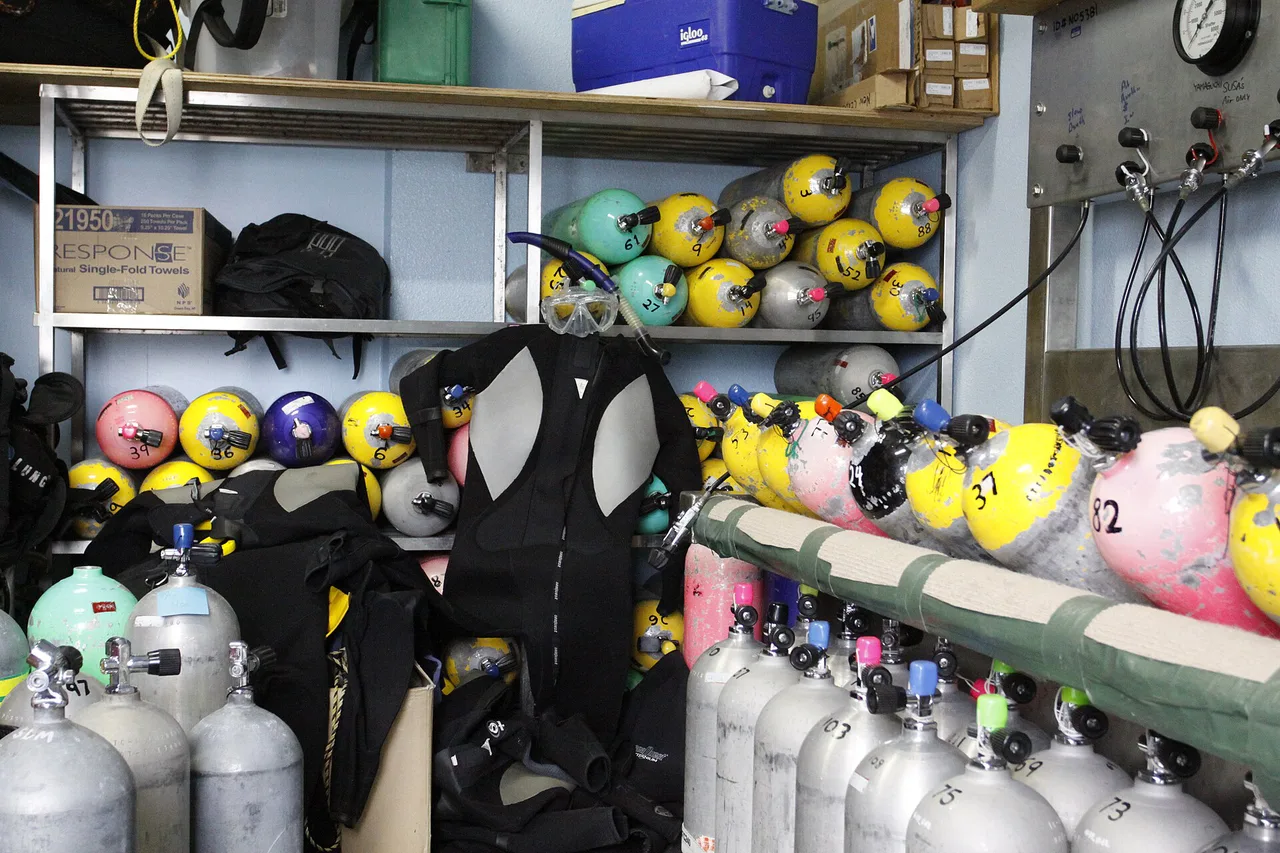
Featured image (a dive gear room, shown for illustration): This image was released by the United States Marine Corps with the ID 100608-M-3, Public domain, via Wikimedia Commons.
Quick Verdict: PADI vs SSI at a Glance
Open Water courses from PADI and SSI cover the same core skills and lead to the same recreational privileges. Differences show up in how lessons are delivered, how materials are packaged and how much freedom the instructor has. Agencies do not teach. Dive centers and their instructors do, so the person in the water with you matters more than the logo on your card. Use the lists below as a quick filter, then read on for Thai specifics.
- Choose PADI if you want a highly standardized sequence that looks much the same at every PADI center.
- Choose SSI if you want an instructor who can adjust the order and pace of skills to your comfort.
- Choose whichever agency your preferred Thai shop teaches if you have already found an instructor you trust.
- Choose neither on price alone, because the gap is usually small and depends on the shop.
What Is the Difference Between PADI and SSI?
Start with what matches. Both follow the minimum training requirements set by the World Recreational Scuba Training Council, and both align with ISO 24801-2 for entry-level divers. Level names map closely, and each agency offers a ladder from Open Water through Advanced, Rescue and on to Divemaster. Real differences are in delivery. PADI uses a tightly standardized curriculum. SSI gives instructors more discretion over sequencing and pacing, and it distributes through dive shops. Published agency details are on the SSI website, and PADI course pages sit on padi.com.
Side-by-Side Comparison Table
Use this table as a checklist when you compare shops. Cost rows are ballpark figures from US-based published guidance, not Thai quotes. Prices and hours checked November 2026.
| Factor | PADI | SSI |
|---|---|---|
| Entry level name | Open Water Diver | Open Water Diver |
| Second level name | Advanced Open Water Diver | Advanced Adventurer |
| Rescue level name | Rescue Diver | Diver Stress & Rescue |
| Course structure | Standardized, fixed skill sequence | More instructor discretion over order and pace |
| Theory access | PADI eLearning, often a separate line item at about $100–$200 when bought direct | Digital materials through the MySSI app, often folded into the shop's course price |
| Typical complete Open Water course (US ballpark, either agency) | $300–$600 | $300–$600 |
| Digital card | Available in the PADI app | Available in the MySSI app |
| Instructor variance | Narrower | Wider, so vet the instructor |
| Pro path | Divemaster, then Instructor | Divemaster, then Instructor |
Course Structure and Online Theory
PADI teaches skills in a defined order that stays consistent from one center to the next. That predictability reassures many learners. SSI lets an instructor move a skill later if you struggle, as long as every requirement is met before certification. A nervous learner struggling with mask clearing may benefit from that room. Both agencies let you finish theory online before any water session. On a short holiday, that frees your Thai days for pool and ocean dives instead of classroom time. Ask your shop whether theory is bundled before you buy any course separately.
- Mistake to avoid: buying eLearning separately when the shop already includes it.
- Mistake to avoid: assuming the card type changes which dive sites you can visit.
- Mistake to avoid: booking a shop on logo alone without checking the instructor.
Cost and Time Trade-Offs
Published ballparks put a complete Open Water course at $300–$600 in the United States for either agency. PADI eLearning bought directly commonly runs $100–$200 on top of in-water fees. SSI digital materials are licensed through the shop, so many centers fold them into one price. Thai baht quotes will differ, and the cost difference is usually small and shop-dependent. Ask each shop for an all-in price. That should cover materials, certification fee, gear rental and any boat or marine park charges. For days needed, ask each shop to write out its schedule, including how much theory you should finish before arrival. A short pause between Open Water and Advanced is fine, but tell the instructor so they can plan a refresher.
Check whether the shop bundles eLearning, since buying it direct can add $100–$200 on top of in-water fees.
Global Recognition and Switching Agencies
Both cards are honored worldwide, and an Open Water certification from either agency allows dives to 18 m. Our scuba certification overview covers the wider picture for Thailand. You can usually start with one agency and continue with the other without repeating courses. Confirm that with the shop and the agency's current policy before you book. A crossover is mainly a professional matter, for instructors changing agency. Naming differs at the second level. PADI calls it Advanced Open Water, while SSI calls it Advanced Adventurer. Our guide to Advanced Open Water in Thailand explains the upgrade step. Certifications do not expire, but a long gap between dives calls for a refresher, and each shop sets its own threshold.
Choosing in Thailand: Pick the Dive Center First
No source we can cite says which agency dominates in Thailand, so check each shop's agency before booking. Our guide to the best place to learn to dive compares destinations. If PADI is your pick, see how to book a PADI Open Water course in Thailand. Whatever the agency, vet the school with questions like these. Safety guidance from Divers Alert Network is worth reading before your first dive.
Whichever agency your Thai shop teaches, its Open Water card still allows dives to 18 m.
- Class size and student-to-instructor ratio in open water.
- Recent reviews that mention the instructor by name.
- Equipment condition and how often rental gear is serviced.
- Instructor language and briefing style.
- eLearning policy: bundled, separate or finished before arrival.
- Safety record and emergency plan.
If You Want to Go Pro: Divemaster and Instructor
Professional ratings are equivalent in level, and divers can move between agencies for instructor training. Fee claims about renewals and rating costs mostly come from agency-affiliated sources, so treat them as unverified and ask each school for a written breakdown. The practical question is where you want to work, so check which agency your target shops teach. Our Divemaster course guide covers training in Thailand. A longer stay might suit a Divemaster internship. For instructor training, see the PADI IDC in Thailand, which is one option rather than a ruling that PADI is better.
Who Each Option Fits
Short-holiday beginners should finish theory before arrival and book the shop with the clearest all-in price. Career-minded divers should check agency prevalence where they hope to work. Budget-focused learners should compare itemized quotes, not agency names. Nervous learners often benefit from a patient instructor, which may favor SSI's flexibility or PADI's predictable sequence depending on temperament. Younger or older travelers should check our Scuba Diving Age Limit: Minimum Age by Course (2026) guide before booking.
Frequently Asked Questions
What does SSI scuba stand for?
SSI stands for Scuba Schools International. It is one of the two agencies most beginners compare, alongside PADI.
Can I scuba dive without PADI?
Yes. SSI and other recognized agencies meet the same international standards, and reputable operators accept their cards. Ask your chosen Thai shop which agencies it welcomes.
Is it hard to get PADI certified?
Open Water combines theory, confined-water skills and open-water dives, all taught step by step. Most healthy learners progress at an instructor-guided pace, and extra practice time is available if you need it.
Notes for your next dive trip
Optional updates to our Thai diving guides.
You might also like


Continue reading
More guides you'll find useful