Phuket Marine Life: What You'll See, Where and When
Plan around Phuket marine life: which animals live at which dive sites, who each site suits, and how season shapes what you see.
On this page
Last updated November 2026: Phuket marine life is best known for leopard sharks, hawksbill turtles and anemone-covered pinnacles, with manta rays and whale sharks as seasonal possibilities. Best encounters happen at offshore sites reached by boat, not off the beaches. What you see depends on the site and the season, so pair this page with our Phuket diving guide when you plan.
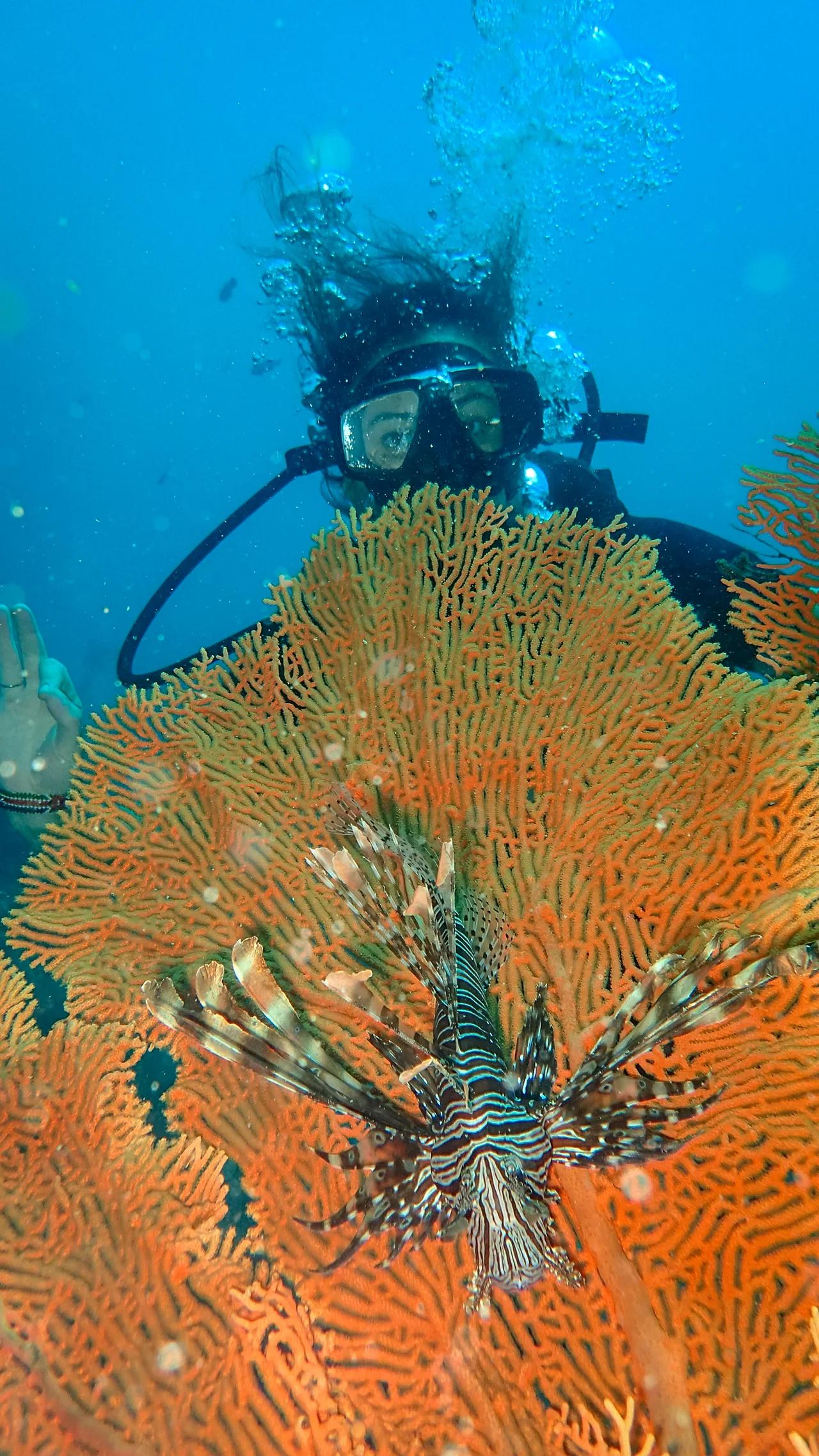
Featured image (a lionfish on a Thai reef, shown for illustration): Weldon Kennedy from London, UK, CC BY 2.0, via Wikimedia Commons.
What Phuket Marine Life Is Known For
Big animals come first. Leopard sharks rest on sand at Shark Point, and hawksbill turtles turn up at Anemone Reef and the Kingcruiser Wreck. Manta rays and the occasional whale shark are reported around Racha Noi, Hin Daeng and Hin Muang. Those are seasonal, probabilistic encounters, not promises. Macro life follows: tiger-tail seahorses, ghost pipefish and camouflaged scorpionfish. Depths in this guide are in meters, and 30 m is about 100 ft. Use the table to match an animal group to a site and a skill level.
| Animal group | Typical Phuket-area sites | Level |
|---|---|---|
| Leopard sharks, bamboo sharks | Shark Point, Anemone Reef, Koh Doc Mai | Beginner to experienced |
| Manta rays, occasional whale sharks | Racha Noi, Hin Daeng, Hin Muang | Experienced |
| Hawksbill turtles | Anemone Reef, Kingcruiser Wreck, Maiton Island | Snorkel to experienced |
| Blacktip reef sharks | Maiton Island | Snorkel and beginner |
| Seahorses, ghost pipefish | Koh Doc Mai, Anemone Reef | Beginner to experienced, patience needed |
| Anemonefish, butterflyfish, parrotfish | Anemone Reef, Coral Island, Racha Yai | Snorkel and beginner |
Shark Point and Anemone Reef: Sharks, Anemones and Seahorses
Shark Point sits about 25 km east of Chalong Bay. It became a marine sanctuary in 1992, so fishing and collecting are banned and official mooring buoys protect the reef. Three limestone pinnacles reach roughly 18 to 20 m. Leopard sharks often rest on the sand at the reef edge, and bamboo sharks hide under coral ledges. Lionfish are common, sometimes up to 20 on a single dive. Scorpionfish are harder to spot because they blend into the coral. Anemone Reef lies about 600 m north. Its pinnacle rises 30 m from the sea floor to just beneath the surface. Anemones cover the rock, and skunk, Clark's and tomato anemonefish live among them. Sea fans on the eastern slope shelter tiger-tail seahorses at deeper levels. Spotting one takes a good eye and patience. Currents can run strong at both sites, so guides often zigzag to avoid finning against the flow.
Kingcruiser Wreck and Racha Noi: Big Animals for Experienced Divers
Kingcruiser, an 85 m ferry, sank on 4 May 1997 after hitting Anemone Reef. All of the roughly 500 people aboard survived. It now rests upright at about 30 m, and the captain's cabin sits at 12 m. Part of the stern top deck collapsed in August 2003, so divers stay outside. Lionfish gather around the twin propellers near 32 m. Divers also report a large hawksbill turtle, a great barracuda and schools of trevally, mackerel and yellowtail barracuda. Strong currents and low-season rough seas make this a poor choice for beginners. Racha Noi offers the best visibility around Phuket, with granite boulders and hard coral. Manta rays and occasional whale sharks pass the boulders. South Point involves a descent to about 18 m in frequent strong current. Hin Daeng and Hin Muang, farther south, are described as whale shark and giant manta sites in high season. Treat those sightings as possible, not guaranteed.
Koh Doc Mai, Coral Island and Maiton: Macro Life and Easy Sites
Koh Doc Mai is a limestone island with walls that drop to about 30 m on three sides. It ranks among the area's best macro sites. Tiger-tail seahorses hide in the gorgonian sea fans, and harlequin ghost pipefish also live here. A macro lens earns its place in your bag. Leopard sharks and gray reef sharks are sometimes seen, along with bamboo sharks from a breeding program at the Phuket Marine Biological Research Center. Coral Island (Koh Hey) is a short boat ride from Chalong Bay. Depths run 3 to 15 m over hard coral with butterflyfish, angelfish, parrotfish and clownfish. Maiton Island is sheltered, with depths of 5 to 25 m. Blacktip reef sharks are reported patrolling the shallows, and turtles are common. Racha Yai covers 3 to 30 m and suits all levels. Watch for titan triggerfish there: during spawning season the male guards his nest and may charge divers who cross it.
Big Animals vs Macro: What Suits You
Pick by patience, not just ambition. Big-animal days favour offshore sites like Racha Noi, where you cover ground in current and scan open water. Macro days favour Koh Doc Mai and Anemone Reef, where you hover over one sea fan for minutes. A seahorse or frogfish rewards slow looking and a guide who knows the spot. Lionfish counts at Shark Point, sometimes up to 20 a dive, show that reef sites deliver steady entertainment between headline sightings. A one-dive trial fits Coral Island or Maiton better than a multi-dive offshore day. Photographers should bring a macro lens for Koh Doc Mai. Sightings are never guaranteed, so judge a trip by the site's overall life, not a single animal.
Andaman Sea Species Worth Looking For
Many Phuket residents are typical of the Andaman Sea rather than unique to Phuket. Dive-center species lists for the area include the tiger-tail seahorse, emperor angelfish, skunk anemonefish, Andaman sweetlips and Indian bannerfish. Reef residents also include titan triggerfish, blue-spotted stingrays half-buried in sand, fluted giant clams and orbicular batfish. Common names differ by region. The blue-spotted stingray is also called Kuhl's stingray or ribbontail. Check a reference such as FishBase if you want an exact species before you buy an ID guide.
Season and Visibility: When to Go for What
Visibility at Racha Yai, with depths of 3 to 30 m, is usually good but varies with the seasons. Racha Noi gives the best water clarity in high season. Hin Daeng and Hin Muang whale sharks and mantas are also tied to high season. Low-season rough seas make Kingcruiser unsuitable for beginners and can close offshore options. Sheltered sites such as Coral Island and Maiton stay workable when the sea turns. Shark Point is described as a good dive at any time of year. For exact windows, read our guide to the best time to dive. Our page on Phuket Water Temperature by Month: Is the Sea Warm Enough? covers warmth and wetsuit choices.
| Season | What tends to work | Trade-off |
|---|---|---|
| High season | Racha Noi, Hin Daeng and Hin Muang for mantas and whale sharks | Best odds, but sightings are still not guaranteed |
| Low season | Sheltered sites such as Coral Island, Maiton and Racha Yai | Rough seas can rule out Kingcruiser and offshore pinnacles |
Snorkel, Try-Dive or Certified: How to See It
Snorkelers do well at sheltered islands. Maiton Island and Coral Island have shallow reef and, at Maiton, reported blacktip sharks. A try-dive suits the same sites, and Coral Island suits discover scuba programs and refresher dives. Racha Yai's artificial reef in Siam Bay averages about 18 m and suits all levels, including open water students. Its statues were sunk in 2006. Certified divers can add the Kingcruiser exterior, Anemone Reef currents and Racha Noi. Start with our guide to trying scuba in Phuket. Ready to learn properly? See the Phuket Dive Course: PADI Options, Costs & How to Choose options. PADI's Thailand dive travel page gives wider context on the region. A common mistake is booking an offshore site for a first dive.
Coral Island's depths run 3 to 15 m, while Siam Bay's reef averages about 18 m, a step deeper for try-dives.
- Snorkel: Maiton Island or Coral Island for turtles, reef fish and sheltered water.
- Try-dive: Coral Island, Maiton or Racha Yai's Siam Bay reef at about 18 m.
- Certified: Shark Point, Anemone Reef, Kingcruiser exterior, Koh Doc Mai walls.
- Experienced only: Racha Noi South Point and the Hin Daeng and Hin Muang trip.
Cost, Time and Logistics
Offshore sites need a boat. Shark Point is about 25 km east of Chalong Bay, and Kingcruiser sits close to it. Coral Island is only a short boat ride from Chalong Bay. Racha Noi works as a one-day excursion or a 2-day liveaboard, and its South Point appears more often on liveaboards than day trips. Fares vary by operator, so use our Phuket Diving Price 2026: Costs, What's Included and Hidden Extras breakdown for current figures. Photography gear and macro lenses are usually extras. Compare route formats in our day trip guide. For context on overall quality, see whether Phuket is good for diving. Planning a base near the boats? Browse Phuket Dive Resort Guide: Where to Stay and Dive options.
Shark Point, a sanctuary since 1992, lies about 25 km east of Chalong Bay, a longer run than Coral Island's short boat ride.
Responsible Wildlife Viewing
Leopard sharks are docile, but do not touch them. Handling does not help the animals and can cause infection and distress. Keep your buoyancy neutral over anemones, sea fans and coral, since a fin kick can break fragile growth. Do not chase turtles or rays, and give titan triggerfish a wide berth in nesting season. Use mooring buoys, never anchors, at protected sites like Shark Point. Choose reef-safe sunscreen. Marine-park rules, fees and closures change, so check the Thai national parks authority before you go.
Frequently Asked Questions
What are some good dive sites in Phuket?
Shark Point and Anemone Reef are the classic pairing for leopard sharks, anemones and seahorses. Kingcruiser Wreck and Racha Noi suit experienced divers. Koh Doc Mai is a macro and wall site, while Coral Island and Maiton Island are gentler options.
Notes for your next dive trip
Optional updates to our Thai diving guides.
You might also like
Continue reading
More guides you'll find useful