Similan Islands Whale Shark: Where & When to Spot One
Whale sharks at the Similan Islands are luck, not a promise. See where sightings are likelier, which trip type helps, and what to expect.
On this page
Last updated November 2026. A Similan Islands whale shark sighting is possible, but nobody can promise one. This guide covers where whale sharks are reported, which trip type gives you the best odds, and what to do if none shows up.
Featured image: Christian Steen, CC BY 2.0, via Flickr.
Short answer: will you see a whale shark at the Similans?
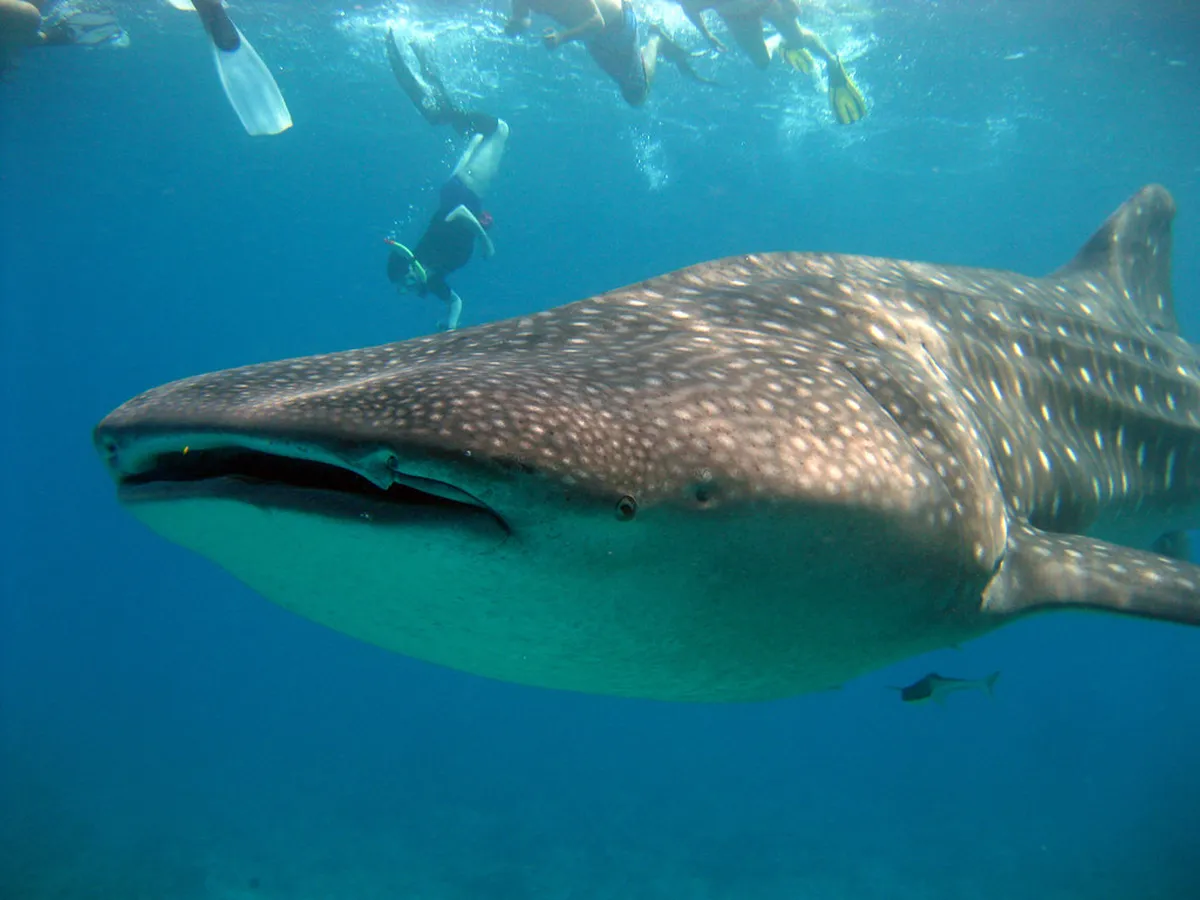
Probably not on a single visit. Whale sharks are filter feeders that cruise open water, and they do not hold a fixed spot around the Similan group. Dive operators name Richelieu Rock and Koh Tachai as the better-known Andaman Sea chances. Liveaboard itineraries from the Similans often include both. One forum veteran wrote in 2006 that you must be "very lucky" to see a whale shark on Similan trips. Another diver reported two at Richelieu once and called it "a matter of luck". Those are anecdotes, not sighting rates, but the message still holds today. Treat a whale shark as a bonus.
- Verdict for divers: a multi-day liveaboard gives a real but unreliable chance.
- Verdict for snorkelers: possible near the surface, but never planned around.
- Verdict for day-trippers: a much weaker chance than a liveaboard diver gets.
- Whale sharks are filter feeders that sieve plankton. Dive operators describe them as gentle, though you should still keep your distance.
Where whale sharks are actually reported
Reports cluster at offshore pinnacles rather than the sheltered Similan granite-boulder sites. Dive operators name Richelieu Rock and Koh Tachai on the Andaman coast as the places to hope for one. In the Gulf of Thailand, they name Chumphon Pinnacle and Sail Rock. Whale sharks in Thailand are usually described as 4–12 m (about 13–39 ft) long. Some sources cite up to 15 m (about 49 ft), but maximum size is debated. The table below sorts the Andaman sites by what they are best known for. Most of this comes from dive-operator reports, so treat the likelihood column as informal.
| Site | How you reach it | Whale shark note | Other highlights |
|---|---|---|---|
| Richelieu Rock | Liveaboard itineraries | Named as a whale shark site; one diver reported two at once | Soft corals and dense fish life |
| Koh Tachai | Liveaboard itineraries | Named as a whale shark site; conditions change often | Large fans, big fish schools, possible mantas |
| Koh Bon | Liveaboard itineraries | Not a named whale shark site | Described as Thailand's manta hotspot; bull sharks reported January 2024 |
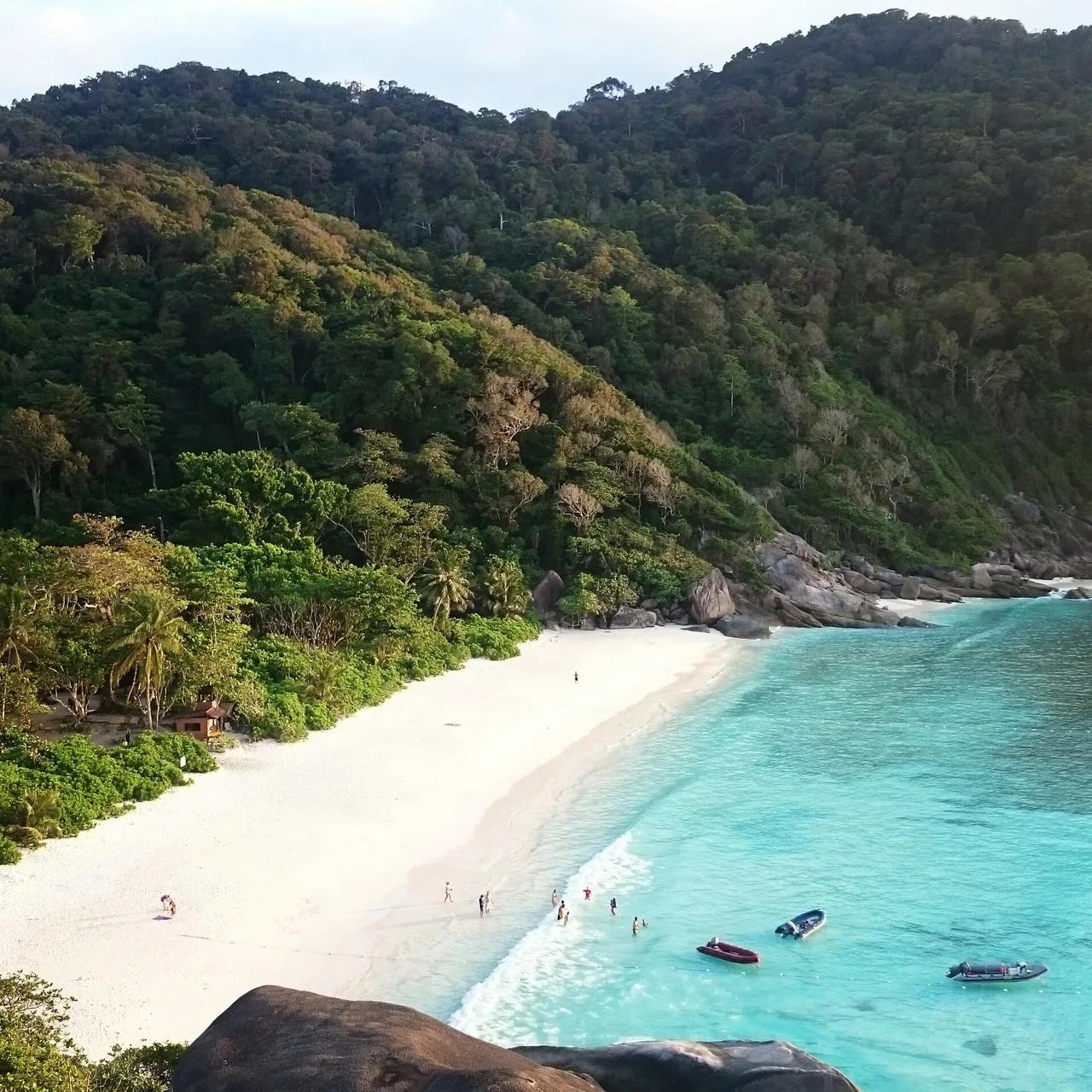
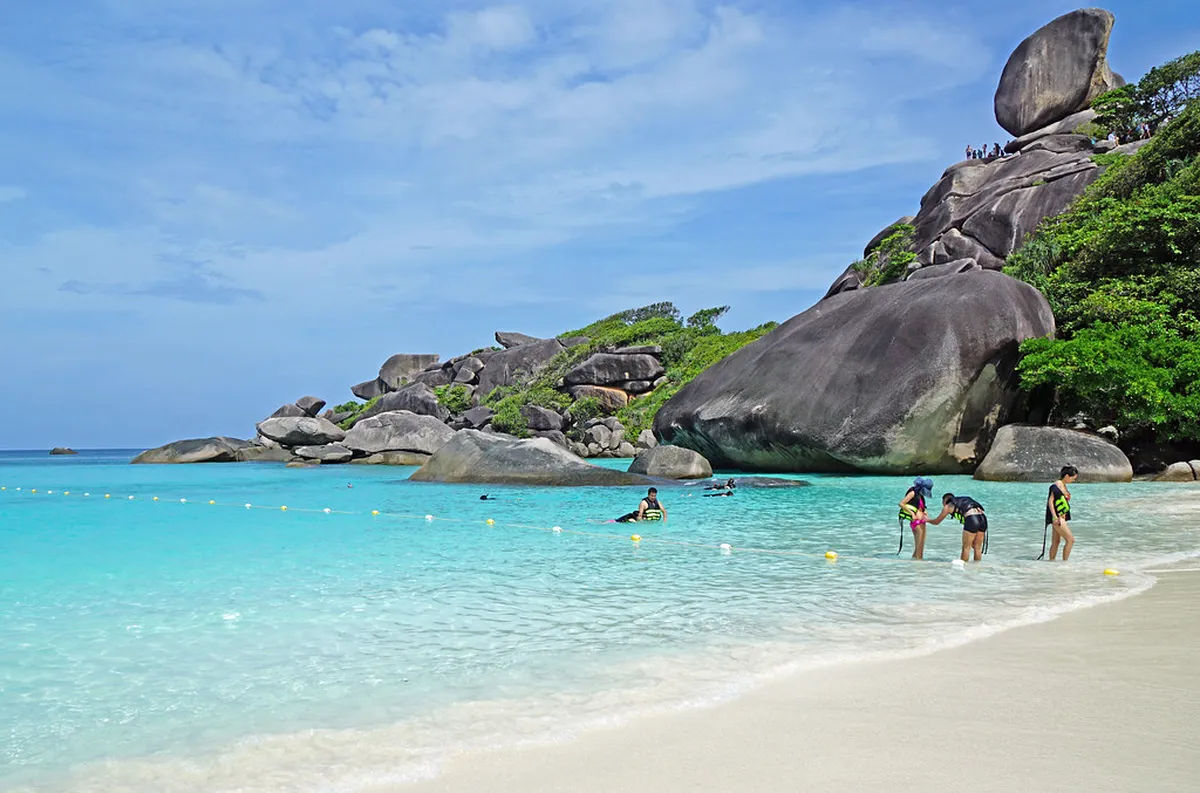
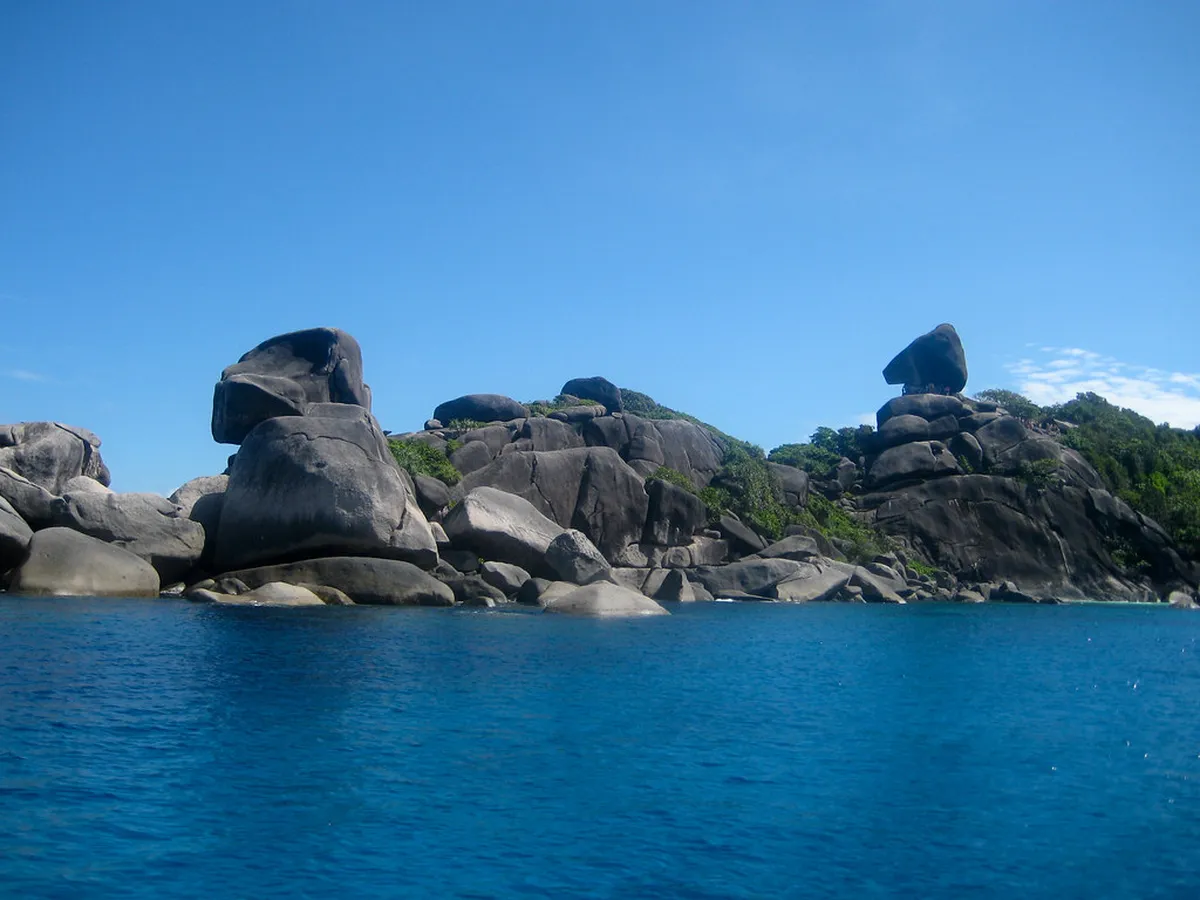
| Similan group (Elephant Head Rock, Christmas Point, North Point) | Liveaboard or day trip | Pelagics are described as rare | Granite boulders, swim-throughs, soft corals |
| Surin Islands (Aow Pakkard) | Often added to liveaboard routes | Not a named whale shark site | Shallow hard coral reef |
Best time to go
Timing is set by the park season before it is set by any animal. Dive operators state that Similan National Park is closed from mid-May to mid-October each year. Liveaboards therefore run in the dry-season window, roughly mid-October to mid-May. One operator lists its Similan season as November to May. Exact opening and closing dates shift each year, so read the park's current announcement on the Department of National Parks site. Our guide to the Similan park opening date covers the season in more detail. For conditions at sea, see Similan water temperature. No source here links temperature or plankton to whale shark sightings, so do not plan around that idea. Prices and hours checked November 2026.
Liveaboard vs day trip vs snorkel: which gives you the best chance?
Time in the water and distance covered drive your odds. A liveaboard reaches several sites over multiple days, and some itineraries include Richelieu Rock. Trip lengths run from overnight to a week or longer. A forum post from 2006 describes a 5-day, 6-night cruise to the Similans and Richelieu Rock. A day trip stays near the Similan group, where pelagics are rare. Compare the two in our guides to the Similan day trip and Similan snorkeling. Cost tiers below are relative. Check current operator prices before you book.
Liveaboards run roughly mid-October to mid-May, so a 5-day, 6-night cruise like the 2006 example fits inside that dry-season window.
| Trip type | Time | Relative cost | Coverage | Who should skip it |
|---|---|---|---|---|
| Liveaboard dive trip | Overnight to a week or longer | Highest | Many sites, may include Richelieu Rock and Koh Tachai | Anyone without dive certification or a free multi-day window |
| Day trip with diving | One day | Lower | Similan group only | Anyone whose main goal is a whale shark |
| Day trip with snorkeling | One day | Lowest | Shallow sites near the Similan group | Anyone who wants to reach offshore pinnacles |
Getting there and departure logistics
Thap Lamu Pier near Khao Lak is the departure point for almost all Similan liveaboards, according to dive operators. Phuket International Airport (HKT) is the nearest airport. Many divers add a night in Phuket or Khao Lak before and after the trip. That buffer protects you from late flights and weather delays. Our guide to Similan Islands from Phuket: Boats, Timing and Costs covers transfers. Ask your operator for the exact pickup point and boarding time.
What an encounter is like and how to behave
Whale sharks can appear at almost any depth, often near the surface and in open sea. Divers and snorkelers get excited, but a calm group tends to keep the animal around. If the shark feels threatened, it leaves. Never chase it, block its path or crowd it from several sides. Keep your distance and leave the approach to the shark. Watch your depth and time when you are thrilled. Dive operators stress staying inside your no-decompression limits even when you want to follow the animal down. Follow your guide's briefing and the park rules posted on the national parks department site.
- Stay calm and keep your movements slow.
- Do not touch, ride or chase the animal.
- Check your no-decompression limit often, especially at depth.
- Give others in your group room to see it.
What to do if you don't see one
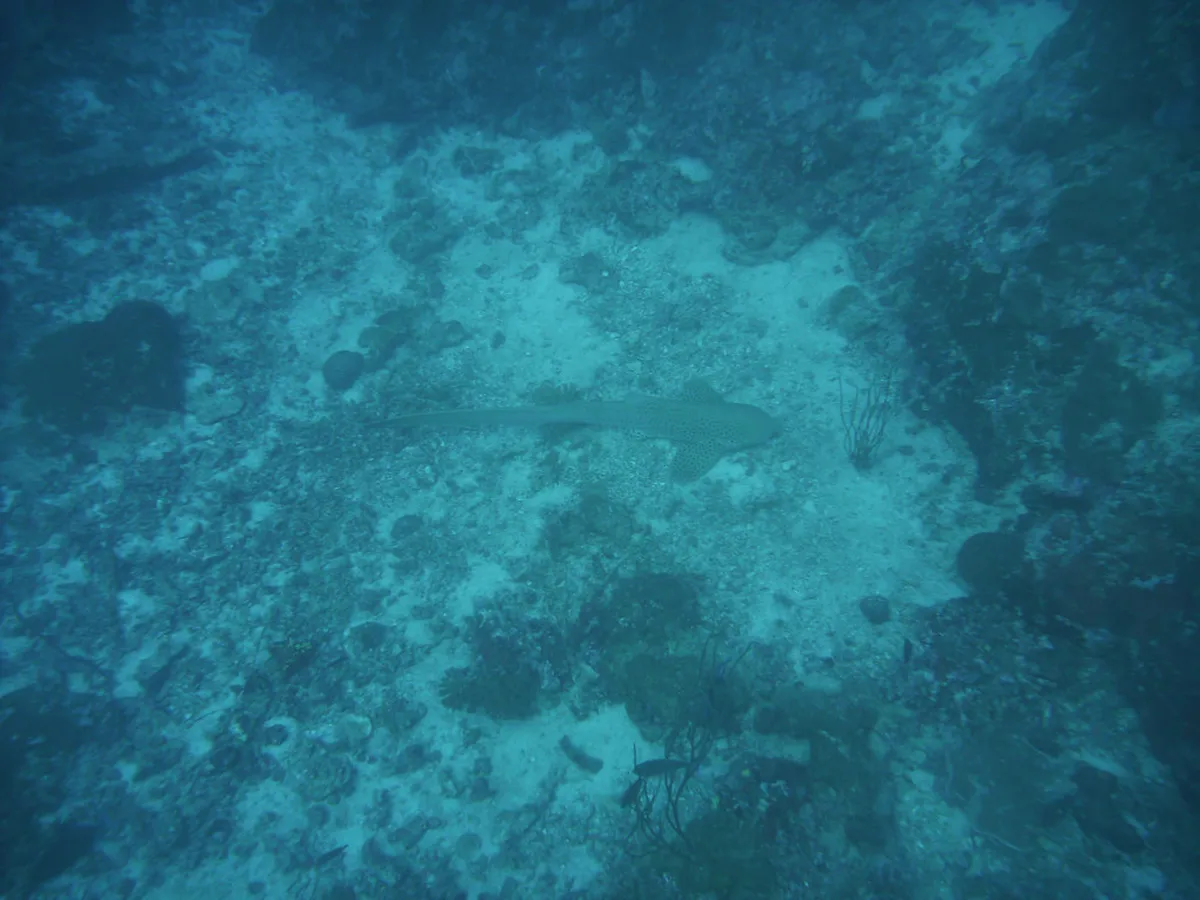
Plan the trip around the whole reef, not one animal. Koh Bon is described as Thailand's manta hotspot, with other life if the mantas stay away. Koh Tachai may also offer mantas. Whitetip and blacktip reef sharks are reported at the Similans. Operators also report bamboo and nurse sharks there. Leopard sharks are easier to find near Phuket and Phi Phi than at the Similans. The big boulder sites give you something solid to plan around. Elephant Head Rock, Christmas Point, North Point and West Of Eden are all named by operators. Start with our Similan Islands diving guide for site choices. For a comparison with the northern group, read Surin or Similan Islands? Which to Visit (and When to Do Both).
Thailand reports usually describe whale sharks at 4–12 m (about 13–39 ft). Use that range to avoid mistaking a large nurse shark for one.
- Mistake: booking a day trip and expecting a whale shark.
- Mistake: traveling during the closed season.
- Mistake: treating a sighting as guaranteed.
- Mistake: chasing or crowding the animal.
- Mistake: confusing a whale shark with a large nurse shark or other big fish.
Frequently Asked Questions
What places have a whale shark?
In Thailand, dive operators name Richelieu Rock and Koh Tachai on the Andaman coast. In the Gulf of Thailand, they name Chumphon Pinnacle and Sail Rock. None of these is a guaranteed sighting.
Is it safe to swim with whale sharks?
Whale sharks are filter feeders, and dive operators describe them as gentle. Stay calm, keep your distance and never chase or touch the animal. Divers should also stay inside their no-decompression limits.
Notes for your next dive trip
Optional updates to our Thai diving guides.
You might also like
Continue reading
More guides you'll find useful